The International Finance Corporation (IFC) has warned that weak succession planning and governance gaps are putting the survival of family-owned businesses at risk, calling for stronger structures to ensure smooth leadership transitions and long-term business continuity.
According to IFC, succession remains the most critical challenge facing family businesses globally – particularly in Africa, where many firms struggle to transition leadership from founders to the next generation.
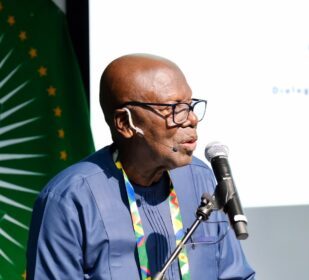
Speaking at a Family Governance Workshop in Accra, IFC ESG Advisory Lead for Africa Moez Miaoui said succession issues cut across regions and business sizes, affecting both developed and emerging economies.
He explained that family businesses typically operate with long-serving founders who remain in leadership for 20 to 30 years, making structured transition planning essential.
“In any family business setting, succession is the most critical challenge that the family will face and the business will face,” he said.
He noted that a major challenge is lack of preparedness among successors, many of whom are not sufficiently exposed to the business or equipped with required skills and experience to take over leadership roles.
On the other hand, he said, some founders also struggle to exit leadership roles due to emotional attachment, as their identity is often closely tied to the business.
“The successors are not prepared enough, not well educated, not well prepared and do not know the business well enough. Leaders are not ready to let go because their identity and the business are one and the same,” he said.
To address these challenges, he stressed a need for strong governance systems within both the family and the business, including family constitutions, family councils and formal decision-making structures.
He explained that family councils serve as internal governance platforms where families can discuss succession, education of the next generation, philanthropy and shared values, separate from business operations.
“The family council is for a family, what a board of directors is for the business,” he said.
Mr. Miaoui further highlighted the importance of corporate governance principles in family enterprises, noting that governance frameworks help balance the roles of ownership, family and business operations.
He said effective governance requires clear structures for each of the ‘three circles’ of family business – family, ownership and enterprise – to ensure coordinated decision-making.
Family businesses central to private sector growth
Also speaking at the workshop, Yewande Giwa, Senior Country Officer at IFC, emphasised that family businesses are central to private sector growth and job creation in Africa, noting about 90 percent of jobs on the continent are generated by the private sector.
She said family businesses are uniquely positioned to drive economic growth because they often balance profit objectives with broader community impact.
“Most family businesses have the right intentions. The challenge is putting the right structures in place to improve productivity, strengthen governance and expand their impact. With strong governance frameworks, family businesses can build lasting legacies that endure from one generation to the next.
“When you are a family business, you do not just think about your bottom line. You are thinking about how do I influence my community, how do I make a difference, how do I create more jobs,” she said.
Ms. Giwa noted that despite their importance, many family businesses struggle to survive beyond the founder stage – mainly due to weak structures for succession and governance.
She urged businesses to establish boards or advisory committees and ensure that leadership roles are filled based on competence and qualification, even within family-run firms.
“Even though it’s a family business, there must be qualifications in place for the people who are running the business,” she said.
In his remarks, IFC Senior Country Manager for Ghana and Liberia, Kyle Kelhofer, reaffirmed IFC’s commitment to supporting private-sector development and helping businesses build the governance foundations necessary for long-term sustainability.
“The sustainability of family businesses is closely linked to the sustainability of the broader economy. Effective governance, professional management and well-planned succession processes help businesses survive beyond their founders, preserve jobs and create opportunities for future generations. IFC is proud to support efforts that strengthen these foundations and contribute to a more resilient private sector in Ghana and across the region,” Mr. Kelhofer said.
The Family Governance Workshop forms part of IFC’s broader efforts to strengthen governance and long-term sustainability among family-owned businesses and SMEs in Ghana.
The programme is supported by the Swiss State Secretariat for Economic Affairs (SECO), which has partnered IFC in Ghana for more than a decade to promote private sector development and strengthen the business environment.
According to SECO, a strong financial sector is essential to creating an enabling environment for investment, business growth and job creation.
The IFC said strengthening governance systems and succession planning will be critical to ensuring that family businesses remain sustainable across generations while continuing to contribute in economic growth and job creation.