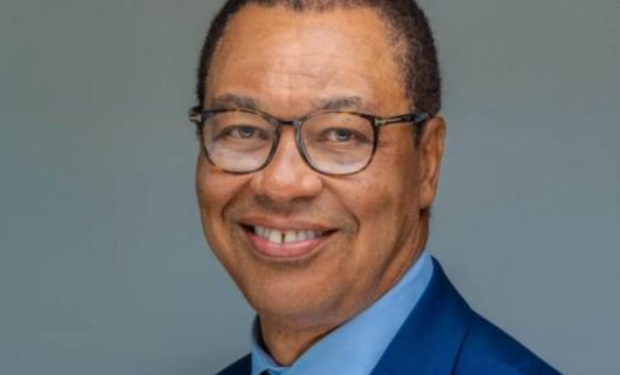
The Chief Executive Officer of Ghana International Bank (GHIB), Ian Greenstreet, has reaffirmed the bank’s commitment to supporting Ghanaian businesses to expand into international markets, saying the country’s greatest economic opportunities lie ahead.
In a reflection on his first official visit to Ghana since assuming office, Greenstreet said he spent 10 of his first 30 working days in the country to gain first-hand knowledge of the businesses, industries and institutions that have shaped GHIB for more than six decades.
According to him, the visit strengthened his belief that the bank’s future extends beyond financing trade to becoming a key partner for Ghanaian businesses seeking to compete globally.
“Ghana is not simply one of our markets. It is our home, our heritage and the foundation upon which GHIB was established. Since 1959, we have served as a bridge between Ghana and the world’s financial markets,” he said.Business & Industrial
During the visit, Greenstreet met government officials, regulators, financial institutions, exporters, manufacturers, entrepreneurs and leaders of state-owned enterprises. He also toured factories, warehouses, ports and processing facilities to better understand the challenges and opportunities facing businesses.
He said one of the most striking observations from the trip was the ambition of Ghanaian entrepreneurs, many of whom are producing goods capable of competing successfully on international markets.
“Perhaps most inspiring was seeing products designed, manufactured and assembled in Ghana not only competing with, but often outperforming, established American, European and Chinese products in international markets,” he noted.
Greenstreet disclosed that discussions with Finance Minister Dr Cassiel Ato Forson, Foreign Affairs Minister Samuel Okudzeto Ablakwa and Trade, Agribusiness and Industry Minister Elizabeth Ofosu-Adjare centred on accelerating investment, industrialisation and export-led growth.Banking
He said engagements with institutions such as the 24-Hour Economy Secretariat, the Ghana Infrastructure Investment Fund (GIIF), the Minerals Income Investment Fund (MIIF), COCOBOD and the Ghana Gold Board highlighted a common challenge of securing long-term capital to turn ambitious projects into reality.
According to him, many promising projects fail to attract international investment because they are not sufficiently prepared or structured to meet global financing standards.Finance
“The best ideas, unfunded, go nowhere,” he stated, adding that every transformational project requires access to well-structured capital before it can create jobs and drive economic growth.
Greenstreet said GHIB intends to work with government, development finance institutions and private investors to structure financing solutions and connect investment-ready projects with international capital markets.Africans & Diaspora
He also outlined the bank’s ambition to become Africa’s leading commodity and natural resources bank by providing financing, risk management and trade solutions across sectors including gold, cocoa, oil and gas, bauxite and critical minerals.
Supporting exporters, he said, will remain central to the bank’s strategy, with GHIB partnering local banks and Ghana EXIM Bank to strengthen Ghana’s export sector through trade finance and foreign currency solutions.
Greenstreet further revealed plans to expand the bank’s retail banking services by developing a digital platform targeted at Ghanaian entrepreneurs, internationally active businesses, high-net-worth individuals and the Ghanaian diaspora.Business & Industrial
He stressed that GHIB aims to become the preferred international banking partner for Ghanaian businesses and investors.Banking
“Our ambition is simple: whenever Ghanaian businesses, financial institutions or investors think internationally, we want Ghana International Bank to be their first choice,” he said, adding that the bank’s profits are reinvested into Ghana and returned to its Ghanaian shareholders to support national development.