
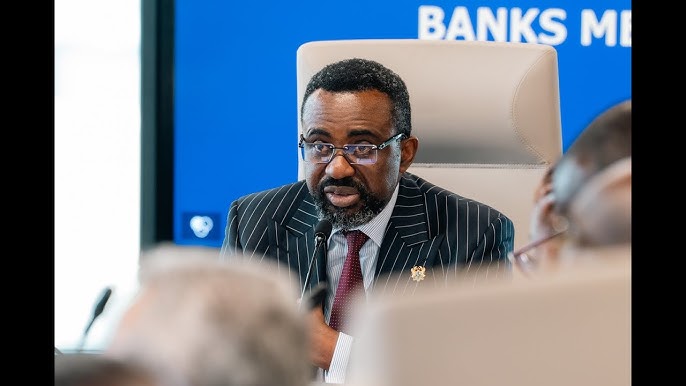
The growing reliance on domestic borrowing is reducing exposure to foreign exchange shocks but creating new risks within national banking systems, Bank of Ghana Governor Dr. Johnson Pandit Asiama has said.
He argues that the next phase of debt reforms should focus on building deeper, longer-dated and more diversified domestic debt markets.
Speaking at the Bank for International Settlements (BIS) Roundtable of African Central Bank Governors, Dr. Asiama said Africa’s public debt landscape is increasingly being shaped by local financing rather than external capital markets as tighter global financial conditions make foreign borrowing more expensive and less predictable.
“What began as a response to tighter external financing is increasingly becoming a strategic policy choice,” he said. “Domestic borrowing is strengthening resilience by reducing external vulnerability, but it is also relocating risk into our own financial systems.”
Dr. Asiama said several African economies entered 2026 from a stronger macroeconomic position after years of fiscal adjustment and structural reforms. He added that relatively limited exposure to recent tariff measures and stronger commodity prices, particularly gold, have also supported growth across the continent.
Drawing on Ghana’s experience, he said the country has transitioned from crisis management to rebuilding long-term fiscal sustainability following successful completion of its debt restructuring under the International Monetary Fund’s Extended Credit Facility programme.
He noted that inflation has declined from more than 54 percent in 2022 to 3.7 percent in May 2026, while government is recording a primary fiscal surplus. Gross international reserves stood at US$14.4billion at the end of May, equivalent to 5.7 months of import cover and reflecting the impact of domestic resource mobilisation and sustained policy reforms.
According to Dr. Asiama, Ghana’s debt crisis was driven by persistent fiscal deficits, a narrow revenue base and increasing reliance on external commercial borrowing before tighter global financial conditions shut the country out of international capital markets. The country’s response combined debt restructuring with fiscal consolidation and institutional reforms aimed at restoring debt sustainability and policy credibility.
Recent Treasury bill market developments suggest government continues to enjoy access to domestic financing, although investor demand has moderated from the exceptionally strong levels recorded at start of the year. Accepted bids declined to GH¢20.5billion in April from GH¢48.5billion in January and GH¢35billion in February as subscriptions eased and the Treasury adopted a more selective issuance strategy.
Nonetheless, government refinanced nearly all its April maturities – rolling over GH¢20.5billion against GH¢21.3billion in maturing bills. Yields also showed signs of normalisation, with the 364-day Treasury bill rising back into double digits at 10.20 percent while the 91-day and 182-day bills closed at 4.92 percent and 6.97 percent, respectively.
While greater reliance on local currency borrowing reduces exchange-rate mismatches on sovereign balance sheets, Dr. Asiama cautioned that it also concentrates risks within domestic financial systems.
“Instead of currency mismatches, we increasingly face concentration risks within the domestic financial system,” he said. “Where banks hold a significant share of government securities, sovereign stress can quickly become banking-sector stress.”
He added that large volumes of short-term domestic debt could complicate liquidity management, distort interest-rate formation and weaken monetary policy transmission, underscoring the need for closer coordination between debt managers and central banks while preserving central bank independence.
Dr. Asiama said policymakers should now focus on developing deeper and more diversified domestic capital markets supported by a broader investor base to ensure today’s financing solution does not become tomorrow’s financial vulnerability.
He also cited tighter global financial conditions, a stronger US dollar and persistent geopolitical uncertainty as continuing external risks, despite the recent easing in oil prices.
The Governor said African governments must deepen domestic debt markets without crowding out private sector credit while managing the growing sovereign-bank nexus before the next external shock emerges.