The government’s plan to raise about US$1 billion through cedi-denominated domestic bonds to finance cocoa purchases is emerging as a critical test of investor confidence in the country’s debt market recovery following the 2022/2023 Domestic Debt Exchange Programme (DDEP) and Ghana Cocoa Board’s (COCOBOD) own restructuring challenges.
The proposed issuance, expected ahead of the 2026/2027 cocoa season, marks a major financing reset for the COCOBOD as authorities move away from the offshore syndicated loan market that funded cocoa purchases for more than three decades.
The strategy is aimed at reducing dependence on foreign lenders and dollar borrowing, but market analysts say the success of the programme will depend heavily on whether local investors are willing to absorb large-scale, cocoa-linked debt despite lingering concerns over COCOBOD’s GH¢32 billion debt burden, past payment delays and weakened production levels in recent past.
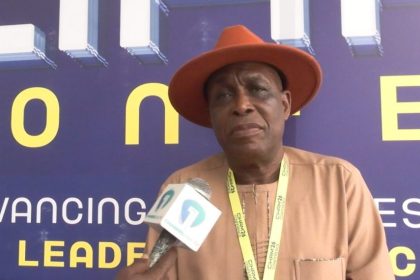
Speaking at the recent Africa Cocoa Investment Forum in London, COCOBOD Chief Executive, Dr. Randy Abbey said authorities were seeking to reduce dependence on foreign lenders and dollar-denominated borrowing by leveraging improving domestic market conditions.
“We are looking at funding the entire crop. We believe that the interest rates in Ghana now are at the right place for us to go into the market,” Dr. Abbey said, citing easing inflation and declining borrowing costs as creating favourable conditions for a large domestic issuance.
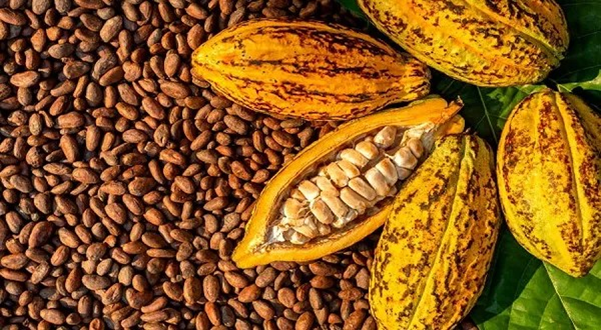
The move comes as Ghana’s cocoa sector faces severe financing and production pressures after years of volatility in global cocoa markets, declining output and rising debt servicing costs. Ghana, the world’s second-largest cocoa producer after Côte d’Ivoire, contributes between 15 percent and 25 percent of global supply and has historically generated about US$2 billion annually in foreign exchange earnings from cocoa exports.
For more than three decades, COCOBOD relied on annual syndicated pre-export facilities ranging between US$1 billion and US$1.5 billion to finance cocoa purchases from farmers. The loans, backed by cocoa receivables, were traditionally repaid within the crop season from export proceeds.
Borrowing conditions, however, deteriorated sharply after Ghana’s sovereign debt crisis and the tightening of global financial conditions. By the 2023/2024 crop season, the cost of syndicated borrowing had climbed to about 8 percent in dollar terms, while the facility size dropped to US$800 million as international lenders became increasingly cautious about Ghana’s risk profile and COCOBOD’s financial position.
At the same time, cocoa production weakened significantly. Output declined from a peak of about 1.04 million metric tonnes in the 2020/2021 season to around 531,000 tonnes in 2023/2024 before recovering modestly to an estimated 700,000 tonnes in 2024/2025.
Analysts say the domestic cocoa bond programme is intended to establish a revolving financing structure where funds raised locally are used to purchase cocoa and repaid within the same crop season using export proceeds. Authorities also expect the model to reduce exchange rate risks associated with dollar-denominated borrowing while reviving indigenous Licensed Buying Companies (LBCs) that have struggled under the existing financing structure.
Still, concerns remain over investor appetite and the capacity of the domestic market to absorb an issuance potentially equivalent to GH¢11 billion to GH¢12 billion.
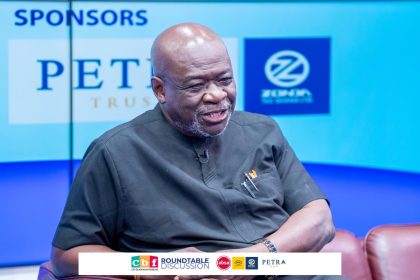
Corporate governance and banking consultant Dr. Richmond Akwasi Atuahene said the proposed financing model represented a significant structural shift for the country’s cocoa industry but warned that rebuilding investor trust would be critical after recent debt restructuring and operational setbacks. “This is not just a financing adjustment. It represents a structural evolution in how Ghana funds one of its most strategic export sectors,” Dr. Atuahene said.
He noted that confidence in government-linked securities weakened considerably after the DDEP and the restructuring of COCOBOD cocoa bills in 2023, where short-term obligations were converted into longer-dated instruments. “The trust deficit remains a major challenge because many investors no longer consider these instruments risk-free after the losses suffered during the restructuring process,” he said.
COCOBOD’s debt burden has also intensified market concerns. The institution’s total liabilities are estimated at about GH¢32 billion, with approximately GH¢11.9 billion due for repayment in 2025 alone. The LBCs are also reportedly owed about GH¢10.1 billion, contributing to delays in payments to farmers and operational disruptions across the cocoa value chain.
Investor confidence has been further undermined by failed forward sales contracts during the 2023/2024 crop season. COCOBOD reportedly failed to deliver more than 330,000 tonnes of cocoa sold under lower-priced contracts before global cocoa prices surged, resulting in estimated losses exceeding US$1 billion.
Dr. Atuahene said the failed forward sales damaged COCOBOD’s credibility with both domestic and international lenders. “The inability to meet contractual obligations created significant concerns about repayment capacity and governance standards within the sector,” he said.
Additional pressure is coming from falling global cocoa prices. After reaching historic highs during the 2024 supply shortage rally, cocoa prices reportedly declined from around US$7,200 per tonne to about US$4,100 per tonne in early 2026, reducing the revenue available to support debt servicing.
Global cocoa prices, which provide the revenue backdrop against which COCOBOD’s financing ambitions must be assessed, have undergone one of the most dramatic cycles in recent commodity market history. Futures briefly exceeded US$10 per kilogramme in early 2025, driven by consecutive below-average harvests in West Africa and tight global supply, before collapsing sharply. By mid-May 2026, benchmark prices had fallen to around US$3,791 per tonne, down approximately 65 percent year-on-year, as supply conditions improved and industrial demand weakened materially.
Cocoa grindings, a key measure of processing demand, fell 7.2 percent year-on-year in Europe and 16 percent in Asia in the second quarter of 2025, reflecting the extent to which high prices had eroded downstream consumption.
The outlook for the remainder of 2026 offers little near-term relief for COCOBOD’s revenue projections. Analysts at StoneX forecast a global cocoa surplus of 287,000 metric tonnes for the 2025/2026 season, with a further surplus of 267,000 metric tonnes projected for 2026/2027, keeping downward pressure on prices. ING’s commodity team forecasts London cocoa will average around £3,400 per tonne across 2026 — well below the peaks of the prior two years but still above pre-2023 norms. J.P. Morgan holds a medium-term price forecast of US$6,000 per tonne, characterising current levels as a market-finding-balance phase rather than a structural collapse.
However, the combination of weak grinding demand, improved West African weather and the absence of speculative buying support means a sustained price recovery before year-end remains unlikely, compressing the export revenue available to service COCOBOD’s substantial debt obligations.
Analysts also warn that issuing large volumes of cocoa bonds locally could crowd out private sector credit or push domestic yields higher if investor demand remains weak.
According to Dr. Atuahene, the success of the cocoa bond programme will likely depend on strong reforms aimed at improving transparency, restructuring COCOBOD’s balance sheet and restoring confidence in the institution’s operations. “The bonds may need to be priced competitively, possibly 200 to 400 basis points above government securities, to attract institutional investors given current market skepticism,” he said.
He also called for the transfer of non-core liabilities, including road infrastructure expenditures, from COCOBOD’s books to improve its financial position and enhance investor confidence.
Authorities are additionally pursuing broader sector reforms, including increasing local cocoa processing, strengthening support for Licensed Buying Companies and implementing programmes to combat swollen shoot disease, illegal mining and climate-related production risks. Despite the challenges, policymakers view the domestic bond strategy as necessary to reduce dependence on volatile offshore funding markets and establish a more stable financing structure for the cocoa sector.
If successfully executed, the issuance would build on the government’s recent return to longer-dated debt instruments, including the 7-year bond sale, as authorities take steps to lengthen the maturity profile of existing Government of Ghana (GoG) securities, reinforcing early 2026 signs of improving investor confidence.