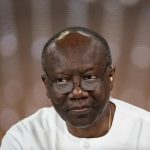
The Governor of the Bank of Ghana, Dr. Johnson Asiama, says Ghana’s economy continues to demonstrate resilience despite growing uncertainty in the global economy, supported by stronger economic growth, rising private sector credit and a stable banking sector.
Opening the 131st Monetary Policy Committee meeting in Accra, Dr. Asiama said the domestic economy has remained robust even as policymakers closely monitor inflationary pressures and external risks.
He disclosed that Ghana’s economy expanded by 6.4 percent in the first quarter of the year, compared with 6.2 percent during the same period last year, while the GDP deflator eased to 4.1 percent.
“Growth has held up quite well and this trend is expected to continue,” he said.
The Governor also highlighted a sharp recovery in private sector lending.
“Real private sector credit has accelerated to 34.1 percent against a 4.5 percent contraction a year ago. This largely reflects the easing in domestic credit conditions associated with the disinflation process.”
Dr. Asiama further noted that the exchange rate has remained broadly stable during the first half of July, while the banking sector continues to be well-capitalised.
“The exchange rate has remained broadly stable through the first half of July and the banking system remains sound and well capitalised.”
However, he cautioned that risks remain, particularly in the banking sector, where non-performing loans are still elevated.
“The still elevated non-performing loan ratio indicates that credit risk has not yet been fully worked through the system.”
He said the Monetary Policy Committee will carefully assess these domestic developments alongside external risks before determining the appropriate monetary policy stance at the conclusion of its meeting.