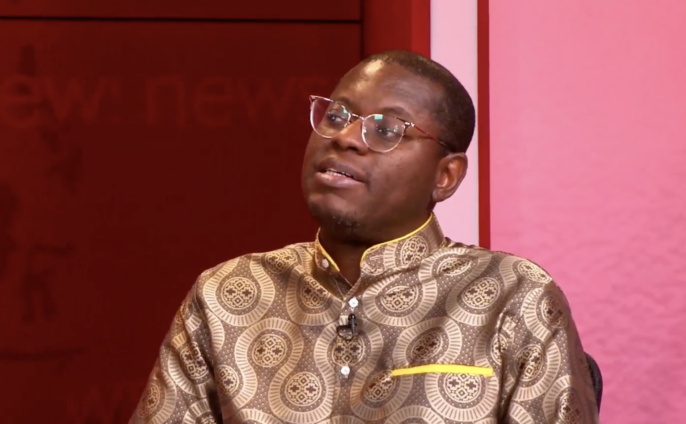
Vice President of IMANI Africa, Bright Simons, has challenged the State Interests and Governance Authority’s (SIGA) claim that state-owned enterprises (SOEs) recorded a “massive” financial turnaround in 2025.
SIGA’s 2025 State Ownership Report said SOEs recorded a combined net profit after tax of GH¢19.8 billion, compared with a GH¢2.25 billion net loss in 2024.
Total revenue also increased from GH¢137.64 billion in 2024 to GH¢176.43 billion in 2025.
However, speaking in an interview on Saturday, September 5, Mr Simons argued that the headline figures do not accurately reflect the underlying performance of the entities.
“If you follow SIGA’s account, this is what happened. We were constantly making losses all the way back from 2017, and then miraculously, as a group, they made a profit of 19.8 billion.”
He said several indicators, including the number of profitable entities, cumulative losses, financial ratios and dividend payments, raise questions about SIGA’s portrayal of the results.
“The problem, as I have already pointed out to you, that even at a high level, this story that there’s been a massive turnaround, unprecedented, historic, is not borne out by the sheer data itself,” he said.
According to Mr Simons, the number of entities making profits declined, while dividend payments also fell by about 45%.
He noted that only Ghana Reinsurance Company and TDC paid dividends during the period.
“You look at the SOEs, the other state entities, they’re actually making massive deficits, 10 billion Ghana, more than 10 billion Ghana cedis.”
He questioned the basis for describing the overall performance as a major turnaround.
“So what are you trying to convey when you say that there’s been a big turnaround? Your own numbers doesn’t even bear you out.”
Mr Simons said the focus should instead be placed on the operational performance of individual SOEs and whether improvements can be directly linked to management decisions.
“The operating line basically is what really is driven by the entity’s operations, the actual thing they do, their core business.”
He accused SIGA of potentially misleading the public by including factors such as foreign exchange movements and improved financing conditions that may boost reported results without necessarily reflecting stronger operational performance.
“Much of our fight with SIGA is that it misleads on the operating results, what we can actually attribute to the SOEs’ performance, by confusing us with other things, which are not operating line but are below the operating line.”
He added that broader economic improvements should not automatically be credited to individual SOEs.
“The problem is that we are not measuring general economic environment; we’re measuring SOE performance.”
“General improvement in the economy is not something you can attribute to Cocoa Board or GNPC. They are not responsible.”
SIGA’s report covered 162 specified entities, including 53 SOEs, 36 joint venture companies and 73 other state entities.