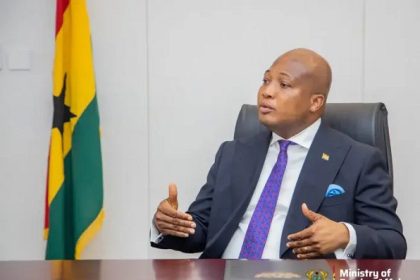
Member of Parliament for Suame, John Darko, has questioned the government’s decision to spend money on 24-hour economy markets across the country.
He believes the money could be used for more urgent projects, especially completing the stalled Agenda 111 hospital projects and addressing the needs of different communities.
His comments come at a time when some groups are opposing the locations chosen for the planned 24-hour economy markets.
In Accra, for example, Konkomba Yam traders have protested against the proposed location of a new market. They have appealed to the government to choose a different site.
The disagreement has led to a wider discussion about why some communities are against the markets.
The Vice Chairman of Parliament’s Local Government Committee, Charles Agbeve, has blamed much of the opposition on a lack of proper consultation with stakeholders.
However, Mr Darko believes there are bigger issues that need to be considered.
Speaking in an interview on Friday, August 14, 2026, the Suame MP said the policy was not properly planned and may not address the most important needs of many communities.
“You ask yourself if government has money to do these things. You have to go to every district or community and ask them what they need,” he said.
Mr Darko said the needs of communities are different, so the government should first speak with residents before spending large amounts of money on market projects.
“When you go to some constituencies, what people need may not be a market,” he said.
He argued that healthcare should be given greater priority, especially in communities where hospital projects under Agenda 111 remain unfinished.
“You could have used this money to finish the Agenda 111 hospitals,” he said.
“Ask yourself: selling tomatoes or kontomire at night, or having access to a hospital at night—which one would you prefer? When you are sick in the night, you want a hospital that is closer to your home.”
The MP accused the government of putting the Agenda 111 programme aside while spending heavily on the 24-hour economy market project.
He also claimed that the government was choosing existing market locations because those places already have traders and customers.
“Look, I can tell you the reason why they don’t want to build on new lands is that they feel that when you build on a new place, people won’t come,” he said.
“They are converting old markets where people are already trading. That is why they want to pull down existing markets and rebuild them.”
According to Mr Darko, this could disrupt traders who already depend on those markets for their livelihoods.
He also questioned whether simply rebuilding existing markets would truly create the kind of 24-hour economic activity the government is promising.
“They will build it, and somebody will go there at 6 p.m. or 7 p.m., take a picture and say it is a 24-hour economy market and people are working at night,” he claimed.
The Suame MP said government should instead spend public funds on projects that directly improve people’s lives and solve important social and economic problems.
“We have better use of our money than to build these so-called 24-hour economy markets across the length and breadth of the country. That is not what we need,” he said.
The government’s 24-hour economy programme is one of the major policies of the Mahama administration. It is aimed at creating more economic activity around the clock through investments in infrastructure, transport and logistics, security, and industrial production.
However, the choice of locations and the implementation of some of the proposed markets continue to face criticism from traders, community members and political figures.