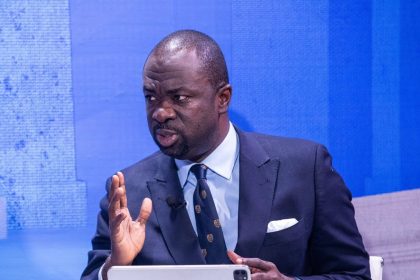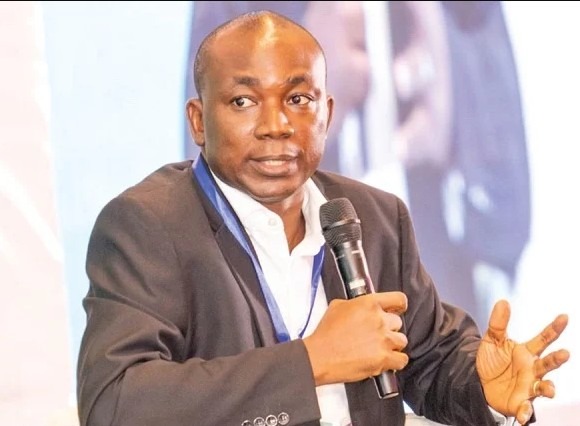
Economist and Professor of Finance, Professor Godfred Bokpin, has warned that continued inefficiencies in the Electricity Company of Ghana (ECG) and other state-owned enterprises could push Ghana back to the International Monetary Fund (IMF) for another financial intervention.
Speaking in an interview on Saturday, Prof. Bokpin said Ghana cannot afford to return to what he described as “business as usual” after years of fiscal pressure caused by inefficiencies within state-owned enterprises.
“So if we go back to business as usual, it is just a matter of time and we have to resort to the IMF and the World Bank for another level of intervention,” he cautioned.
He said Ghana has lost between 2.5% and 3.2% of its Gross Domestic Product (GDP) over the past 15 to 20 years due to inefficiencies in state-owned enterprises, including ECG and the Ghana Cocoa Board (COCOBOD).
“Over the last 15 to 20 years, between 2.5% to almost 3.2% of our GDP is lost to the inefficiencies of state-owned enterprises alone, including ECG and then COCOBOD and the rest of them,” he said.
Prof. Bokpin noted that the energy sector continues to put significant pressure on Ghana’s finances, with government often required to provide additional funding to cover shortfalls.
He said these extra-budgetary allocations can sometimes exceed the combined budgets of the Ministries of Health, Food and Agriculture, and Education.
“If you look at the fiscal space that the energy sector alone takes, the extra-budgetary allocation that we have to make to cover the energy sector shortfall sometimes exceeds the combined budgetary allocation to the ministries of Health, Food and Agriculture, and Education,” he said.
He stressed that reducing losses across the electricity generation, transmission and distribution chain would require substantial investment.
“There is no way we can reduce the level of losses from generation, transmission to distribution without a certain level of investment,” he said.
According to him, government must carefully determine how to finance the needed investment without diverting scarce public funds from other critical sectors.
Prof. Bokpin also said the IMF-supported programme has improved transparency in the energy sector, particularly regarding the scale of losses and the movement of funds.
“What we should rather be seeing now as the effect of the IMF-supported programme is that there’s a lot of transparency today in terms of even the extent of the losses going forward and the progress that we have made,” he said.
He pointed to the cash waterfall mechanism as another area where some progress has been made.
“Today, the cash waterfall mechanism is working to some extent,” he said.
“You can credit that to the IMF programme because we know what was happening with the cash waterfall mechanism before.”
Prof. Bokpin urged government to use the ongoing reform process to address the structural challenges facing ECG and other state-owned enterprises instead of repeatedly providing financial support to cover their inefficiencies.
He also called for broader consultation and greater transparency on proposed reforms.
“There has to be a broader consultation. There has to be greater disclosure of what kind of private-sector participation we are talking about,” he said.
He warned that returning to the old approach could deepen Ghana’s fiscal challenges and eventually force the country to seek another external intervention.
Prof. Bokpin therefore urged policymakers to implement reforms that improve ECG’s efficiency, reduce losses and reduce the company’s reliance on government financial support.