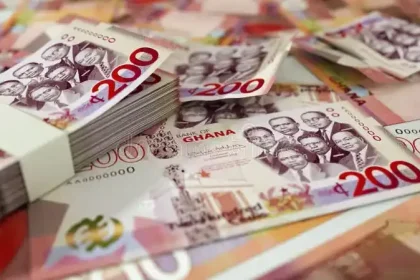

The Bank of Ghana says its early assessments of the Cash Reserve Ratio (CRR) of a uniform 20% has been orderly, with banks generally complying with the revised requirement and the banking system remaining sufficiently liquid.
In a bi-monthly publication of questions by the media, the Central Bank said it has been closely monitoring liquidity conditions, money market rates, credit activity, and the foreign exchange market since its introduction.
The adoption of the new CRR policy was primarily aimed at strengthening liquidity management, improving monetary policy transmission, and supporting overall macroeconomic stability.
The central bank said the new CRR policy ensures that liquidity conditions stay aligned with the Bank’s inflation expectations and the goals of its foreign exchange operations.
“Compared to the period when the previous CRR framework was in place, a one-month span may be too short to assess the overall impact of the new CRR policy. Nonetheless, the Bank will continue to review data and industry feedback. The Bank’s goal is to ensure that the policy promotes stability, resilience, and growth”, it added.
At the time of the transitioning, the Bank of Ghana said 17 of the 23 banks were already provisioning at an effective CRR of 25% under the dynamic CRR framework. Only six banks were operating below that level, three at 20% and the other three at 15%.
The Bank had projected that a minimum of about GH¢11.5 billion would be absorbed from the market through the implementation of the new uniform 20% CRR, maintained in domestic currency, at no cost to the Bank.
The central bank concluded that the observed decline in the Bank of Ghana securities of about GH¢10.6 billion shortly after the implementation date, together with other liquidity withdrawals, suggests that the projected liquidity absorption target was largely achieved, in aggregate terms.