The Minority in Parliament has appealed to President John Dramani Mahama not to sign the Public Tribunal Bill 2026 into law, arguing that the legislation could reverse Ghana’s democratic progress and weaken public confidence in the justice system.
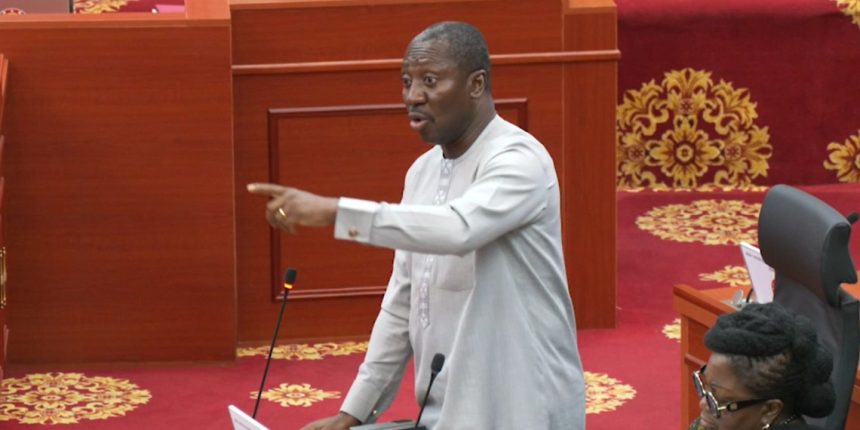
Speaking on the floor of Parliament before the House adjourned indefinitely, Minority Leader Alexander Afenyo-Markin said the proposed law had raised serious concerns among Ghanaians because it seeks to reintroduce district and regional public tribunals.
According to him, the proposal has revived memories of the tribunal system that many people associate with a difficult period in the country’s history.
Afenyo-Markin insisted that the President should refuse to give presidential assent to the bill, stressing that the Minority believes it is not the right solution to the challenges facing Ghana’s justice delivery system.
He explained that although the Minority supports efforts to improve access to justice and reduce delays in court proceedings, establishing public tribunals is not the appropriate approach.
Instead, he urged the government to invest more resources in the existing court system by improving infrastructure, increasing staffing, and providing the logistical support needed to ensure faster and more effective delivery of justice.
The Minority Leader also expressed concern that the proposed tribunals could undermine the independence of the judiciary and reduce public trust in the country’s legal institutions.
He maintained that any reforms introduced to improve the justice system should strengthen the constitutional framework rather than create parallel structures that may generate uncertainty.
The Public Tribunal Bill 2026 was passed by Parliament despite a boycott by Minority Members of Parliament, who refused to participate in the approval process.
The bill seeks to establish district and regional public tribunals with the authority to hear specific categories of cases as part of broader efforts to improve the administration of justice and reduce the workload of conventional courts.