The Ministry of Health has renewed its call for stronger national action to eliminate viral hepatitis, urging Ghanaians to take testing, vaccination and early treatment seriously.
The ministry says Ghana continues to face a high burden of hepatitis B and C, with many people living with the infections without knowing their status.
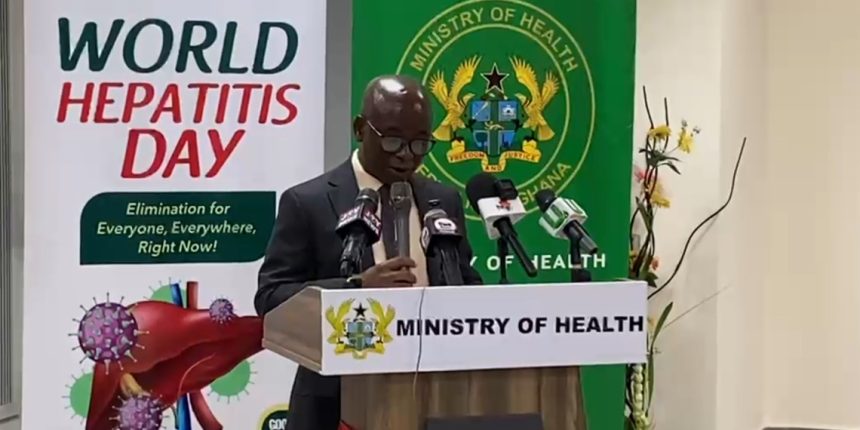
The call came during the commemoration of World Hepatitis Day in Accra, where the ministry also inaugurated the National Viral Hepatitis Technical Working Group.
The new group will help coordinate policies, strengthen prevention efforts and improve access to treatment and other forms of care.
Representing the Minister for Health, Kwabena Mintah Akandoh, the Chief Director of the Ministry, Desmond Boateng, said Ghana needs a united and sustained response to the disease.
He warned that millions of people could be living with viral hepatitis without realising they are infected.
According to him, the disease can develop quietly for years, allowing it to damage the liver before symptoms become noticeable.
By the time many patients seek medical attention, the infection may have already caused serious complications, including liver cirrhosis or liver cancer.
Mr Boateng therefore stressed the need for regular screening and early diagnosis to help identify infections before they become severe.
“Today’s commemoration draws attention to the burden of viral hepatitis. Part of the integration of the National Viral Hepatitis Technical Working Group provides the mechanism for translating our commitments into coordinated and measurable action.
“Ladies and gentlemen, viral hepatitis remains a major public health challenge in Ghana. About 3 million Ghanaians are estimated to be living with hepatitis B while roughly half a million may be living with hepatitis C. Many do not know their status because the infection can remain silent for years, even as it progressively damages the liver.
“Chronic hepatitis B and hepatitis C are major causes of liver cirrhosis and liver cancers. Current estimates place liver cancer as the third most commonly diagnosed cancer in Ghana and the second leading cause of cancer-related deaths.
“Hepatitis B can be prevented through vaccination and effectively managed with treatment, while Hepatitis C can be cured with highly effective medicines.”
The ministry is encouraging the public to take advantage of testing services, get vaccinated against hepatitis B and seek medical care early where an infection is detected.
Health officials say stronger coordination among government agencies, healthcare providers and other stakeholders will be essential if Ghana is to reduce new infections and prevent avoidable deaths linked to viral hepatitis.