Ghana stands at a critical juncture in its economic history. For decades, the nation has exported raw agricultural commodities while simultaneously importing finished food products at a significant premium.
This paradox—exporting unprocessed wealth while spending billions on imports—represents both a profound economic inefficiency and an extraordinary opportunity. The Ghana Agro-Industrial Twinning & International Partnership Initiative represents a bold, strategically coherent response to this challenge, designed to catalyze a transformation that could reshape the nation’s economic trajectory and position it as a regional agro-industrial powerhouse.
The initiative is grounded in compelling economics. Ghana’s food import bill reached approximately US$3.25 billion in 2024, with over half of this figure attributable to products that could be domestically produced. Simultaneously, the nation processes less than 20% of its cocoa beans, under 10% of its cashew nuts, and only 30-40% of its shea nuts—a value-capture gap that costs the economy billions in lost value addition annually. The opportunity is equally clear: by fostering strategic partnerships between Ghanaian districts and international agro-processing investors, the nation can unlock an estimated US$1.5-3.0 billion in investment, create 50,000-100,000 direct and indirect jobs, and reduce annual import bills by US$300-600 million while expanding exports by US$500 million to US$1 billion annually.
What distinguishes this initiative from previous agricultural development efforts is its sophisticated architecture. Rather than pursuing generic agricultural development, the programme identifies specific commodities, specific districts, and specific international partners—matching Ghana’s comparative advantage in particular agro-ecological zones to the capital, technology, and market access of international investors. The result is a framework that is simultaneously ambitious in scale and pragmatic in execution, backed by robust government policy support and aligned with continental trade opportunities through the African Continental Free Trade Area (AfCFTA).
PART ONE: THE ECONOMIC IMPERATIVE
The Value-Capture Gap: A Structural Paradox
Ghana’s agricultural sector presents a striking paradox. The nation possesses world-class endowments in climate, soil, water, and biodiversity. Its farmers produce some of the world’s finest cocoa, cashew, shea, and other commodities. Yet the vast majority of value added through processing, branding, and distribution accrues not in Ghana, but in Switzerland, the Netherlands, Vietnam, and other processing hubs thousands of miles away.Ghana politics analysis
The statistics are sobering. Ghana processes less than one-fifth of its cocoa beans domestically, exporting the remainder as raw beans for processing abroad. For cashew, the figure is even more stark: over 90% of Ghana’s raw nuts are exported to Vietnam and India for processing, with Ghana capturing only the farm-gate price while international processors capture the value-added margin—often 200-300% above the raw commodity price. Shea presents a similar pattern, with only 30-40% of production processed domestically despite installed capacity exceeding 300,000 tonnes annually.
The mirror image of this value-capture gap is Ghana’s persistent food import bill. In 2024, Ghana imported approximately US$3.25 billion worth of food and agricultural products, with grains, meat, fish, fats and oils, and sugar together accounting for over half of all food imports. Many of these products could be produced domestically: Ghana meets only a small fraction of domestic demand for poultry, approximately half of its milled-rice requirement, and roughly one-fifth of its palm-oil consumption from local production. Each percentage point recovered for domestic supply represents foreign exchange retained, a job created, and a margin captured at home.
The economic consequence is substantial. Ghana’s non-traditional exports grew 53% to US$2.4 billion in 2025, yet the nation remains heavily dependent on raw commodity exports. The structural transformation that would allow Ghana to capture value through processing, branding, and distribution—the path followed by successful agro-industrial economies from Brazil to Vietnam—remains incomplete. This is the opportunity that the Agro-Industrial Twinning Initiative directly addresses.
The Policy Environment: An Exceptional Moment
The timing of this initiative is fortuitous. The current Ghanaian administration has placed agriculture and agribusiness at the centre of its economic transformation plan, creating a policy environment that is unusually conducive to large-scale agro-processing investment.
The Agriculture for Economic Transformation Agenda (AETA) serves as the overarching framework, with the Feed Ghana Programme (2025-2028) as its flagship initiative. Launched by the President in April 2025 at Techiman in the Bono East Region, Feed Ghana prioritises a set of strategic commodity value chains and is explicitly designed not only to secure food but to “expand agro-industrial value chains,” reduce the import bill, and create jobs. The programme is backed by a US$10 billion commitment, representing one of the largest agricultural investments in Ghana’s history.Ghana politics analysis
Within this framework, several instruments are directly relevant to inward agro-processing investment:
Agro-Industrial Zones and Agro-Production Enclaves. The Government is establishing zones in each region “based on their comparative advantage,” equipped with irrigation, warehousing, and road access, to host processing and allied industries and to attract private capital. These zones are designed to function as integrated ecosystems, connecting raw material production to processing to distribution.
Farmer Service Centres and Farm Banks. Service hubs supply mechanisation, inputs, and technical support to smallholders, while Farm Banks ease access to land and irrigation within designated agricultural zones—the raw-material base on which processors depend. This infrastructure addresses a critical constraint: international investors require reliable, concentrated supplies of consistent quality, which smallholder-dominated production systems have historically struggled to provide.
The 24-Hour Economy Policy. Now placed on a statutory footing through a dedicated Authority, this policy supports round-the-clock, three-shift operation in priority sectors. Agro-processing is named first among its target sectors, with participating firms offered time-of-use electricity tariffs, tax incentives, and financing support through the Ghana EXIM Bank. This represents a significant competitive advantage: the ability to operate continuously, with lower energy costs during off-peak hours, materially improves the economics of processing operations.
The “Big Push” and the Volta Economic Corridor. A US$10 billion infrastructure programme is rehabilitating roads and rail to open economic corridors and connect production zones to ports. The Volta Economic Corridor—a vast development zone along the Volta River—is being readied to host clusters of agro-industrial parks, power, and export-focused processing. This represents a transformative investment in the enabling infrastructure that agro-processing requires.
Collectively, these initiatives create a policy environment that is exceptionally supportive of large-scale agro-processing investment. Ghana is not simply offering tax breaks; it is constructing an entire ecosystem designed to support industrial-scale agricultural processing.Ghana politics analysis
Global Market Access: The AfCFTA Advantage
Ghana’s processed agro-products are positioned to benefit from expanding preferential market access at precisely the moment when the initiative is being launched. The African Continental Free Trade Area (AfCFTA), which entered into force in January 2021 and is progressively operationalizing, encompasses over 50 African states and represents a single market of 1.3 billion people with a combined GDP of approximately US$3.4 trillion.
The significance of AfCFTA for Ghana’s agro-industrial strategy cannot be overstated. The agreement is progressively removing tariffs across the continent, creating unprecedented market access for processed and branded goods. Critically, AfCFTA rewards transformation, not extraction: raw commodities face tariffs and quotas, while processed goods benefit from preferential access. This creates a powerful incentive structure for value addition.
Beyond Africa, Ghana’s processed agro-products face an expanding set of preferential market windows. Growing demand in the European Union and other high-value markets for traceable, certified, and deforestation-free products creates premium opportunities for Ghanaian exports. The EU Deforestation Regulation, which enters into force at the end of 2025, explicitly rewards products from certified, deforestation-free supply chains—a category in which Ghana, with its strong environmental governance frameworks, is well-positioned to compete.
A broad trend among major economies towards duty-free treatment for African exports is steadily widening the outlets open to Ghanaian goods. The common thread across all these market windows is that each rewards transformation, not extraction. As with much of Africa’s trade, Ghana’s exports remain dominated by unprocessed raw materials, so the full value of improved market access is realised only when paired with domestic processing capacity—so that the goods crossing into these markets are finished and branded rather than raw. Matching Ghana’s comparative advantage with international capital, technology, and offtake is the most direct route to that outcome.Ghana politics analysis
PART TWO: THE STRATEGIC FRAMEWORK
Ghana’s Agro-Ecological Zones: The Foundation of Strategy
Ghana is conventionally divided into six agro-ecological zones, distinguished by rainfall, temperature, soils, and terrain, which together determine what each part of the country can grow and process competitively. Annual rainfall ranges from around 800 mm in the dry north-east and along the coast to over 2,000 mm in the wet south-west. In broad terms, tree crops thrive in the forest zones of the south, while cereals, legumes, and livestock dominate the transitional and savannah zones of the centre and north.
The Rain Forest Zone (Western, Western North, Central, Eastern) receives over 1,500 mm of rainfall annually and is characterized by dense forest vegetation. This zone is the natural home of cocoa, oil palm, rubber, and coconut. Production is concentrated in established, high-productivity systems with strong institutional support through COCOBOD and other industry bodies.
The Deciduous Forest Zone (Ashanti, Bono, Ahafo, Oti) receives 1,200-1,500 mm of rainfall and represents a transitional environment. This zone produces cocoa, oil palm, citrus, and plantain, and is increasingly important for cashew production as farmers diversify away from cocoa monoculture.
The Forest-Savannah Transitional Zone (Bono East, Eastern, parts of Ashanti) receives 1,000-1,200 mm of rainfall and is characterized by mixed forest and grassland. This zone is the primary location for cashew production, with expansion into maize, yam, and mango cultivation. It represents one of the most dynamic agricultural zones in Ghana, with rapid adoption of new crops and technologies.Ghana politics analysis
The Guinea Savannah Zone (Northern, Savannah, Upper East, Upper West) receives 800-1,000 mm of rainfall and is characterized by grassland with scattered trees. This zone is the natural home of cereals (maize, sorghum, millet), legumes (cowpea, groundnut), and shea nuts. It is also the location of most of Ghana’s livestock production.
The Sudan Savannah Zone (far north) receives 600-800 mm of rainfall and is characterized by sparse grassland. This zone produces sorghum, millet, cowpea, and shea, and is marginal for most other crops.
The Coastal Savannah Zone (Greater Accra, Volta, Western) receives 700-1,000 mm of rainfall and is characterized by coastal grassland and lagoons. This zone produces pineapple, vegetables, cassava, and fish, and is increasingly important for aquaculture.
Any agro-processing investment should be located with reference to this geography—close to a reliable, concentrated supply of the relevant raw material. The Agro-Industrial Twinning Initiative does precisely this, matching specific commodities to specific zones and identifying specific districts within those zones as the focus for partnership development.
The Twinning Model: A Symbiotic Partnership
At the heart of the initiative is the ‘twinning model,’ a concept that pairs Ghanaian Metropolitan, Municipal, and District Assemblies (MMDAs) with international partners—corporates, established agribusinesses, city and industrial authorities, and governmental and development institutions. The model is designed to match each district’s comparative agricultural advantage to a partner with the relevant processing expertise and investment appetite.Ghana politics analysis
The governance structure is carefully designed to ensure accountability and effectiveness. The District Assemblies Common Fund and the Ministry of Local Government, Chieftaincy and Religious Affairs provide oversight and district-level coordination. The Ministry of Foreign Affairs and Regional Integration and Ghana’s diplomatic missions lead international facilitation. The Ghana Investment Promotion Centre (GIPC) manages registration, approvals, and incentives. This multi-level governance approach ensures that partnerships are grounded in local political commitment while benefiting from national-level support and international diplomatic engagement.
The economic logic of the model is straightforward. Ghanaian cooperatives and farmers supply land, labour, and local knowledge; international partners bring capital, technology, plant, and access to logistics and markets. For Ghana, the benefits include modern processing technology, rural jobs, retained foreign exchange, and higher farm incomes. For the international partner, the benefits include secure access to processed agricultural goods, an expanded investment footprint in West Africa, and a durable, well-governed commercial relationship within a rapidly growing market.
Critically, the model is designed to welcome partners from any country, not just traditional trading partners. While European companies dominate in cocoa and shea processing, Vietnamese and Indian firms lead in cashew processing, Norwegian and Israeli companies in aquaculture, and Brazilian firms in integrated poultry systems. By remaining open to partners from all countries, Ghana maximizes its ability to attract the most appropriate technology and capital for each commodity and district.
PART THREE: STRATEGIC COMMODITIES AND PARTNERSHIP OPPORTUNITIES
Cocoa: Premium Value Addition
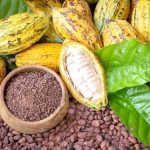
Cocoa is Ghana’s signature export and remains a major contributor to GDP and government revenue. The industry supports around 800,000 farming families across 10 of the country’s 16 regions and generates approximately US$2 billion in foreign exchange annually. Production is concentrated in the rainforest and deciduous-forest zones—Western, Western North, Ashanti, Eastern, and Central, with newer plantings in Bono, Ahafo, and Oti.Ghana politics analysis
Output has been turbulent in recent years. From a peak of around 1.04 million tonnes in 2020/21, production fell to roughly 531,000 tonnes in 2023/24—the worst season in two decades—under the combined pressure of disease, adverse weather, ageing trees, illegal mining, and financing constraints. However, a recovery is now under way: 2024/25 output is estimated at about 600,000 tonnes, and COCOBOD targets some 650,000 tonnes for 2025/26, with the USDA forecasting up to 750,000 tonnes.
The processing opportunity is unusually clear. Ghana has installed grinding capacity of roughly 505,000 tonnes, yet local processors typically operate at below half of it because beans are diverted to raw export; only around 18-22% of the crop is processed at home . Where value addition has been backed, the returns are striking: cocoa-paste exports alone are reported to have reached some US$789 million in 2025, up over 70% year-on-year, helping lift total cocoa-sector earnings to around US$3.7 billion.
With duty-free access to several major markets now opening and the EU Deforestation Regulation (in force from end-2025) rewarding traceable, deforestation-free origins, the premium for compliant, processed Ghanaian cocoa is rising. International partners such as Barry Callebaut, Lindt & Sprüngli (both Switzerland), Cargill, and Olam (both Netherlands) have expressed interest in establishing chocolate manufacturing and cocoa-butter extraction facilities in Ghana.
Investment Opportunity: €50-150 million per facility | Expected Jobs: 2,000-3,000 per facility | Key Districts: Sefwi Wiawso, Asunafo North, Amenfi West
Cashew: Rapid Scaling of Processing
Cashew is Ghana’s leading non-traditional agricultural export earner and a fast-growing rural livelihood, supporting an estimated 300,000 farmers and a further 200,000 people in aggregation, transport, and processing. Production—in the order of 85,000 to 140,000 tonnes of raw nuts a year—is concentrated in the transitional belt of Bono, Bono East, and Ahafo, with expansion into the Northern Region.Ghana politics analysis
The value leakage is acute: more than 90% of the crop is exported raw, principally to Vietnam and India for processing, and Ghana’s installed kernel-processing capacity of around 65,000 tonnes (across roughly fourteen plants, of which about ten are active) processes under 10% of national output—an estimated 15,000 tonnes in 2025. The Tree Crops Development Authority (TCDA) judges that, with proper regulation, value addition, and export facilitation, the sector could move from current export earnings of roughly US$300 million towards US$660 million a year, and the Government has signalled the creation of a dedicated Cashew Development Board.
The opportunity extends beyond kernel processing. Cashew shell liquid (CNSL), a by-product of kernel extraction, has significant industrial applications in adhesives, resins, and specialty chemicals. Currently, most CNSL is either wasted or exported raw. Establishing CNSL extraction and refining capacity in Ghana could create an entirely new value stream.
International partners such as Vinacas and Tan Binh (Vietnam), Olam Agro (India), and SITA (Ivory Coast) have signalled interest in establishing advanced kernel-processing and CNSL-extraction facilities in Ghana, with investment commitments in the range of US$75-170 million.
Investment Opportunity: $75-170 million per facility | Expected Jobs: 3,000-4,000 per facility | Key Districts: Wenchi, Techiman, Jaman North/South
Shea: Cosmetics and Specialty Fats
Often called “the cocoa of the north,” shea is a uniquely inclusive commodity: it grows wild across an estimated 94 million trees in the five northern regions (Northern, North East, Savannah, Upper East, and Upper West) and is harvested and first-processed overwhelmingly by rural women. Annual output is in the region of 130,000 to 150,000 tonnes of nuts, valued at around US$118 million, and Ghana ranked as the world’s leading exporter of shea butter in 2023.Ghana politics analysis
Yet only 30-40% of the crop is processed domestically. Installed processing capacity already exceeds 300,000 tonnes, but commercially utilised local volume is closer to 90,000 tonnes—a wide structural gap, with raw nuts shipped to multinational refiners abroad. Demand is strong and growing: the global shea-butter market is valued at roughly US$2.75 billion and is projected to approach US$5.6 billion by 2033, driven by food, cosmetics, and pharmaceutical uses.
The Government plans to triple production towards 400,000 tonnes, to move against raw-nut exports, and to develop a parallel income stream from carbon credits on the shea parklands. International partners such as L’Oréal and Clarins (France), BASF (Germany), and Bunge Loders (Netherlands) have expressed interest in establishing cosmetic-grade shea-butter processing facilities in Ghana, with investment commitments in the range of €110-220 million.
Investment Opportunity: €110-220 million per facility | Expected Jobs: 2,500-3,500 per facility | Key Districts: Tamale, West Gonja, Wa Municipal
Poultry: Import Substitution and Integrated Farming
Poultry represents the clearest single import-substitution play in the livestock sector. Ghana consumes an estimated 500,000-600,000 tonnes of poultry meat annually but produces only about 150,000-200,000 tonnes domestically—roughly one-third of demand—importing the balance at a cost of approximately US$400-500 million annually.
The opportunity for import substitution is substantial. International partners such as Marel and Pas Reform (Netherlands), BRF and JBS (Brazil), and Tyson Foods (USA) have signalled interest in establishing integrated poultry farming operations in Ghana, combining feed production, hatchery operations, farm management, and processing facilities. These operations would be designed to supply both domestic demand and regional export markets.Ghana politics analysis
Investment Opportunity: $160-350 million per facility | Expected Jobs: 5,000-7,000 per facility | Key Districts: Dormaa Central, Kumasi Metropolitan, Sunyani
Aquaculture: RAS Technology and Fish Processing
Aquaculture represents a rapidly growing opportunity, particularly with the adoption of Recirculating Aquaculture Systems (RAS) technology, which allows for intensive, land-efficient fish farming with minimal environmental impact. International partners such as Mowi and Skretting (Norway), AquaMaof (Israel), and CPF (Thailand) have signalled interest in establishing RAS-based tilapia and catfish farming operations in Ghana, with processing facilities for both fresh and value-added products.
Lake Volta, the world’s largest artificial lake by surface area, represents a particular opportunity for extensive aquaculture development. However, the initiative also encompasses land-based RAS systems, which offer advantages in terms of environmental control and disease management.
Investment Opportunity: $110-220 million per facility | Expected Jobs: 2,000-3,000 per facility | Key Districts: Asuogyaman, South Tongu, Kpando
Rice and Grains: Modern Milling and Storage
Rice is a fast-growing staple and a persistent drain on foreign exchange. Domestic production meets only around half of national requirement—consumption is estimated at 1.45 to 1.8 million tonnes of milled rice—and imports of milled rice rose by some 77% between 2021/22 and 2024/25, to around 1.1 million tonnes . Paradoxically, more than 200,000 tonnes of local paddy and milled rice have at times gone unsold, reflecting weaknesses in milling, grading, storage, and market access rather than in production capacity itself.
The opportunity lies in establishing modern milling facilities with integrated storage, quality control, and market-access infrastructure. International partners such as CP Group (Thailand), Loc Troi (Vietnam), and JICA (Japan) have signalled interest in establishing advanced rice-milling and storage facilities in Ghana.Ghana politics analysis
Investment Opportunity: $70-140 million per facility | Expected Jobs: 1,500-2,500 per facility | Key Districts: Kassena Nankana, Ejura Sekyedumase, Northern Region
Horticulture: Fruit Processing
Ghana produces significant quantities of tropical fruits—pineapple, mango, papaya, passion fruit—yet most are either consumed domestically or exported fresh. Establishing juice, puree, and concentrate processing facilities would unlock significant value addition. International partners such as CFT and Del Monte (Italy), Dole (Thailand), and Rhodes Food (South Africa) have signalled interest in establishing fruit-processing facilities in Ghana.
Investment Opportunity: €85-170 million per facility | Expected Jobs: 1,500-2,500 per facility | Key Districts: Nsawam Adoagyiri, Yilo Krobo, Komenda
PART FOUR: IMPLEMENTATION AND EXPECTED OUTCOMES
The Implementation Framework
The implementation of the Agro-Industrial Twinning Initiative is structured in five phases, designed to move from partner identification to full operational capacity within 18-24 months:
Phase 1: Partner Identification & Engagement. Formal outreach to international partners, investment missions, and tailored partnership proposals. This phase involves identifying and engaging potential partners, conducting preliminary discussions, and developing initial partnership concepts aligned with each district’s comparative advantage.
Phase 2: Feasibility & Due Diligence. Joint feasibility studies, supply chain assessment, and infrastructure evaluation. This phase involves detailed technical and financial analysis to ensure that proposed partnerships are economically viable and operationally feasible.
Phase 3: MOU Signing & Negotiation. Finalize agreements, negotiate investment terms, and establish governance structures. This phase involves formal commitment from both Ghanaian and international partners, with clear terms regarding investment, technology transfer, employment, and market access.Ghana politics analysis
Phase 4: Project Development & Approvals. Secure financing, conduct engineering assessments, and establish management teams. This phase involves detailed project planning, environmental and social impact assessments, and securing all necessary regulatory approvals.
Phase 5: Implementation & Commercial Operations. Construct facilities, install equipment, and begin commercial operations. This phase involves physical construction, equipment installation, workforce training, and the commencement of commercial production.
Expected Economic Outcomes
The initiative projects a total investment potential of US$1.5-3.0 billion, with an expected creation of 50,000-100,000 direct and indirect jobs. Annual export growth is estimated at US$500 million to US$1 billion, alongside a US$300-600 million reduction in annual import bills.
These projections are grounded in conservative assumptions about adoption rates and processing efficiency. They assume that approximately 30-40% of Ghana’s strategic commodity production is processed domestically within five years—a significant increase from current levels but well below the 70-80% processing rates achieved in comparable countries such as Ivory Coast and Vietnam.
Beyond direct economic impacts, the initiative is expected to generate substantial capacity-building benefits. Technology transfer in modern agro-processing, skills development for 10,000+ workers, strengthening of farmer cooperatives, and improvements in supply chain integration will create durable competitive advantages for Ghana’s agricultural sector.Ghana politics analysis
Regional Development Impact
The initiative is designed to ensure balanced geographic development across all 16 regions of Ghana. By identifying specific commodities and specific districts as the focus for partnership development, the initiative ensures that agro-industrial investment is not concentrated in a few regions but is distributed across the country in alignment with each region’s comparative advantage.
Infrastructure improvements in rural and semi-urban areas, enhanced market access for smallholder farmers, adoption of sustainable agricultural practices, and reduced rural-urban migration through job creation are expected to strengthen local economies and community resilience across Ghana.
PART FIVE: CHALLENGES, RISKS, AND MITIGATION STRATEGIES
Climate Change and Environmental Risks
Ghana’s agricultural sector faces increasing pressure from climate change, with rising temperatures, shifting rainfall patterns, and more frequent extreme weather events threatening crop yields and livestock productivity. The Agro-Industrial Twinning Initiative addresses this challenge through several mechanisms: promoting climate-smart agricultural practices, investing in irrigation infrastructure to reduce rainfall dependence, and supporting farmer training in climate adaptation.
International partners bring expertise in climate-resilient production systems, precision agriculture, and water management that can significantly improve the sector’s ability to adapt to climate change. However, climate risk remains a material consideration in project evaluation and requires ongoing monitoring and adaptive management.
Commodity Price Volatility
Global commodity prices for cocoa, cashew, shea, and other products are subject to significant volatility, driven by global supply and demand dynamics, currency movements, and speculative trading. This volatility creates risk for both Ghanaian producers and international processors.Ghana politics analysis
The initiative addresses this through several mechanisms: diversification across multiple commodities and value chains, development of long-term supply contracts between processors and farmer groups, and investment in value-added products (such as cocoa paste, processed cashew kernels, and cosmetic-grade shea butter) that command more stable prices than raw commodities.
Infrastructure and Logistics Gaps
While the Government’s infrastructure investment programme is substantial, significant gaps remain in road quality, port capacity, and logistics infrastructure. These gaps can increase costs and reduce competitiveness for agro-processing operations.
The initiative addresses this through targeted investment in agro-industrial zones with integrated infrastructure, prioritization of infrastructure development in zones identified for partnership development, and coordination with the “Big Push” infrastructure programme to ensure that transport corridors and port capacity are aligned with agro-processing development.
Land Access and Tenure Security
Land access and tenure security remain challenges in many parts of Ghana, with unclear property rights and competing claims creating uncertainty for long-term agricultural investments. The initiative addresses this through the Farm Banks mechanism, which provides secure access to land and irrigation within designated agricultural zones, and through strengthened coordination with district land authorities.
Regulatory and Institutional Capacity
Successful implementation of the initiative requires strong regulatory oversight, environmental and social impact management, and coordination across multiple government agencies. Building institutional capacity to manage these functions effectively is an ongoing challenge.
The initiative addresses this through establishment of a dedicated coordination unit within GIPC, capacity building for district-level staff, and engagement of international development partners to provide technical support and best-practice guidance.
PART SIX: INTERNATIONAL CONTEXT AND COMPARATIVE ADVANTAGE
Learning from Regional Precedents
Ghana’s agro-industrial strategy is informed by the experiences of other African nations that have successfully scaled agro-processing. Ivory Coast, the world’s largest cocoa producer, has invested heavily in cocoa-processing capacity and now processes approximately 35-40% of its cocoa production domestically, compared to Ghana’s 18-22%. This has created a significant competitive advantage: Ivory Coast captures higher value margins and has developed a thriving domestic chocolate and cocoa-products industry.Ghana politics analysis
Vietnam has transformed itself from a cashew-importing nation to the world’s largest cashew processor, handling over 80% of global cashew processing. This transformation was driven by strategic investment in processing infrastructure, technology development, and supply chain integration. Ghana has the potential to follow a similar trajectory, leveraging its position as a major cashew producer and its proximity to West African markets.
Brazil has developed an integrated poultry industry that is now a global leader in poultry production and export, with companies such as JBS and BRF operating across the entire value chain from feed production to processing to distribution. Ghana’s agro-industrial strategy explicitly aims to replicate this integrated model in the poultry sector.
Global Trends Favouring Value Addition
Several global trends are creating tailwinds for Ghana’s agro-industrial strategy. First, there is a global trend towards supply-chain localization and diversification, driven by recognition of the risks associated with concentrated supply chains. The COVID-19 pandemic and subsequent supply-chain disruptions have accelerated this trend, with multinational companies actively seeking to diversify their sourcing geographies.
Second, there is growing demand for traceable, certified, sustainable products, particularly in developed markets. Ghana’s strong environmental governance and commitment to deforestation-free agriculture position it well to capture premium markets for certified products.
Third, the AfCFTA is progressively removing trade barriers across Africa, creating unprecedented market access for processed goods. This creates a powerful incentive for African nations to invest in processing capacity, as the economics of exporting processed goods to regional markets are materially better than exporting raw commodities to global markets.
Fourth, there is growing recognition among development partners and multilateral institutions that agricultural transformation is central to African economic development. This is reflected in increased financing for agro-industrial development through institutions such as the African Development Bank, the World Bank, and bilateral development agencies.
PART SEVEN: CONCLUSION AND OUTLOOK
The Strategic Imperative
Ghana’s Agro-Industrial Twinning & International Partnership Initiative represents a sophisticated, evidence-based response to a fundamental economic challenge: the need to move from raw commodity dependence to value-added agro-industrial production. The initiative is grounded in compelling economics, backed by robust government policy support, and aligned with global market trends and continental trade opportunities.Ghana politics analysis
The opportunity is substantial. An estimated US$1.5-3.0 billion in investment, 50,000-100,000 jobs, and US$500 million to US$1 billion in annual export growth represent transformative potential for Ghana’s economy. Yet these figures represent only the direct impacts; the indirect effects—technology transfer, skills development, supply chain integration, and institutional strengthening—may prove even more significant in the long term.
The Path Forward
Successful implementation of the initiative will require sustained commitment from multiple stakeholders: the Government of Ghana must maintain policy support and infrastructure investment; international partners must commit capital and technology; Ghanaian farmers and cooperatives must adopt improved practices and quality standards; and development partners must provide technical support and financing.
The first wave of partnerships is likely to focus on commodities with the clearest value-addition opportunities and strongest international demand: cocoa, cashew, and shea. Success in these sectors will build momentum and demonstrate the viability of the model, creating conditions for expansion into poultry, aquaculture, rice, and horticulture.
The Broader Vision
Beyond the immediate economic benefits, the Agro-Industrial Twinning Initiative represents a broader vision of Ghana’s role in the global economy. Rather than remaining a supplier of raw commodities, Ghana aspires to become a regional agro-industrial hub, capturing value through processing, branding, and distribution, and serving not only domestic markets but also the rapidly growing markets of West Africa and the broader African continent.
This vision is ambitious but achievable. Ghana possesses the natural endowments, the policy framework, the institutional capacity, and the geographic position to succeed. What is required is sustained commitment, strategic patience, and a willingness to learn from both successes and setbacks as the initiative is implemented.Ghana politics analysis
The “Golden Age of Agriculture” in Ghana may finally be at hand. For investors, policymakers, and development partners, the Ghana Agro-Industrial Twinning Initiative represents a compelling opportunity to participate in one of Africa’s most significant economic transformation efforts. For Ghana itself, it represents a pathway to sustainable, inclusive, and transformative economic growth.