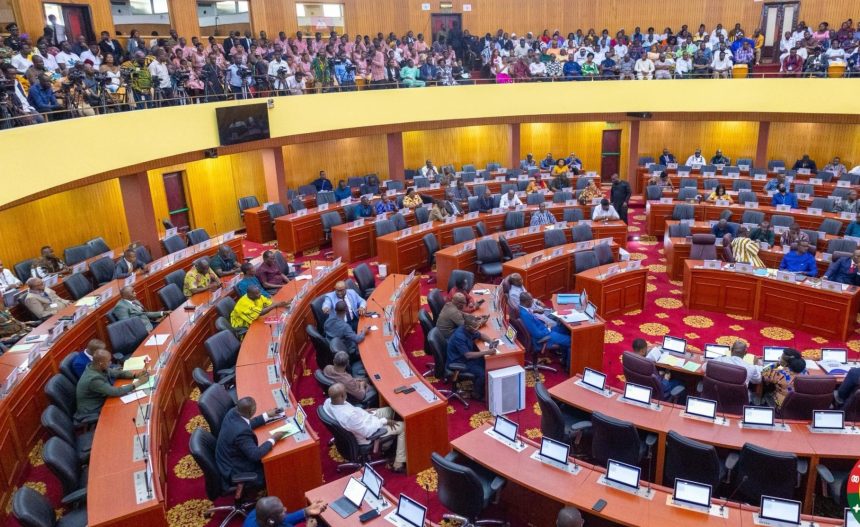
The recent approval of the Public Tribunals Bill by Parliament has reignited discussions regarding the reestablishment of a justice system that was prevalent during the Provisional National Defence Council (PNDC) era, with legal experts expressing differing opinions on its potential consequences.
This bill, which received approval this week following deliberation by the Committee on Constitutional, Legal and Parliamentary Affairs, facilitates the reintroduction of public tribunals in Ghana.
While government representatives contend that the new tribunals will offer a quicker and more effective means of addressing specific cases, certain legal professionals have voiced concerns regarding their historical ties to the PNDC period.
During a segment on the Current Agenda political talk show on Saturday, July 18, Private Legal Practitioner Nii Wiabo Nunoo Esq. remarked that the legacy of public tribunals is intricately connected to the PNDC era, a time when the system was criticized for its alleged lack of judicial independence.
“The history of public tribunals is closely linked to the PNDC era, and it was not free from criticism. Critics argued that they lacked judicial independence and that rather than prosecuting, they were persecuting,” he said.
Public tribunals were instituted under PNDC Law 24 in 1982 and functioned alongside the regular courts, addressing cases related to economic crimes, corruption, and offenses against the state.
Nevertheless, opponents of the system at that time raised alarms about summary trials, restricted avenues for appeals, and perceived political influence over certain rulings.
Conversely, proponents of the new legislation assert that the proposed tribunals will function distinctly from those that were established under the PNDC administration.
The Chief Executive Officer of the Ghana Investment Fund for Electronic Communications (GIFEC) and Deputy Director of Elections of the National Democratic Congress (NDC), Rashid Tanko Computer, defended the bill’s passage, asserting that the new tribunals are intended to tackle contemporary justice challenges.
“The tribunals that happened during the PNDC era are not what is going to happen now. In fact, every Ghanaian must be happy it is coming back,” he said.
Mr. Tanko Computer elaborated that the reinstated tribunals would alleviate the burden on the conventional courts and facilitate faster access to justice for particular types of cases that pertain to public interest and state issues.
The discussion surrounding the Public Tribunals Bill persists as stakeholders assess how the new structure will reconcile the need for expedited justice with the principles of judicial independence and the safeguarding of citizens’ rights.