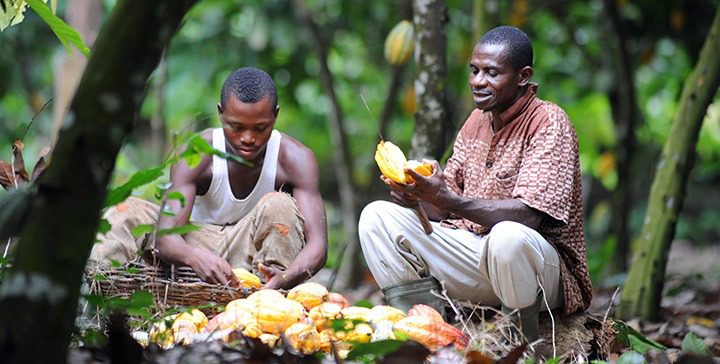
The Ghana Cocoa Board (COCOBOD) has announced plans to roll out a scholarship programme for children of cocoa farmers pursuing tertiary education, beginning with the 2026/2027 academic year.
The initiative is part of a broader package of reforms aimed at improving the welfare of cocoa farming households while promoting the long-term sustainability and growth of Ghana’s cocoa industry.
The announcement was made during COCOBOD’s nationwide sensitisation campaign on the reintroduced Free Fertiliser and Agro-Inputs Distribution Programme and other policy interventions being introduced across the cocoa sector.
According to the Board, the scholarship scheme is intended to ease the financial burden on cocoa farming families and expand access to higher education for their children.
As part of the nationwide outreach campaign, farmers are being educated on the eligibility requirements and objectives of the scholarship programme alongside other reforms designed to increase cocoa production and improve farm management.
The sensitisation exercise is being carried out by COCOBOD’s Public Affairs Department in partnership with the Cocoa Pest and Disease Control (CODAPEC) Unit under the Cocoa Health and Extension Division (CHED).
The campaign has already begun in the Western South and Ashanti Regions and will gradually be extended to all cocoa-growing communities across the country.
In addition to introducing the scholarship initiative, COCOBOD is using the engagement sessions to educate farmers on the reintroduced Free Fertiliser and Agro-Inputs Distribution Programme, which is expected to improve farm productivity, reduce production costs and support sustainable cocoa cultivation.
COCOBOD said placing farmers at the centre of policy implementation remains critical to achieving lasting reforms in the cocoa industry.
Through regular engagement, transparent information sharing and continuous dialogue with farming communities, the Board believes farmers will be better equipped to benefit from the new programmes and contribute to the transformation of Ghana’s cocoa sector.