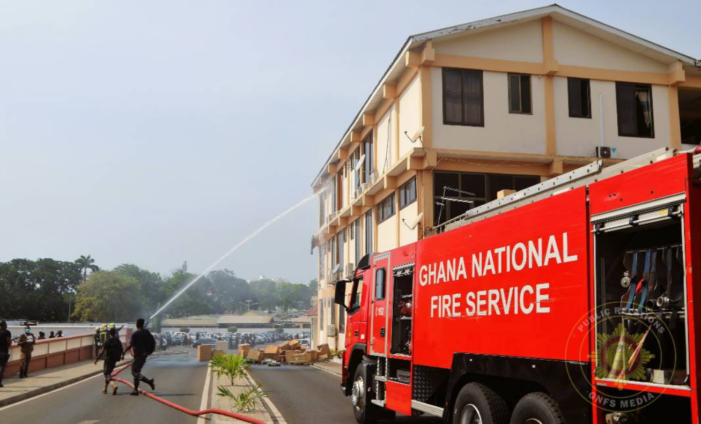
The Ghana National Fire Service (GNFS) has raised concerns about fire safety compliance within the Kpone industrial enclave, warning that a major fire outbreak in the area could have serious consequences for Ghana’s energy sector and economy.
Divisional Officer II (DO II) Ebenezer Yenzu, Tema Regional Public Relations Officer of the GNFS, said the enclave is home to several critical state-owned and private facilities, including power generation, oil, and gas installations, making it one of the country’s most strategic industrial zones.
Speaking at an intersectoral review meeting organised by the Kpone-Katamanso Municipal Assembly (KKMA), he highlighted key facilities in the enclave, including the Sunon Asogli Power Plant, Quantum LPG, and Quantum Oil.
He described the area as a major industrial hub with significant fire risks.
According to him, any failure by operators to comply with safety regulations could lead to a major industrial disaster with nationwide repercussions.
“A major fire incident within the enclave could result in catastrophic shortages of oil and gas products and significantly affect electricity generation across the country,” he warned.
DO II Yenzu said the GNFS has intensified inspections and enforcement measures in the enclave to ensure facilities comply with fire safety standards and emergency preparedness requirements.
He explained that the Service is working closely with operators to identify potential hazards, improve preventive measures, and minimise the risk of industrial fires.
Providing data on fire incidents in the region, he revealed that the Tema Region recorded 318 fire outbreaks between January and April 2026.
He added that nearly a quarter of those incidents occurred within the Kpone-Katamanso Municipality, which is served by four fire stations located at Katamanso, Akuse, the Industrial Area, and Community 25.
The GNFS officer urged industries and businesses in the enclave to prioritise safety compliance, staff training, and regular maintenance of fire prevention systems to protect lives, property, and critical national infrastructure.