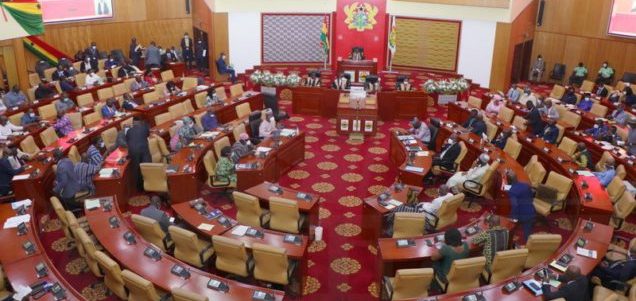
Parliament resumes sitting today, Thursday, May 21, 2026, starting the Second Meeting of the Second Session of the Ninth Parliament of the Fourth Republic.
Members of Parliament are expected to discuss several important bills and policy changes affecting different sectors of the economy.
Majority Chief Whip Rockson-Nelson Dafeamekpor said Parliament has a busy agenda covering areas such as transport, energy, justice, security, and governance reforms.
According to him, Parliament will look at the Maritime and Related Offences Bill after the Transport Committee presents its report for the second reading.
Lawmakers are also expected to review reports on road traffic regulations and air service agreements between Ghana and countries including Luxembourg, Qatar, Saudi Arabia, and the United Arab Emirates.
“We expect to receive the Maritime and Related Offences Bill from the Committee on Transport because it’s been moved, the first reading done and referred to the committee to bring a report for the second reading,” he stated.
On energy matters, Parliament is expected to discuss plans to review laws governing the National Petroleum Authority. MPs will also debate private sector involvement in electricity distribution, the proposed Nuclear Power Corporation Bill 2026, and plans to create a Renewable Energy Authority.
“We want to establish a statutory entity that will coordinate renewable energy issues like solar and wind,” the South Dayi MP explained.
Mr. Dafeamekpor also revealed that the Interior Ministry will present a Community Service Bill aimed at reducing overcrowding in prisons by allowing people who commit minor offences to serve non-custodial punishments instead of going to jail.
Parliament will also discuss changes to the National Identity Register law, prison parole regulations, and a new law aimed at improving cooperation among security agencies.
“There have been complaints about activities of security operatives so the new legislation is to take care of that,” he added.
In addition, MPs are expected to consider a proposed Code of Conduct Bill to strengthen rules on asset declaration and ethical behaviour among public officials.
CI 47, which deals with civil procedures in the High Court, will also be reviewed to combine the many amendments made over the years into one updated legal framework.
“There have been so many amendments we think it’s time to consolidate these issues into a new procedure code,” he said.