A policy think tank, the Institute of Economic Research and Public Policy (IERPP), has accused the government of presiding over what it describes as the politicisation and capture of Ghana’s natural resources, alleging that key mining assets have been handed to politically connected individuals, including relatives of the President.
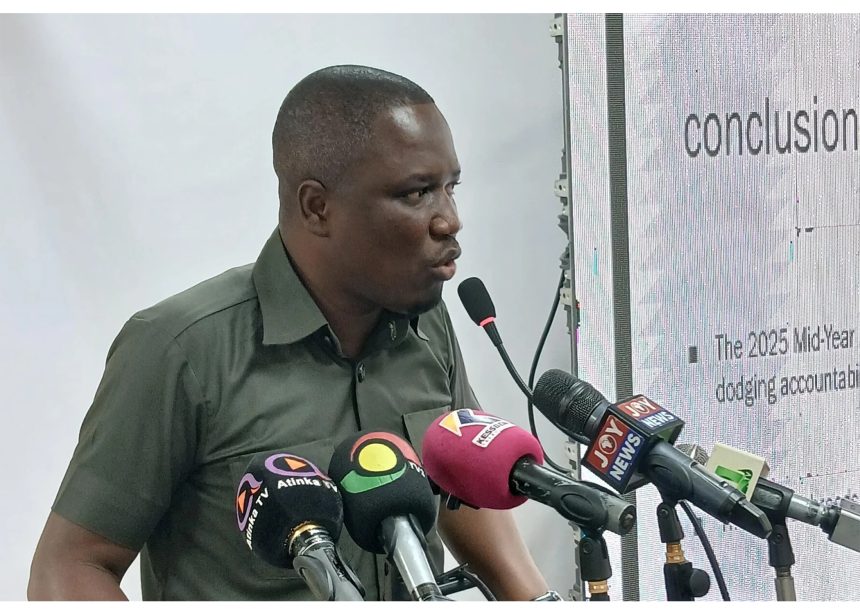
At a press conference in Accra, Senior Research Fellow Dr. Frank Bannor criticised what he termed a growing pattern of elite control over the extractive sector.
According to him, the situation reflects a broader governance failure where state institutions appear reluctant to act decisively.
“The President’s brother got the mines. Civil society got very busy doing nothing. Ghana has mastered a new form of governance: announce concern, form a committee, and protect them,” Dr. Bannor stated.
Expanding on the issue, he further alleged that the allocation of mining concessions has increasingly favoured politically exposed persons rather than being guided by transparency and national interest.
“What we are witnessing is a system where Ghana’s natural resources are being concentrated in the hands of a few individuals with close ties to political power, undermining accountability and fairness in the sector,” he added.
The IERPP argued that such developments not only weaken public trust but also risk deepening the country’s long-standing challenges with illegal mining, popularly known as galamsey.
The institute has consistently warned that the fight against illegal mining must be led by the government and not deflected onto other actors.
Dr. Bannor stressed that the state cannot abdicate its responsibility in regulating the mining sector, noting that effective oversight is essential to safeguarding both the environment and economic sustainability.
He warned that failure to act decisively could have far-reaching consequences for key sectors, including agriculture, which is already under threat from mining activities.
The IERPP is therefore calling for greater transparency in the allocation of mining licenses, stricter enforcement of regulations, and an independent review of existing concessions to ensure they serve the national interest.