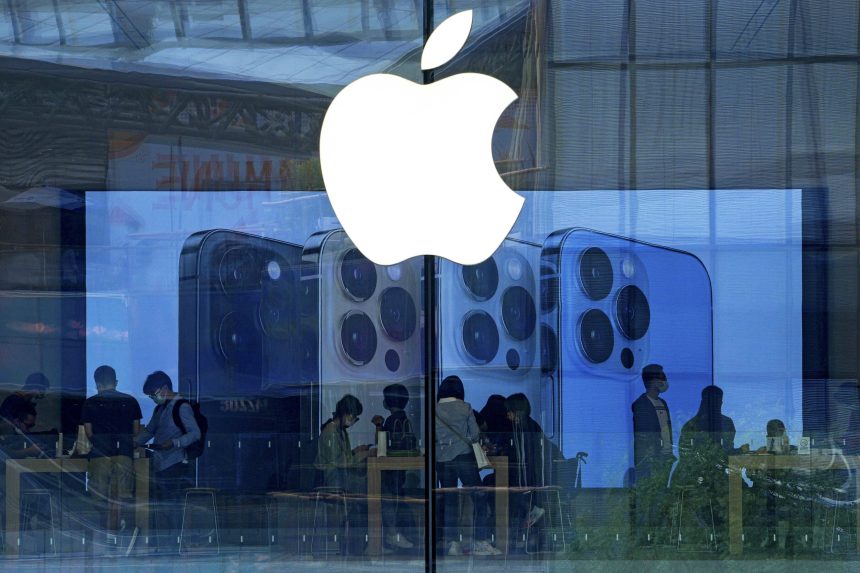
Apple has agreed to pay up to $250 million (£184 million) to settle a lawsuit brought by some iPhone buyers.
The lawsuit claimed the company misled customers about new artificial intelligence (AI) features on its devices.
On Tuesday, May 5, Apple filed the settlement in a federal court in California. The company did not admit any wrongdoing but chose to resolve the issue through this agreement.
The case combined several similar complaints into one large class action lawsuit filed last year.
The lawsuit argued that Apple falsely advertised its AI features, which it branded as Apple Intelligence. These features included improvements to its Siri voice assistant.
Under the settlement, Apple will pay between $25 and $95 to customers in the United States who purchased an iPhone 15 or iPhone 16 between June 2024 and March 2025.
An Apple spokesperson explained that the case mainly focused on “the availability of two additional features” among many included in the Apple Intelligence rollout.
She said, “We resolved this matter to stay focused on doing what we do best, delivering the most innovative products and services to our users.”
Last week, lawyers representing the group of iPhone buyers updated their complaint. They argued that Apple’s marketing of its AI features was misleading.
“Apple promoted AI capabilities that did not exist at the time, do not exist now, and will not exist for two or more years, if ever, all while marketing them as the breakthrough innovation,” the lawyers wrote.
They also claimed that Apple pushed these AI campaigns to keep up with competition in the tech industry, especially from newer companies like OpenAI and Anthropic.
Over the years, critics have questioned outgoing CEO Tim Cook about whether Apple continues to innovate enough with its products.
The lawyers further alleged that Apple misrepresented its Apple Intelligence features. They said the company promised a more advanced Siri that could evolve from a “limited voice interface into a full-fledged personal AI assistant”. However, they argued this did not happen.
“The iPhone 16 was delivered to consumers without “Apple Intelligence,” and Enhanced Siri never came,” the lawyers wrote.