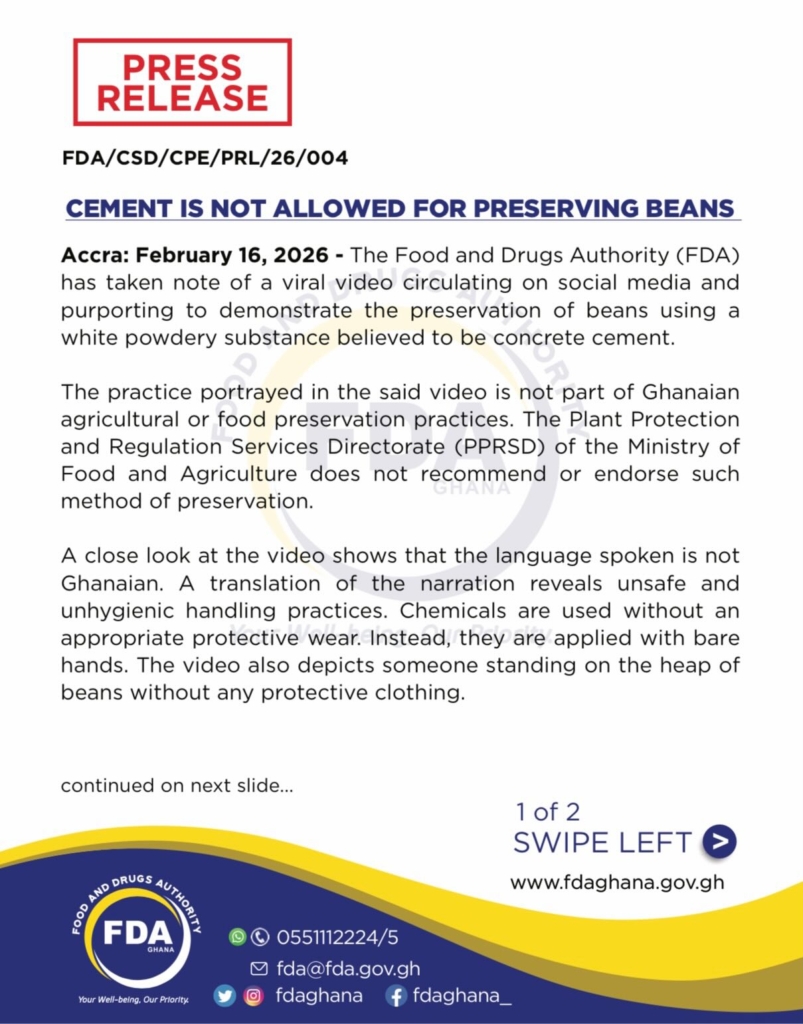

The Food and Drugs Authority (FDA) has reassured the public that a widely circulated video showing beans allegedly being treated with a white powder suspected to be cement did not originate from Ghana, based on its preliminary investigations.
The video, which caused widespread concern on social media, shows individuals walking over large piles of beans, pouring a powdery substance onto them, and mixing it through the grains, reportedly as a method of preservation.
In a statement issued in Accra on February 16, 2026, the FDA emphasised that the practices shown are not part of Ghana’s approved food handling standards and are neither recognised nor permitted in the country.
The Authority also reaffirmed its commitment to safeguarding public health and ensuring food safety throughout the country.
“Our preliminary review indicates that the language spoken in the video is not Ghanaian, and the procedures depicted fall far below acceptable food safety standards,” the authority said.
The regulator highlighted serious breaches of hygiene and safety in the video, including individuals handling beans with bare hands, applying chemicals without protective equipment, and standing directly on the produce.
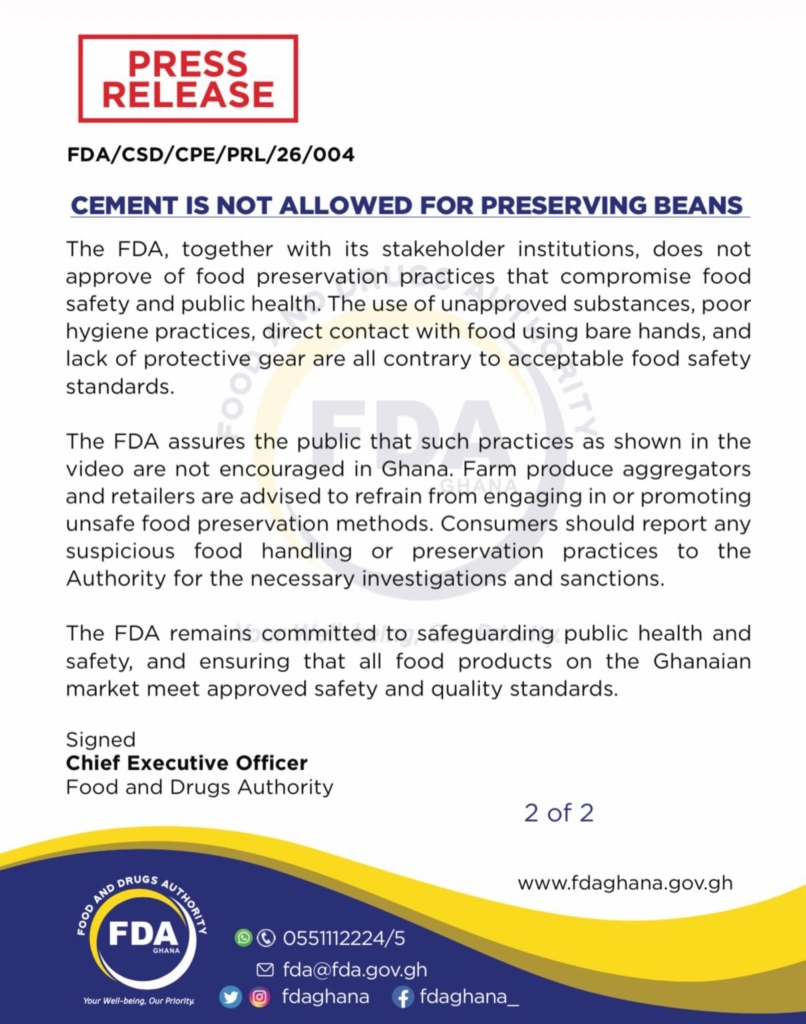
“Such actions compromise food safety and public health. The FDA, together with its stakeholder institutions, does not approve of preservation practices that put consumers at risk,” the statement added.
The FDA reassured the public that the unsafe preservation methods shown are not part of any approved agricultural practice in Ghana.
“Consumers should not associate these practices with our local food systems. Farm produce aggregators and retailers are urged to adhere strictly to approved methods, and the public should report any suspicious food handling activities,” the authority advised.
Reaffirming its commitment, the FDA promised to safeguard public health and ensure that all food products on the Ghanaian market meet established safety and quality standards.
Below is the full statement