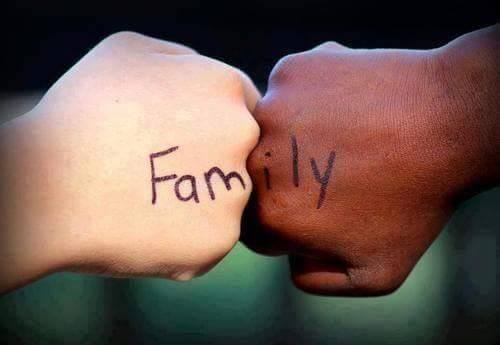
Ghana has made significant progress in fostering a nation where Christians, Muslims and people of other faiths coexist, work, worship and celebrate together.
Our religious diversity has, for the most part, been a source of strength rather than division. It is, therefore, concerning when statements from some religious leaders threaten to undermine this cherished tradition of peaceful coexistence.
Recent comments attributed to an Islamic cleric, reportedly advocating for the beheading of anyone who insults or describes Prophet Muhammad as a false prophet, have understandably generated public concern.
The subsequent apology is welcome, but the incident serves as a stark reminder of the immense responsibility that accompanies religious authority.
Similarly, comments attributed to Prophet Isaac Owusu Bempah, opposing the presidential ambitions of Dr Mahamudu Bawumia on religious grounds, have also sparked considerable public debate.
Religious leaders, like all Ghanaian citizens, are entitled to their political opinions.
However, when political preferences are presented through religious authority in a manner that suggests a person’s faith should determine their suitability to lead Ghana, we must pause and reflect.
Dormant Account Notice
The question we should ask is simple: Is Ghana’s presidency a religious office?
The answer is no.
Ghana is a constitutional democracy. The President is the President of all Ghanaians—Christians, Muslims, traditional believers, and those who profess no religion.
Our choice of national leaders should be determined by their competence, integrity, vision, character, leadership capacity, and commitment to the welfare of all citizens, rather than their religious identity.
Lessons
Interestingly, the Bible itself offers important lessons on this matter.
In Acts 10:34–35, Peter declares: “I now realise how true it is that God does not show favouritism but accepts from every nation the one who fears him and does what is right.”
The message is clear: God is not confined by the boundaries we create around ourselves.
Furthermore, 1 Samuel 16:7 reminds us that “people look at the outward appearance, but the Lord looks at the heart.”
When choosing David, God did not simply follow human expectations; God looked beyond appearance and saw the heart.
Even 1 Corinthians 1:26 reminds believers that God’s choice does not necessarily follow human calculations of status, prominence or social standing.
Our political choices, therefore, should not devolve into a contest between Christianity and Islam.
Ghana does not need a Christian President merely because Christians constitute the majority, nor does it need a Muslim President simply because Muslims are citizens.
Ghana needs a good President.
Perhaps one of the most beautiful examples of Ghana’s interfaith tradition is the life and ministry of the National Chief Imam, Sheikh Usmanu Nuhu Sharubutu.
A Muslim leader, he contributed GH¢50,000 towards the construction of the National Cathedral, a Christian project.
During celebrations of his 100th birthday in 2019, he also worshipped with the Catholic community at Christ the King Catholic Church in Accra.
These gestures demonstrated something far more powerful than religious rhetoric: respect for one another.
That is the Ghana we should preserve.
Our churches employ Muslims.
Our mosques have Christian friends and neighbours.
Christians and Muslims attend the same schools, work in the same offices, serve in the same security services, trade in the same markets, and belong to the same families.
At Christmas, Muslims often greet Christians.
During Ramadan, Christians express solidarity with Muslims.
This is Ghana at its best.
Religious leaders, therefore, bear a special responsibility.
Their words can heal or divide; they can calm or inflame; they can build bridges or erect walls.
I am not advocating religious leaders to remain silent on national issues. Far from it.
Ghana needs the prophetic voice of the Church and the moral voice of the mosque. However, those voices must promote justice, peace, truth, tolerance, and the common good.
We must disagree without demonising one another.
We must compete politically without turning religion into a weapon.
We must preach our faith without teaching our followers to despise another person’s faith.
Ghana has come too far to allow reckless religious rhetoric to threaten the peace we have enjoyed for generations.
Let our religious leaders remind us of what unites us rather than what separates us.
We are Christians.
We are Muslims.
We belong to different faith traditions.
But above all, we are Ghanaians.
We are one people, one nation, and one destiny.
The writer is a Minister of the Presbyterian Church of Ghana, former Public Relations Officer of the Church, journalist, Public Relations Practitioner, and PhD student of the University of South Africa.
The writer is a minister of the Presbyterian Church of Ghana/a Ph.D candidate at the University of South Africa.