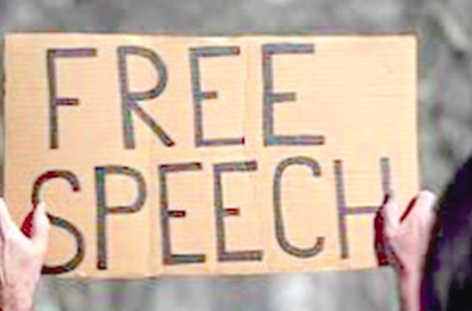
This is clear and unambiguous: freedom of speech in Ghana is protected under Article 21(1)(a) of the 1992 Constitution, which states that “all persons shall have the right to freedom of speech and expression.” Ghanaian crude oil
However, the Constitution equally recognises that rights are not absolute. Article 164 provides that such freedoms are subject to laws required in the interest of public order, public morality, national security, and the rights and freedoms of others.
That distinction matters.
Because somewhere along the line, we appear to have mistaken freedom for licence, rights for entitlement, and expression for recklessness.
For some time now, I have struggled to understand how we have allowed our moral standards to descend to such troubling levels that open disrespect, insults, and even threats against leaders are no longer condemned with the seriousness they deserve, but are increasingly normalised and, in some circles, applauded.
Recently, I raised this concern on one of my old school platforms after watching a disturbing social media commentary by a young lady who openly insulted the President and, even more alarmingly, made statements perceived as threatening his life and calling for his assassination.
But beyond her comments, what unsettled me most was the reaction that followed.
Breakfast meeting Q2
Suddenly, a chorus of voices emerged in her defence, invoking “freedom of speech” as though the phrase had become a universal passport for every form of reckless expression.
More disturbing was seeing elderly people and political actors rushing to her defence after her arrest.Politics
That, unfortunately, did not surprise me.
It has become increasingly common for politicians to defend what they know is wrong if they believe it can earn them sympathy, headlines, or votes.
The script is familiar: defend today, exploit tomorrow, and forget thereafter. Politics, in its most cynical form, often thrives on emotion and convenience.
The incident has naturally generated debate. One school of thought insists that every citizen has an unfettered right to speak freely and cites constitutional provisions to support that position.
Others believe the issue transcends legal interpretation and goes to the heart of our values, our national character, and the dangerous implications of threats directed at a sitting President.
Question
Without venturing into legal arguments, one question continues to trouble me: How did we get here?
How did our public space become so polluted that social media and radio platforms have turned into theatres of insults, vulgarity, and character assassination?
How did we arrive at a point where anyone can say anything against anyone, at any time, with little regard for truth, decency, or consequences?Today’s headlines
Our national discourse has become dangerously coarse.
The famous American jurist and Supreme Court Justice Oliver Wendell Holmes once observed: “The right to swing my fist ends where the other man’s nose begins.”
The principle is simple: every right has a boundary.
Freedom that disregards responsibility eventually ceases to be freedom; it becomes disorder.
And disorder, when tolerated long enough, begins to masquerade as normality.
Any attempt to call people to order today is often met with resistance, defiance, and accusations of suppressing free speech.
Yet we seem unwilling to confront one uncomfortable truth:
Our children are watching
They are observing what society applauds and what society excuses.
They are learning from what we defend and what we tolerate.
They are taking mental notes.
Children rarely become what we tell them. More often, they become what they repeatedly see.
So if adults openly celebrate insults, abuse, and threats under the banner of rights, then we should not be surprised when the next generation adopts the same conduct and perfects it.
That, I strongly believe, should concern every responsible citizen.
Yes, Ghana’s Constitution guarantees freedom of speech.Ghanaian crude oil
Article 21(1)(a) says so clearly.
But the same Constitution does not create an unrestricted licence for abuse, incitement, intimidation, or threats.
Article 164 equally recognises limits where public morality, national security, and the rights of others are concerned.
Rights come with responsibilities.
Freedom of speech does not mean freedom from accountability.
It does not mean freedom to threaten lives.
It does not mean freedom to poison public discourse.
And it certainly does not mean freedom to destroy the values that hold society together.
There is an old saying that “a society that loses its values gradually loses itself.” Perhaps that is where my concern lies.
Ghana was once known as a country where respect for elders, leaders, and institutions was deeply ingrained. Respect did not mean silence; disagreement did not require insults.
One could oppose authority strongly without descending into the gutters.
I listened to a discussion on Joy FM’s “That’s My Opinion,” hosted by Nana Ansah Kwao, and one thing stood out clearly: callers, almost without exception, expressed deep concern about how far we have descended as a society.
They called on the security agencies to act firmly, fairly, and without fear or favour whenever individuals, regardless of political affiliation, cross the boundaries of the law.Politics
One could disagree fiercely and still remain civil. We seem to be losing that distinction.
The responsibility for reversing this decline does not rest with the government alone.
Citizens must resist becoming willing consumers of political manipulation and selective outrage.
Politicians who inflame tensions and descend into vulgarity on public platforms should not be rewarded with power.
It can be done if the electorate becomes more alert to the power they wield in their thumb.
We cannot condemn indiscipline in our children while applauding it in adults merely because they belong to our preferred political camps.
That contradiction is both dangerous and dishonest.
As a society, we must move beyond this dangerous misreading of free speech.
Constitutional protections should never be used to justify abuse, intimidation, or threats.
Security agencies must be prepared at all times to arrest anyone who breaks the law, regardless of political affiliation, in order to uphold fairness and balance.
I have always believed that nations do not collapse in a day.
They erode gradually; one compromised value, one excused wrong, and one defended excess at a time.
What is paramount for all of us to appreciate is that a noble nation is not built merely on rights.
It is built on values, discipline, responsibility, and mutual respect.
It is time we returned to those foundations because the future of our children, and indeed our country, depends on it.
And the time to act is now, not later.
We must raise a generation of disciplined, responsible, and value-driven young people to inherit this nation, not one empowered by irresponsible influences and misguided examples.
We cannot allow selfish interests and political expediency to take precedence over the collective good of society.
A nation that fails to guide its young gradually mortgages its future.
Let’s be reminded once again that the values we excuse today may very well become the burdens we struggle with tomorrow.
For me, the warning signs are clear.
The time bomb is ticking, and fast.
If we fail to act today, tomorrow may confront us with an explosion we could have prevented but chose to ignore.