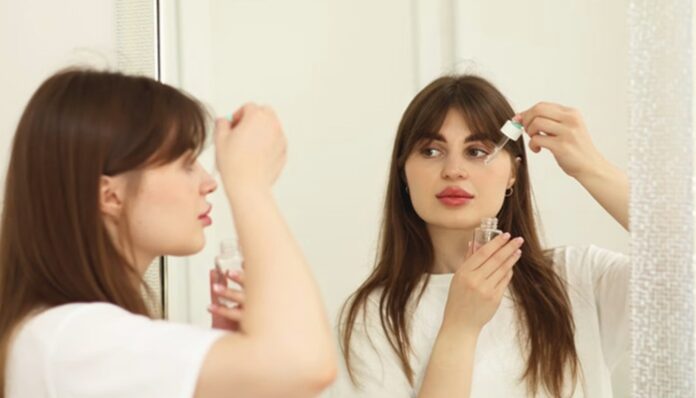
As someone who’s had extreme hormonal acne and oily skin throughout the entirety of my adolescence, I’ve almost bought every skincare product on the shelf. I broke the bank trying out numerous actives, serums, and more, all while making my skin worse. The endless advertisements for new skincare products on the market didn’t help either in this addiction to getting clear skin. After years of trying to find the perfect routine, I’ve concluded that multiple barriers in the skincare world are blocking people from achieving clear skin.
The “Pore Clogging Ingredient” Myth
The most popular practice in the skincare world is to avoid products with comedogenic or “pore-clogging” ingredients. I was once a strong advocate for avoiding them, instantly putting products back on the shelf if they didn’t pass the “Pore-Clogging Ingredients Checker” I found online. However, it’s a myth. Avoiding comedogenic ingredients in skincare won’t give you clear skin.
It started when the two dermatologists Albert Kligman and James Fulton tested for comedogenicity using rabbit ears in the 1970s, applying a substance to the inner part of them and waiting weeks to see if clogged pores appeared, and they did. The faults in this test are that rabbit ears are more sensitive than human skin, which makes them react to comedogenic ingredients faster. The rabbit ear model had no relevance to what produced come done formation in human skin on the face.
However, the findings had already taken hold of the dermatology world, listing numerous ingredients as “highly comedogenic” based on the unreliable rabbit ear testing. The truth is, the “poor clogging” ingredients that are in a product are usually at a very low concentration and diluted by the other ingredients so much that it wouldn’t even impact human skin. Additionally, “non-comedogenic” isn’t an FDA-regulated term because there’s no accurate way to test for comedogenicity. So companies can put it on their products without it being tested for truth.
Ultimately, your best bet for finding the skincare products that work for you is to shift focus towards other factors that may influence your skin, such as your diet, sleep, hormonal imbalance, etc. Avoiding these “pore-clogging ingredients” won’t do you any good, and you may miss out on a potentially good product. Monitor your skin when trying new products to find out which works best for you.
Overconsumerism in the Skincare World
Overconsumption is a big problem in the skincare world, and it’s by design. People who desperately want to clear their skin will see the new popular product being pushed on their algorithms and instantly buy it without a second thought. Then once they only use it for maybe only a week or so and determine that it “doesn’t work,” they’re off to buy the next. The need to follow the next big trend stops people from finding what product actually works for them. It also makes people think that having multiple of the same products in their skincare routine is the cheat code to clear skin when it’s not.
Using too many products can hinder your skin’s progress, and to be quite frank: it’s unnecessary.
When it comes to skincare, the less is the better. It all depends on your skin type and skin needs. For me, I have oily skin and cystic acne. I was using multiple different serums, toners, and actives all together in my skincare routine – which didn’t end well. The standard products you should have in your routine are any brand of micellar water (at nighttime to wipe off sunscreen before cleansing), a simple cleanser, a simple moisturizer with ceramides, and SPF 50 sunscreen.
I do recommend using one active if you have heavy hyperpigmentation and rough skin, or it’s something that has been prescribed to you before and has been working. Common ones are tretinoin or light exfoliants with AHAs or BHAs. This is where a serum or toner can come in to provide extra hydration, since the active ingredients can dry out the skin and potentially damage the skin barrier. Using too many actives overexfoliates the skin, resulting in a damaged skin barrier that you’ll have to halt your entire skincare routine to fix.
Remember to use a small amount and start slowly, preferably applying only twice a week in your nighttime routine. Also, always make sure to wear sunscreen after your morning routine, and reapply every 2 hours if you are in an environment where you’re exposed to UV rays. People underestimate sunscreen. But applying it prevents hyperpigmentation from forming again and is also essential for your skin’s barrier during activities.
Undisclosed Ads
We live in a time where product advertisements are constantly being pushed in our face as “the solution to your problems”. And most of the time, we don’t even know it’s an ad — especially on TikTok. If you interact with a lot of skincare content on the app, your entire For You page will be filled with people who supposedly have the holy grail product that will clear your skin. Skincare companies, most of the time, are actually sponsoring these influencers to create ads for them, with no “paid partnership” label on their videos to disclose that to viewers.
This is a problem because in advertisements, it’s the influencer’s job to “hype up” the product sent to them.
Most of the time, they make exaggerated positive statements about the product’s capabilities without even having used the product themselves. Many people can fall victim to this type of advertisement, believing what’s being told and buying the product. Even when they are disclosed ads, the influencer still tells only about the product’s pros and not its cons.
To spot these ads, monitor the tone of the person talking about the product. The “Influencer Marketing” voice is almost always prevalent in these videos, when the influencer talks the way a salesperson would. Next, the person usually only talks about the product’s positives and never anything bad. They will even copy exactly what the product’s description says on the bottle or on the website. Lastly, the person usually tells the viewer at the end of the video to use their discount code, signaling they are under a skincare company’s influencer program that will give them money or free products. Or, they will point you to a link in their description.
Ultimately, when crafting your skincare routine, be careful not to be influenced by these barriers. The skincare world has many faults; one is being too focused on gaining profit. Which tip will you try? Share in the comments below!