You believe in wellness and preventive health care—so you’re exactly the kind of person wellness marketing targets. The problem is, not everything that sounds “healthy” is actually supported by science.Get Health Tips
Some of the biggest wellness trends of recent years look impressive on Instagram but deliver little beyond placebo, short-term water-weight loss, or an expensive urine test.
Below are five popular wellness trends that sound smart but aren’t backed by solid evidence, plus what to do instead if you truly want to protect your long-term health.
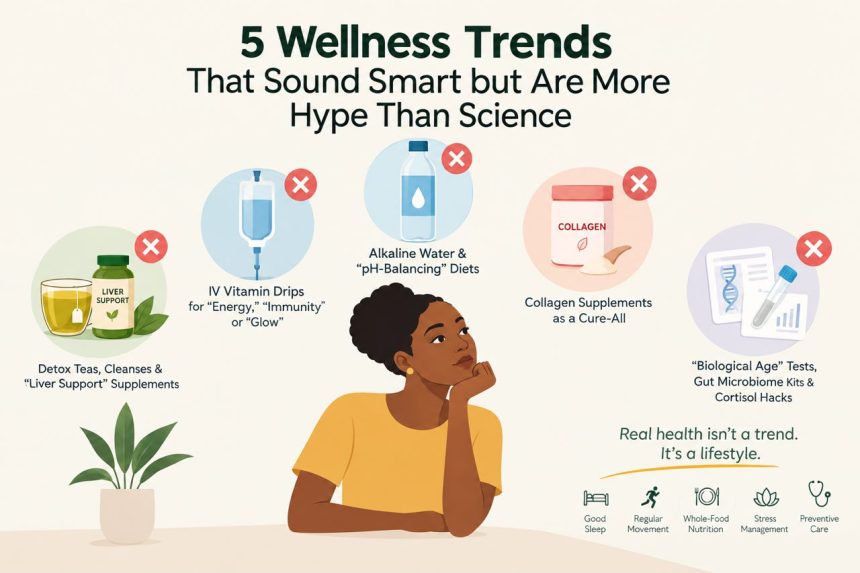
1) Detox Teas, Cleanses, and “Liver Support” Supplements
The promise: Flush out toxins, reset your metabolism, and give your liver and kidneys a “fresh start.”
What’s really happening:
Your liver and kidneys already detox your body 24/7. There’s no good evidence that over-the-counter detox teas, juice cleanses, or “liver support” supplements remove additional toxins or improve organ function in healthy people. Many detox teas are essentially laxatives or diuretics—they may cause short-term water-weight loss and frequent trips to the bathroom, but they don’t change body fat or long-term health.
Do this instead:
– Eat a fiber-rich diet with plenty of vegetables, fruits, legumes, and whole grains.
– Stay hydrated, limit alcohol, and get regular sleep.
– If you have liver or kidney concerns, see a clinician for proper testing and treatment rather than self-prescribing “detox” products.
2) IV Vitamin Drips for “Energy,” “Immunity,” or “Glow”
The promise: A quick drip of vitamins and minerals will boost your energy, strengthen your immune system, clear your skin, and speed recovery.
What’s really happening:
For most healthy people, there’s no robust evidence that IV vitamin therapy improves energy, immunity, or recovery compared with normal hydration and a balanced diet.Get Health Tips
IV vitamins are medically useful for documented deficiencies or specific conditions (for example, severe malabsorption), but using them as a general wellness treatment is largely hype. They also carry risks: infection, vein irritation, electrolyte imbalances, and unnecessary cost.
Do this instead:
– Address fatigue or frequent illness with sleep, stress management, nutrition, and, if needed, blood tests to check for real deficiencies (iron, B12, vitamin D, thyroid, etc.).
– Use supplements only when there’s a clear indication and preferably under medical guidance.
3) Alkaline Water and “pH-Balancing” Diets for Disease Prevention
The promise: Drinking alkaline water or eating “alkalizing” foods will change your body’s pH, prevent cancer, boost athletic performance, and slow aging.
What’s really happening:
Your body tightly regulates blood pH through your lungs and kidneys; diet and alkaline water do not meaningfully change systemic pH in healthy people. Studies have not shown consistent benefits of alkaline water for performance, injury prevention, or disease risk compared with regular water. A healthy diet rich in vegetables, fruits, and whole grains is beneficial—but not because it “alkalizes” your blood.
Do this instead:
– Drink enough water (plain or lightly flavored) to stay hydrated.
– Focus on an overall balanced diet rather than chasing pH numbers or buying expensive “alkaline” products.
4) Collagen Supplements as a Cure-All for Joints, Skin, and Anti-Aging
The promise: Collagen powders or drinks will “reverse aging,” erase wrinkles, fix joint pain, and prevent arthritis.
What’s really happening:
Some studies suggest collagen peptides may modestly improve skin hydration or reduce joint discomfort in certain groups, but effects are generally small, short-term, and not universal. Collagen is not a miracle cure, and claims of dramatic anti-aging or arthritis prevention are overstated. Your body breaks collagen into amino acids; you can support collagen production with adequate protein, vitamin C, resistance training, sun protection, and good sleep.Get Health Tips
Do this instead:
– Ensure enough total protein, vitamin C, and minerals in your diet.
– Use resistance training and protect your skin from excessive sun.
– If you try collagen, treat it as a possible minor adjunct, not a core strategy.
5) “Biological Age” Tests, At-Home Microbiome Kits, and Cortisol Hacks
The promise: A single “biological age” score, a gut microbiome report, or a cortisol test can precisely tell you how to live longer, fix your health, or optimize performance.
What’s really happening:
These consumer tests are often oversold. “Biological age” algorithms vary widely between companies and are not yet validated as precise personal health guides. Direct-to-consumer microbiome reports rarely provide actionable, individualized advice beyond general healthy-eating principles. Cortisol levels fluctuate throughout the day; a single snapshot (especially from non-clinical settings) is hard to interpret and easy to overreact to. The biggest longevity and wellness gains still come from basics: not smoking, maintaining a healthy weight, staying active, sleeping well, managing stress, and controlling blood pressure, lipids, and blood sugar.
Do this instead:
– Use such tests, if at all, as curiosity tools—not definitive medical guidance.
– Invest first in proven pillars: regular movement, strength training, sleep regularity, stress management, and routine medical check-ups.
Why These Trends Spread Anyway
– Anecdotes over data: “It worked for me” feels compelling but isn’t the same as controlled trials.
– Placebo and ritual: Feeling you’re “doing something powerful” can improve mood and perceived energy.
– Social media incentives: Influencers and brands profit from simple, dramatic promises, not nuanced science.Try Science Kits
A useful rule of thumb: if a trend promises quick, sweeping benefits, relies heavily on testimonials, and is sold mainly through social media, treat it as marketing until you see high-quality, peer-reviewed evidence.
The Bottom Line
Being serious about wellness doesn’t mean chasing every new trend. It means protecting your time, money, and health for strategies that actually move the needle: consistent sleep, regular physical activity, a mostly whole-food diet, stress management, and routine preventive care. Everything else is optional—and often overhyped.