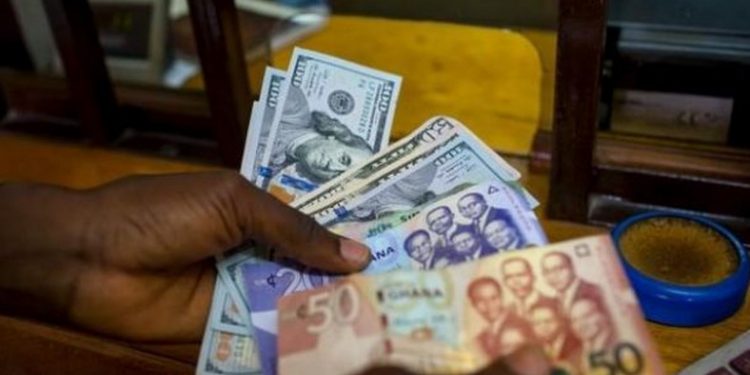
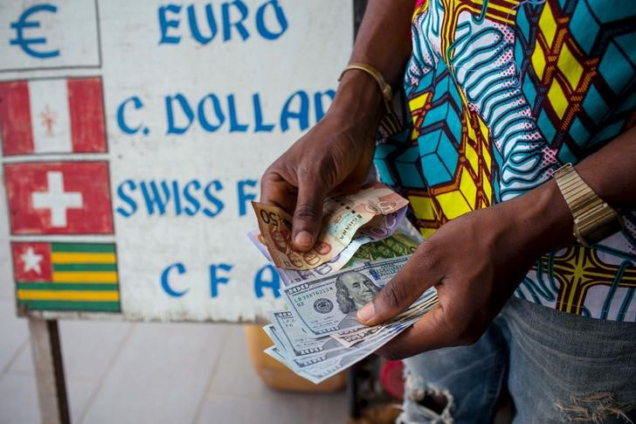
As 2025 draws to a close, the Ghana cedi is ending the year in an unusually strong position, delivering a rare but welcome boost to the domestic economy.
Against long-standing expectations of a late-year slump, the local currency has instead recorded its most resilient performance in a decade, easing pressure on businesses and households alike.
This outcome marks a clear break from Ghana’s familiar end-of-year pattern, when demand for foreign exchange typically surges and the cedi weakens sharply.
For years, the final quarter has been synonymous with a forex crunch, driven largely by importers racing to secure dollars ahead of the festive season.
In 2025, however, that cycle has been decisively disrupted.
Rather than losing ground, the cedi has steadily strengthened against major international currencies.
Recent market figures underscore the scale of this turnaround.
Just last week, the interbank market opened with the US dollar trading at GHȼ11.50, the British pound at GHȼ15.36 and the euro at GHȼ13.47.
By the start of the final week of December, those rates had improved noticeably, with the dollar falling to GHȼ11.11, the pound to GHȼ15.00 and the euro to GHȼ13.08.
These levels stand in sharp contrast to December 2024, when the cedi was under severe pressure and the dollar, pound and euro traded at GHȼ14.71, GHȼ18.49 and GHȼ15.33 respectively.
Economists attribute this stability to a favourable combination of macroeconomic conditions.
Ghana is currently recording a current account surplus, supported by stronger capital and financial inflows, which has helped rebuild external buffers.
This has given the Bank of Ghana greater room to manage exchange rate pressures and avoid the sharp swings that have characterised previous year-ends.
Two developments specific to this period have also been decisive.
Many firms completed their import requirements earlier than usual, reducing the traditional late-season scramble for foreign currency.
At the same time, foreign exchange inflows from the Ghanaian diaspora have surged, as thousands returned home for the “Beyond the Return” festivities.
These inflows significantly increased the supply of dollars, pounds and euros on the local market, easing pressure on the cedi.
For businesses, the impact goes beyond headline exchange rates.
Greater currency stability allows importers, manufacturers and traders to plan with confidence, price their goods more accurately and manage cross-border transactions with less risk.
Market watchers note that this environment is likely to reduce operating costs and improve planning in the first quarter of 2026.
Among consumers and traders, the prevailing mood is one of cautious optimism.
After years of watching purchasing power eroded by inflation and currency depreciation, many now see the cedi’s year-end strength as a hopeful signal.
While challenges remain, the closing weeks of 2025 suggest that Ghana may be taking firmer steps toward sustained macroeconomic stability.