
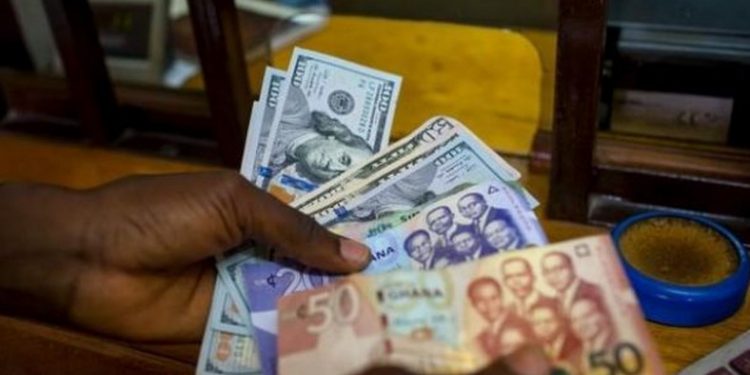
The Ghana cedi weakened by about 3.9% against the US dollar in the interbank market during the first three months of the year.
This represents a higher depreciation compared to the 2.2% recorded in February.
According to the Bank of Ghana’s March 2026 Summary of Economic and Financial Data, the cedi was trading at GH¢10.87 to one US dollar in March 2026.
This is an improvement compared to GH¢15.53 recorded during the same period in 2025.
Earlier in the year, the cedi lost 4.6% of its value against the dollar in January, but its performance improved in February, when the depreciation slowed to 2.2%.
In contrast, the retail market tells a slightly different story.
Since January 1, 2026, the cedi has actually gained about 4.9% against the US dollar and is currently selling at around GH¢11.70 to one dollar.
Against other major currencies, the cedi also weakened in January, declining by 2.8% against the British pound and 1.7% against the euro.
It traded at GH¢14.46 to the pound and GH¢12.49 to the euro on the interbank market.
According to Databank, the recent strengthening of the cedi has been partly supported by higher export earnings from gold and crude oil.
Rising global commodity prices, driven in part by tensions in the Middle East, have increased foreign exchange inflows and improved liquidity in Ghana’s domestic market.
However, the global economic environment remains uncertain.
Ongoing geopolitical risks have strengthened the US dollar as a safe-haven currency, maintaining strong global demand for dollar liquidity.
Databank Research said, “Looking ahead, stronger commodity export receipts alongside the Central Bank’s targeted US$1bn FX [foreign exchange] intervention facility for March [2026] should provide near-term support to the cedi. Nonetheless, we anticipate that rising importer-driven FX demand, higher import costs and persistent global risk aversion will reintroduce depreciation pressures on the currency”.