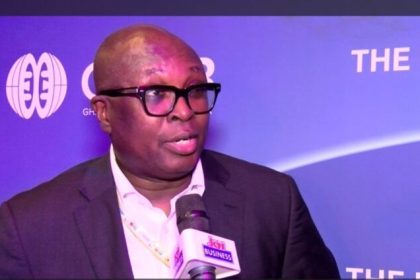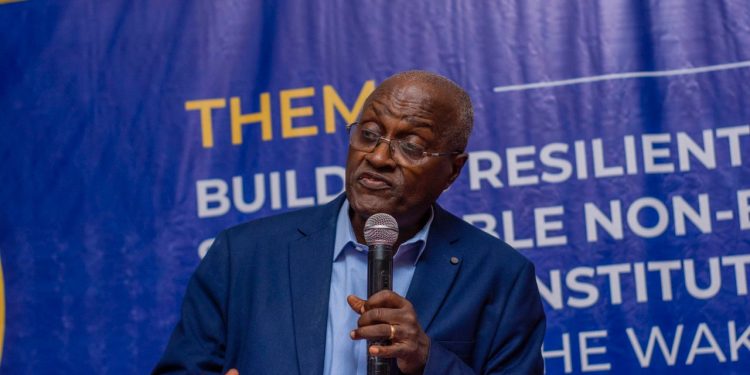
Banking and Corporate Governance Consultant, Dr Richmond Atuahene, has warned that the GH¢282 billion debt burden of Ghana’s state-owned enterprises (SOEs) poses a major threat to the stability of the economy.
He said the recent improvement in SOE profitability should not be viewed in isolation, arguing that the figures do not necessarily reflect genuine operational efficiency.
“As Professor Isaac Boadi of UPSA said, I look at it, and he called it a miracle. But if you dive deep into it, it’s not operational efficiency. It’s completely, it’s not operational efficiency.”
His comments come after the State Interests and Governance Authority (SIGA) reported a sharp turnaround in the financial performance of SOEs in 2025.
According to SIGA’s latest State Ownership Report, SOEs recorded a consolidated net profit after tax of GH¢19.80 billion in 2025, reversing a GH¢2.25 billion net loss in 2024. Revenue also increased by 28.12% to GH¢176.43 billion.
However, the report showed that total SOE liabilities remained high at GH¢281.99 billion in 2025. The Electricity Company of Ghana (ECG) alone accounted for GH¢82.31 billion of that amount.
Dr Atuahene questioned whether the reported profits reflected sustainable improvements in the enterprises’ operations.
“If you are moved by foreign exchange gains by 60%, then you are not talking about efficiency,” he said.
“So, for me, it’s not so much the profit, but are we talking about operational efficiency?” He warned that the current gains could quickly reverse if the cedi begins to depreciate.
“Because other than that, when the reality comes, you’re going to have a hit. When I mean the reality, should the cedi begin to go downwards, then you’ll begin to see that we have a big problem.”
He said the scale of the SOE debt should be a major concern, particularly in relation to Ghana’s overall debt burden.
“And also, the magnitude of the debt, 282 billion. If you run an economy with such a debt overhang, I don’t know what you can do.”
“Debt overhang of over ¢700bn; 282 is by the state enterprises. That is where we should have a little bit of concern and worry.”
Dr Atuahene further warned that continued weaknesses among SOEs could eventually have serious consequences for the wider economy.
“Because it is not, it hasn’t been well at all.” He said the issue has persisted for years and requires urgent attention.
“Those of us who are fairly old, where we’ve got this, our this problem, it has been with us.”
Dr Atuahene also questioned whether the performance of SOEs is being measured against the services they provide to Ghanaians.
“Produce the figures, talk about profit, but the reality, like Professor said, what is the output?”
“You’re not getting your light on. You’re not getting your water. But these people are being char-, these people are charging every now and then, declaring profit.”
“Are we measuring it by what measure? What metrics are we using?”
He stressed that the issue requires greater attention under Ghana’s ongoing economic reform programme.
“That is the reason why, in the IMF’s PCI, one of the ten fundamental reforms that we are being required to do is to look at these SOEs, which is very, very important.”
Dr Atuahene said failure to address the structural weaknesses could eventually bring economic activity to a standstill.
“And I have said it, and I’ve written a lot about it. If we go the way we are going with SOE, one day we will get up, and the country will come to a grinding halt.”