That earlier spike was driven in part by geopolitical tensions in the Middle East, which pushed Brent crude above $100 per barrel at the time, increasing import costs for fuel-importing countries like Ghana.
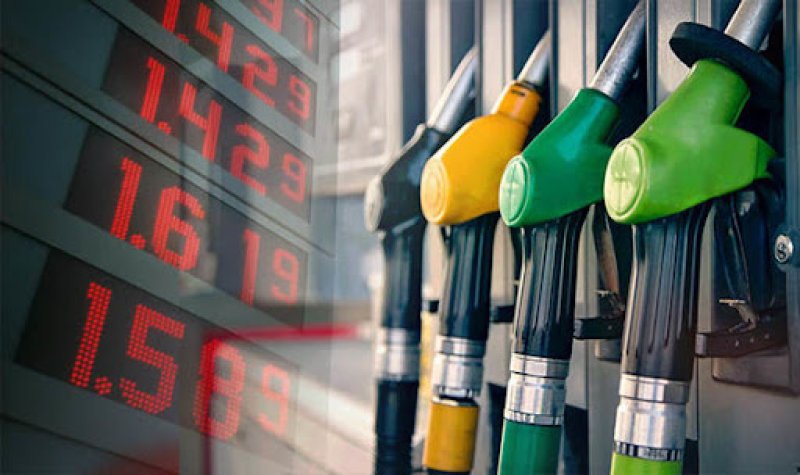
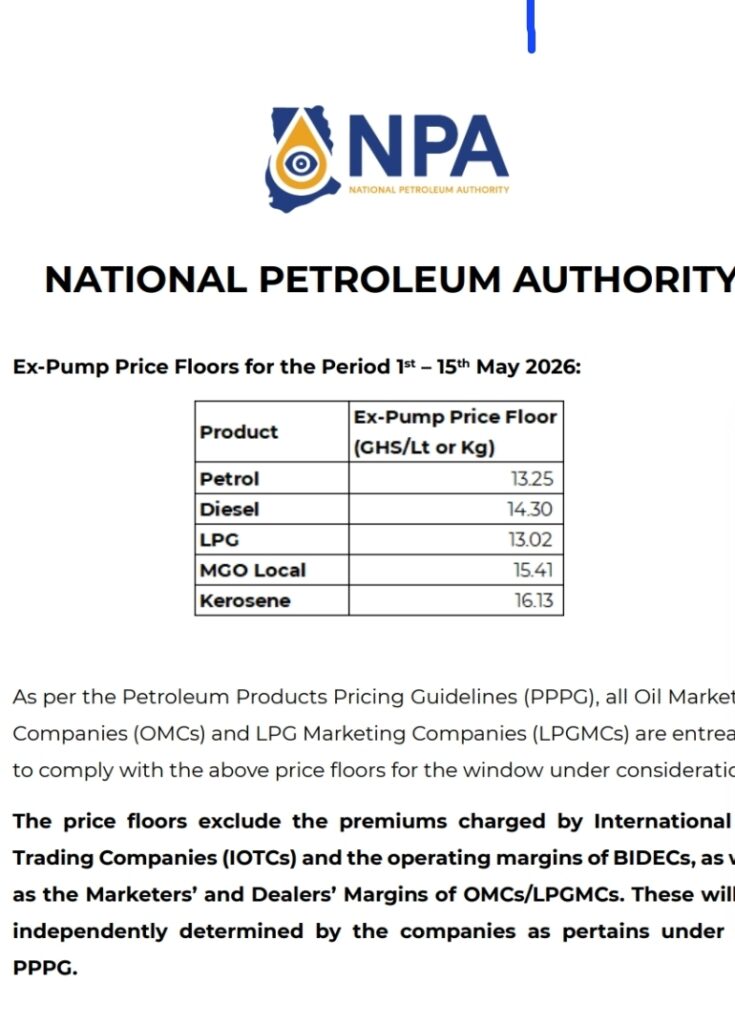
By contrast, diesel prices have now dropped by GH¢2.80 from the early April peak, though they remain higher than levels recorded in February and early March.
The government has also been intervening to soften the impact on consumers by absorbing part of the pricing burden. From the April 16 window, it removed selected margins in the petroleum price build-up, including GH¢2.00 per litre on diesel and GH¢0.36 on petrol.
It is, however, not immediately clear whether those subsidies will continue into the new pricing window or be adjusted ahead of the mid-year fiscal review.
The NPA has reminded Oil Marketing Companies (OMCs) and LPG Marketing Companies (LPGMCs) that they are required to comply with the announced floors, although they are permitted to add their own margins, meaning actual pump prices may vary across stations.
“As per the Petroleum Products Pricing Guidelines, all OMCs and LPGMCs are entreated to comply with the above price floors for the window under consideration,” the Authority added.
The latest adjustment is expected to bring modest relief to consumers, but transport operators continue to warn that sustained high fuel prices could trigger fare adjustments, with wider implications for the cost of living and inflation pressures in the country.
The new pricing structure takes effect on May 1, 2026, and will be reviewed mid-month again.