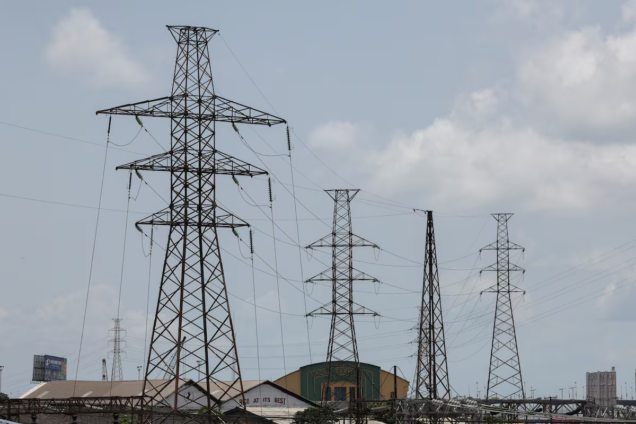
Ghana’s total electricity generation fell by 3.99% in July 2026 compared with the previous month, according to the Public Utilities Regulatory Commission (PURC).
The Commission’s Ghana Electricity Supply Fact Sheet for July 2026 shows that total generation declined from 2,413.30 GWh in June to 2,317.13 GWh in July.
Despite the monthly decline, generation was 6.20% higher than in July 2025, indicating continued year-on-year growth in electricity supply.
The PURC attributed the month-on-month decline partly to seasonal changes in demand, including lower demand associated with improved weather conditions.
“Generation remained resilient, however the intermittent decline in generation highlights the need to closely monitor generation availability and fuel supply to ensure reliable electricity supply,” the report stated.
Thermal power continued to dominate Ghana’s electricity generation mix, accounting for 74.33% of total generation in July.
Thermal generation stood at 1,722.33 GWh, representing a 4.99% decline from June but an 11.25% increase compared with July 2025.
Hydropower contributed 579.45 GWh, representing 25.01% of total generation. This was a marginal 0.18% decline month-on-month and a 7.41% decline year-on-year.
Solar accounted for only 0.66% of total generation, at 15.35 GWh. Although solar generation fell 13.76% from June, it was 96.26% higher than in July 2025.
The PURC said the generation mix showed that fuel availability and thermal plant performance remained critical to electricity supply reliability.
Among thermal plants, Karpower recorded the highest generation at 311.72 GWh, equivalent to 13.45% of total national generation.
Sunon Asogli followed with 284.61 GWh, while TICO and Cenpower generated 232.51 GWh and 206.27 GWh, respectively.
For hydro generation, Akosombo remained the largest contributor at 435.53 GWh, followed by Kpong with 83.91 GWh and Bui GS with 60.01 GWh.
Ghana’s national electricity system recorded a peak demand of 3,968 MW in July 2026.
Although this was below the annual peak recorded in April, peak demand increased by 6.61% year-on-year, reflecting continued growth in electricity demand.
Installed generation capacity stood at 5,818 MW, while dependable capacity was 4,968 MW.
The resulting capacity surplus was 988 MW, with a reserve margin of 24.82% — above the system adequacy benchmark of 18%.
The PURC said the positive reserve margin indicated that dependable generation capacity was sufficient to meet peak demand while providing some flexibility to manage unexpected system disruptions.
The Commission, however, cautioned that Ghana’s heavy reliance on thermal generation leaves the power sector exposed to fuel price volatility, foreign exchange pressures and fuel supply risks.
It recommended accelerated investment in renewable energy to diversify the generation mix, reduce exposure to thermal generation risks and improve the long-term sustainability of the electricity sector.