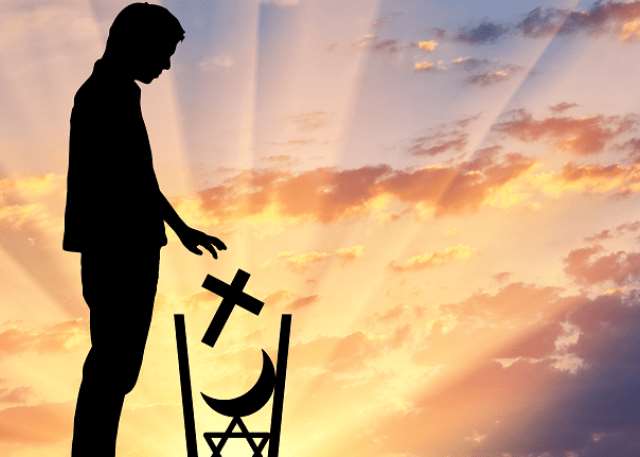
Ghana has long been celebrated for its religious pluralism ‒ churches and mosques standing side by side, faith leaders shaping national discourse, communities bound by mutual tolerance.History
Yet, tolerance is not coexistence; it is merely its most fragile expression.
The Pastor-Imam controversy reveals just how thin that fragility can become.
stor Adjei was arrested after a video circulated showing alleged derogatory remarks about Prophet Mohammed.
Imam Abdullah was arrested following a sermon allegedly advocating violence against those who insult the Prophet.
The situation deepened when another video emerged showing the pastor being assaulted in custody ‒ by a civilian with no official connection to the Ghana Hajj Board.
When individual misconduct is attributed to an entire faith community, suspicion metastasises and social cohesion unravels.
T
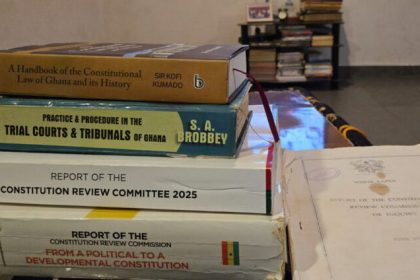
he constitutional stakes are clear. Articles 21 and 26 of Ghana’s 1992 Constitution protect freedom of expression, conscience, belief and religious practice – equally for Christians and Muslims.
But freedom of expression is not a licence to incite violence.
The challenge: protect controversial speech while intervening when words become conduct capable of producing violence.
Religious offence, however, deeply felt, never justifies vigilantism.
The national security dimension emerges the moment inflammatory speech shifts from disagreement to mobilisation.
When a sermon encourages followers to attack perceived enemies of the faith, its consequences extend far beyond the pulpit.
The arrests signal that authorities treat such statements as threats to public order.
Yet, security must remain constitutional ‒ national security cannot justify arbitrary detention, collective punishment or the conflation of individual conduct with communal guilt.
Dormant Account Notice
The Interior Ministry reinforced this principle.
It condemned the assault on the pastor in custody, directed the IGP to investigate how civilians accessed a protected suspect, and stressed that no allegation justifies extrajudicial violence.
It equally rejected calls for violence from both sides.
As the Interior Minister put it: “Let us treat crime as crime.”
This is the architecture of a state that refuses to let religious sentiment replace criminal justice.
A pivotal development followed: IGP Christian Tetteh Yohuno convened Christian and Muslim leaders at Police Headquarters, shifting from enforcement alone to enforcement paired with prevention.
Religious leaders possess influence security agencies cannot replicate – they reshape the emotional climate within communities, serving as early-warning systems and peacebuilding partners.
Risks
Religion’s entanglement with politics compounds the risk.
Political leaders attend churches and mosques, consult faith leaders and draw on religious identity for legitimacy.
This is constructive until actors exploit religious difference as an electoral instrument.
A democracy where one community feels permanently favoured and another excluded breeds grievances eroding national cohesion.
Media bear parallel responsibility: allegations are not facts, and individual misconduct must never be presented as communal conduct.
Social media has become a security frontier.
A sermon delivered to dozens can reach thousands within hours, stripped of context, weaponised as proof that an entire community is under siege.
Security architecture must include digital monitoring, rapid verification and community engagement ‒ while respecting constitutional rights. Citizens must pause before sharing inflammatory content: Is it authentic?
In context? Could its circulation endanger lives?
The governing principle must be equality before the law.Legal
If a Christian leader incites unlawfully, the law applies.
If a Muslim leader does the same, it applies identically.
Violence against any person is criminal, regardless of religious identity.
Ghana’s objective must evolve from tolerance to mutual constitutional respect ‒ the recognition that people of different faiths possess equal dignity, rights and protection under law.
The Pastor-Imam controversy is a test of Ghana’s democratic maturity.
A Muslim should affirm Islam without threatening Christians; a Christian should proclaim faith without hostility towards Muslims; critics should question beliefs without inciting violence; and police should arrest suspects while ensuring their dignity and safety.History
The answer depends on every institution and citizen.
Differences in faith must become opportunities for dialogue ‒ never sources of division.
Neither religious sensitivity nor national security should weaken constitutional rights, justify violence or undermine equal protection under law.
This balance protects harmony and strengthens democracy itself.