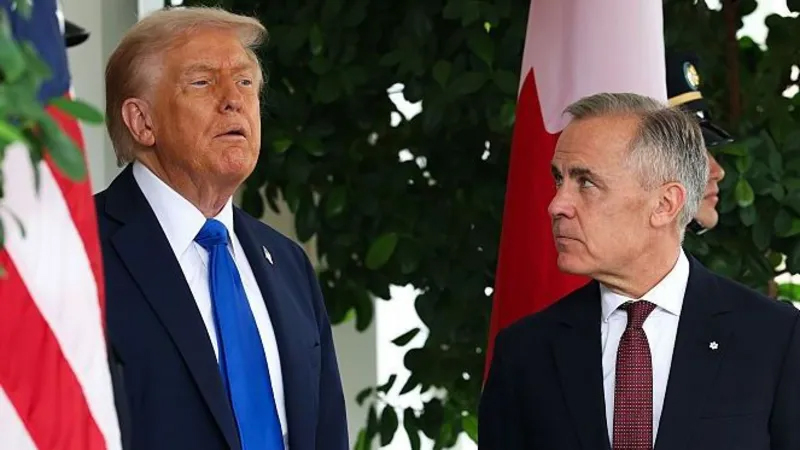
The US will ban imports of a range of Canadian products, including alcoholic spirits, some dairy goods and motorbikes, after its neighbour’s retaliatory tariffs on American goods came into force.
In a series of executive orders on Tuesday, President Donald Trump said Canada was “discriminating” against the US and outlined the bans, which will begin on 29 September.
Officials on both sides have said they would like to strike a trade deal, but no new talks have been scheduled since negotiations collapsed in late August.
Dominic LeBlanc, Canada’s trade minister, said the latest US measures were “unjustified” and that he would work to protect the country’s workers, families and businesses.
“Our core focus is on what we can control: building strength at home, diversifying our partnerships abroad, and building Canada strong for all Canadians,” LeBlanc said.
He said he had contacted his US counterpart and promised to work “in good faith” to resolve tensions.
Earlier on Tuesday, Canada’s Prime Minister Mark Carney said in a video address that his country’s move away from the US as its largest trading partner “will come at a cost”.
The White House’s new sanctions are the latest strike in a months-long trade war between the US and Canada. The two countries have historically been close allies, with each a key business partner to the other.
Generally more than two-thirds of Canada’s total exports go to the US. In 2025, Canada’s exports of alcoholic spirits to the US were worth US$687m (£507m), dairy products were worth $269m and motorbikes were worth $90m, according to UN data compiled by Trading Economics.
But Stephen Brown, chief North America economist at Capital Economics, said the import ban covered just 0.25% of Canada’s exports to the US.
He said: “Nonetheless, Trump’s willingness to impose an import ban is further evidence, if it were needed, that these latest measures are about inflicting economic pain rather than raising revenue.”
Canada is the second-largest trading partner of the US after Mexico. Its exports are less diversified than those of the US.
In recent months, business owners on both sides of the border have expressed fears over the trade war’s fallout. Many expect prices of goods to rise and the number of customers to fall.
Last month, the White House imposed 50% tariffs on around $20bn (£14.8bn) of Canadian goods after several rounds of talks had broken down.
Those tariffs hit sectors including Canada’s furniture and wine industries, as well as some sporting and fishing equipment businesses.
Canada responded with what Carney called “dollar-for-dollar” tariffs on US goods like steel, clothing and furniture. The counter-duties came into effect after midnight on Tuesday.
Canada is “discriminating” against US businesses by restricting American goods while not doing the same to the same products from other countries, the White House said when announcing the new import restrictions on Tuesday.
Some products, like whey and non-alcoholic beer, have been banned from import entirely, while tariffs have been further hiked for others, including for cheeses and cheese substitutes – which were not covered by bans – and for motorboats.
The list of Canadian products banned by the White House include:
- Some dairy products like whey
- Cane molasses
- Non-alcoholic beer
- A long list of wine, rum and vodka products
- Beer made from malt
- Motorbikes, including mopeds
Those facing higher import taxes include:
- Various types of cheese
- Raw hides and skins
- Paper
- Some furniture and mattresses
- Some metals, including aluminium and iron
- Motorboats
- Golf carts
- Fishing rod parts and accessories
- Switchboards
Washington has targeted “significant industries” for Canada, including its politically influential dairy businesses, said economics lecturer Scott French from the University of New South Wales in Australia.
Trump has previously argued that Canada’s system – which has production quotas, set pricing, and import limits on dairy, eggs, and poultry – is unreasonable to US farmers.
Canada’s ‘powerful’ dairy sector is in Trump’s trade crosshairs
The import bans and new tariffs will also put Canada’s leaders under more pressure to resist Trump’s demands for concessions, French said.
The trade war will be “costly for both sides due to the historical level of integration of the North American economy,” he said, adding that consumers on both sides will end up as “the biggest losers”.
On Monday, Trump hinted at more trade restrictions to come, warning Canadian aircraft company Bombardier that it would no longer be able to sell its products in the US unless it moved manufacturing there.
Trump has long believed that tariffs will help reduce trade imbalances between the US and other countries, but his wide-ranging levies have upset many of the States’ traditional allies.
Some Canadians have led a massive boycott of US products like alcohol, which have vanished from some store shelves after Trump launched his global tariff campaign last year.
Trade expert Deborah Elms, from the Hinrich Foundation, told the BBC the import ban could have a “strong” impact on any Canadian business with US buyers, though early estimates show a “modest impact” affecting around $1bn worth of goods.
Canada will likely “hold course for now” and adjust their business support measures to account for the US’ latest moves, Elms said.
“The bigger question is what it will take for the two sides to sit back down together. The language in these proclamations, as an example, isn’t helpful in getting to the negotiating table,” she added.
Carney said on Tuesday as Canada’s counter-tariffs came into effect: “There’s always a cost to action. But it doesn’t come close to the cost of standing still.”
Tension between the US and Canada has also moved beyond tariffs.
In August, Trump ordered Lake Ontario to be renamed as Lake America, resulting in uproar from Canadians and some in the US.