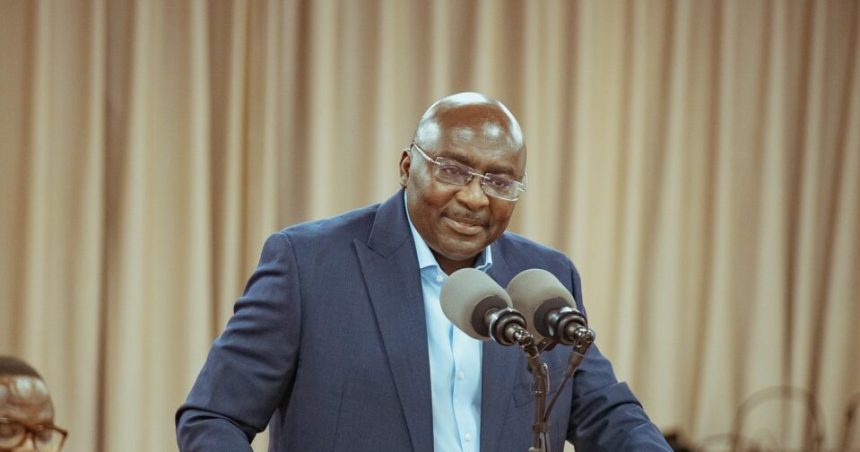
Former Vice President Dr. Mahamudu Bawumia has proposed supporting Ghana’s small-scale miners to expand their operations as part of efforts to tackle illegal mining, popularly known as galamsey.
According to Dr. Bawumia, small-scale miners should not be treated as the main cause of the country’s mining challenges but should instead be supported to operate legally and responsibly.
Speaking at a meeting with members of the Ghana National Association of Small-Scale Miners in Accra, he said helping legitimate miners move from small-scale to medium-scale operations could reduce the incentive for illegal mining.
Dr. Bawumia recalled that when he introduced the Domestic Gold Purchase Programme, he deliberately engaged small-scale miners to ensure that the policy did not negatively affect them.
He noted that small-scale miners now produce more than 52 per cent of Ghana’s gold, making them an important part of the country’s mining sector.
He said the sector needs access to affordable financing, modern mining equipment, geological information and secure concessions to enable operators to expand their businesses.
To address the financing challenge, Dr Bawumia renewed his proposal to establish a Minerals Development Bank to provide funding for local miners to acquire appropriate equipment and operate more efficiently.
He said the proposed bank would work with institutions including the Minerals Income Investment Fund (MIIF), the Bank of Ghana and private-sector partners.
According to him, many Ghanaian miners currently lack the capital needed to develop their concessions and are therefore forced to rely on foreign financiers.
He said this situation can result in foreign control of mining operations and contribute to the smuggling of gold.
Dr. Bawumia said the proposed bank would assess the viability of mining concessions and provide loans that miners could repay from their earnings.
He also proposed decentralising the Minerals Commission and Environmental Protection Agency to mining districts and establishing district mining committees.
Other proposals include using geological data to identify gold deposits, creating equipment pools and establishing shared gold-processing facilities.