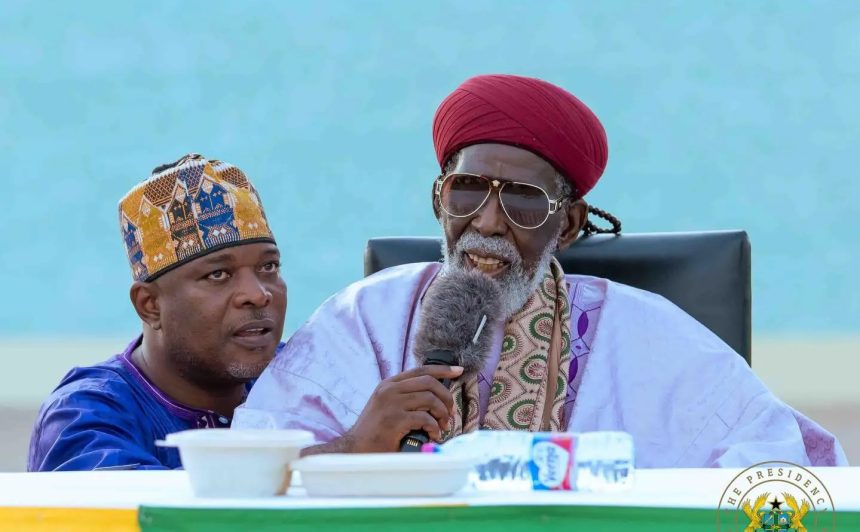
The National Chief Imam, Sheikh Dr Osmanu Nuhu Sharubutu, has distanced mainstream Islamic teaching from claims that Muslims are required to kill people who make unacceptable comments about Islam or the Prophet Mohammed.
His spokesperson, Sheikh Aremeyaw Shaibu, said the controversial sermon attributed to another imam does not reflect the principles and teachings of Islam.
Speaking in an interview, Sheikh Aremeyaw called on the Inspector-General of Police (IGP) and other security agencies to invite the imam involved for questioning over the comments.
He said the authorities should establish what prompted the imam to make the statements and identify the specific comments that allegedly provoked him.
According to Sheikh Aremeyaw, the message delivered in the viral video contradicts the Islamic principle of mercy associated with Prophet Mohammed.
He cited the Quran’s description of the Prophet as a mercy to humanity and questioned how a teaching that encourages violence could be reconciled with that principle.
“The foundation and teachings of Islam” do not support such a position, he stressed.
The controversy followed a viral video in which the imam claimed that killing people who insult Prophet Mohammed was an Islamic teaching.
He reportedly urged his audience to follow the teaching without fear of Ghanaian law and suggested that those who carried out such acts would be rewarded in heaven.
The imam referred to an unnamed man whom he accused of making derogatory comments about Prophet Mohammed and Islam.
Although he later apologised, the imam said he had been angered by the alleged remarks but acknowledged that such punishment could not be carried out because Ghana is governed by its Constitution and laws.
However, Sheikh Aremeyaw said the apology was insufficient because the sermon had already been circulated and could influence others.
He therefore repeated his call for the police to question the imam, warning against the possibility of religious tensions escalating in Ghana.
“We’ve seen what’s happened in Nigeria,” he said, stressing the need for authorities to address the matter before it creates wider religious instability.