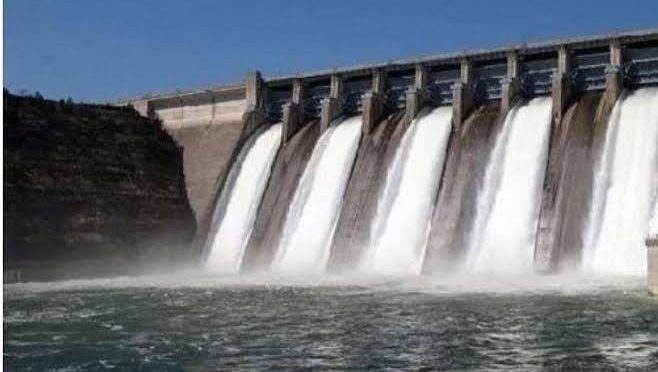
The National Disaster Management Organisation (NADMO) in the North East Region has warned farmers to prepare for possible losses as the anticipated spillage of Burkina Faso’s Bagre Dam threatens farms along the White Volta basin.
The organisation says the early timing of the spillage could leave many farmers with little time to harvest their crops before floodwaters reach their farms.
North East Regional Director of NADMO, Tahiru Rafiu, said the situation was particularly worrying because many farmers in the region cultivate along riverbanks, where the soil is considered suitable for farming.
According to him, the spillage is expected earlier this year compared with last year. He noted that the Bagre Dam was spilled around August 27 to 28 last year, giving farmers more time to prepare and harvest their crops.
“This year, I can say that the spillage of this dam has come earlier compared to last year,” Mr Rafiu said.
He explained that the main concern was the potential impact on agricultural activities rather than widespread destruction of homes and communities.
“Automatically, most of our farmers are going to be victims because their farm produce, when the water comes, it washes away everything,” he said.
Mr Rafiu noted that farming remains the main source of livelihood for residents in the region, making the potential loss of crops a serious concern for households.
He said NADMO had therefore intensified public education and engagement with communities to help residents understand the dangers associated with the expected floods.
The regional director particularly warned farmers against entering flooded farms to retrieve crops or other items.
He urged them to prioritise their safety and avoid attempting to recover farm produce when the water begins to rise.
NADMO also indicated that there would be some time between the release of water from the dam and its arrival in Ghana.
According to Mr Rafiu, floodwaters usually take between 48 and 72 hours to reach Ghana after the Bagre Dam is spilled.
The period, he said, provides authorities with an opportunity to strengthen preparedness measures and alert communities that could be affected.
The White Volta basin has historically experienced flooding linked to the Bagre Dam spillage, with farmers losing crops including maize, rice, millet and vegetables.