The Court of Appeal’s decision to overturn the conviction of former Microfinance and Small Loans Centre (MASLOC) Chief Executive Officer Sedina Christine Tamakloe has predictably ignited political celebrations and partisan outrage.
Both reactions miss the point. The real scandal is neither that a former public official walked free nor that prosecutors lost a high-profile case.
The scandal is that after nearly a decade of investigations, prosecution and public expenditure, Ghana’s criminal justice system failed to answer the only question that truly matters: did the public lose money through corruption?
Tamakloe, who headed MASLOC between 2013 and 2017, was tried over alleged financial improprieties involving the state-owned microfinance agency.
She faced 78 criminal charges, including conspiracy to steal, stealing, conspiracy to wilfully cause financial loss to the State, causing financial loss to the State, causing loss to public property, improper payment of public funds, money laundering, unauthorised commitments resulting in financial obligations for the Government, and breaches of the Public Procurement Act.
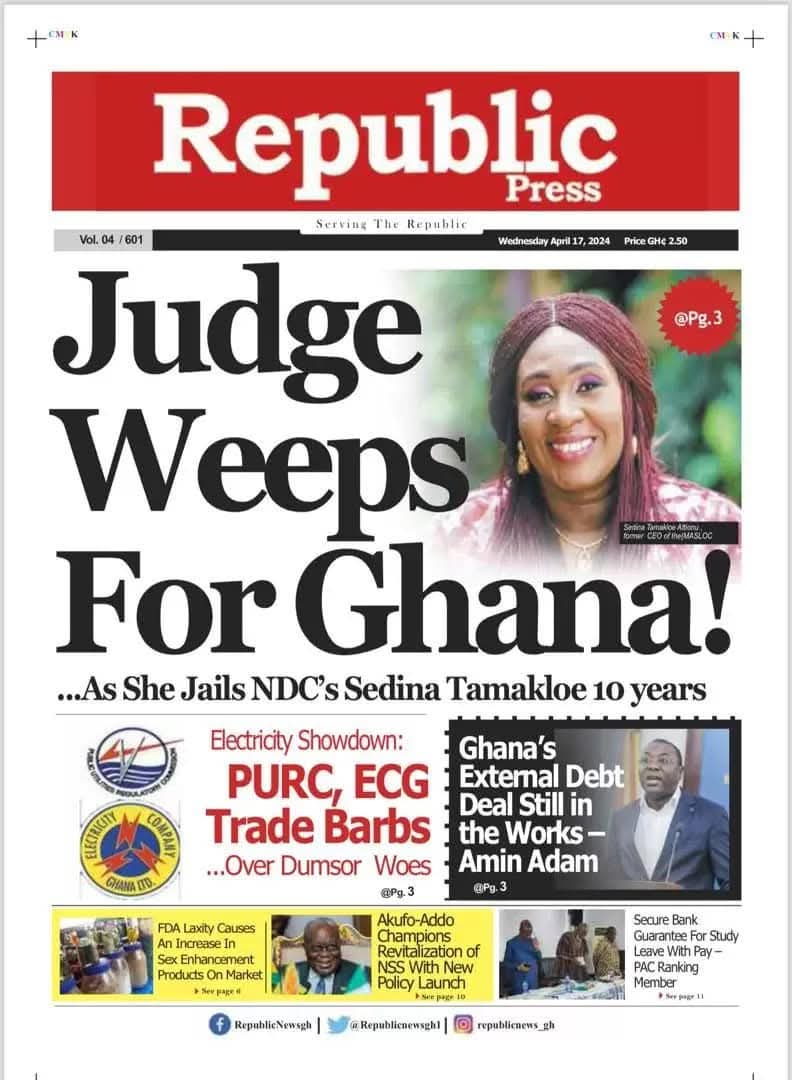
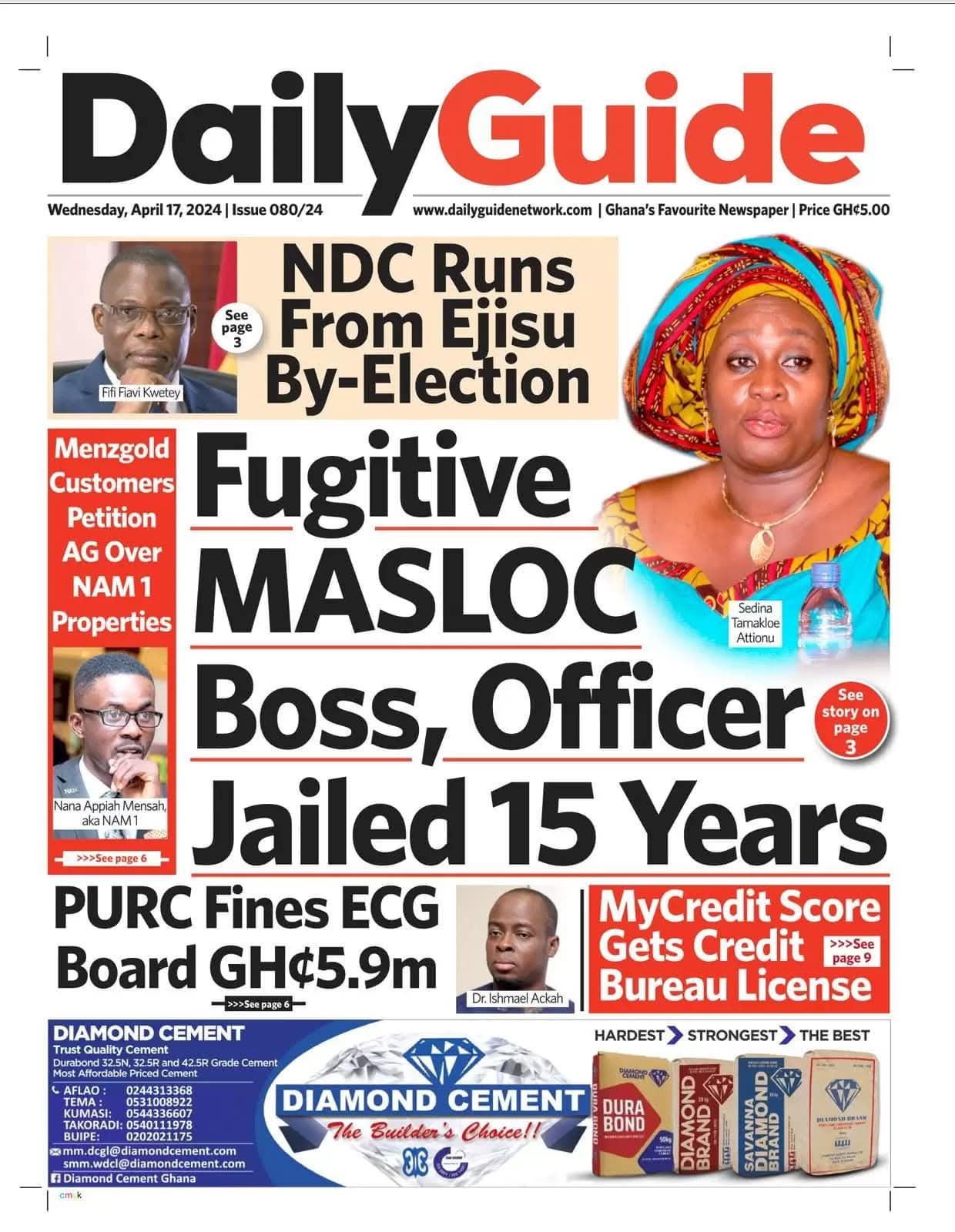
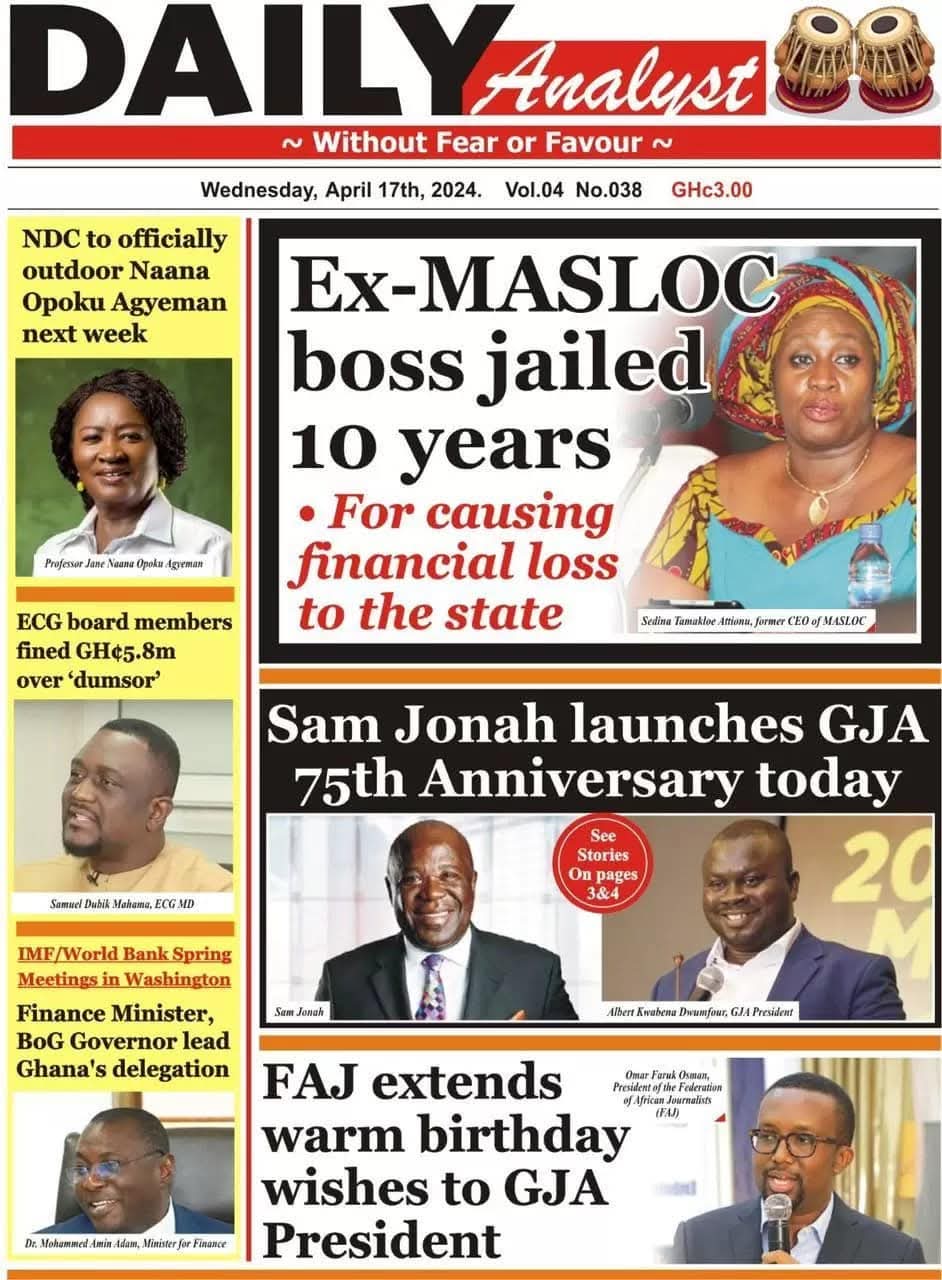
In 2024, the High Court convicted her in absentia and sentenced her to 10 years’ imprisonment after she failed to return to Ghana following permission to travel abroad for medical treatment.
The Court of Appeal answered a different question. It asked whether the prosecution proved its case beyond reasonable doubt. Its answer was an emphatic no.
The three-member panel found that the trial court committed a fundamental legal error by shifting the burden of proof onto the accused. In one of the judgment’s most significant passages, the court reminded prosecutors that “the prosecution must prove the guilt of the accused, and that this burden never shifts unless the enabling statute… has expressly and clearly said otherwise.”
It further held that “the Prosecution’s evidence, on a fair and unaided reading, fell short of proof beyond reasonable doubt,” before allowing the appeal and setting aside all convictions.
That conclusion should alarm every Ghanaian who genuinely wants corruption punished.
Perhaps the most devastating criticism of the prosecution concerns its own evidence.
The Court highlighted testimony from the prosecution’s witness acknowledging that investigators had established funds withdrawn for Kantamanto fire victims were indeed distributed to beneficiaries, yet that crucial fact was omitted from the audit report relied upon at trial.
The judges concluded that this omission struck “at the very foundation” of the stealing charge because dishonest appropriation, the heart of the offence, had not been proved.
This is not merely a courtroom setback. It is an indictment of how Ghana investigates economic crime. Corruption cases are among the most document-intensive prosecutions anywhere in the world.
They require forensic accounting, digital evidence, procurement specialists, financial intelligence and witnesses whose testimony is internally consistent. If exonerative evidence exists, prosecutors have a duty to confront it honestly rather than build a case that collapses under appellate scrutiny.
Other jurisdictions have learnt this lesson the hard way. Brazil’s once-celebrated Operation Car Wash secured hundreds of convictions, but several landmark cases, including that of former President Luiz Inácio Lula da Silva, were later nullified after the Supreme Federal Court in 2021 found serious procedural irregularities and judicial bias.
South Africa’s Zondo Commission took the opposite approach, painstakingly documenting evidence before recommending prosecutions arising from State Capture. The lesson is universal: corruption cannot be defeated by weak investigations dressed up as strong prosecutions.
The Attorney-General’s announcement that the Republic will appeal to the Supreme Court is legally understandable. Yet an appeal alone cannot cure evidential weaknesses identified by the Court of Appeal.
The more difficult question is whether investigators gathered the best available evidence from the outset. Were all beneficiaries traced? Were procurement approvals independently verified? Were financial flows forensically reconstructed? Were contradictory witness statements rigorously tested before trial? These are investigative questions, not political ones.
Ghana’s anti-corruption fight will never be won by dramatic arrests, lengthy charge sheets or triumphant press conferences. It will be won when prosecutors present airtight cases capable of surviving every level of judicial scrutiny.
Justice demands that the guilty are convicted, but it equally demands that convictions rest on credible evidence rather than assumptions. The Court of Appeal has reminded the nation that the rule of law is not an obstacle to fighting corruption. It is the only way corruption can truly be defeated.