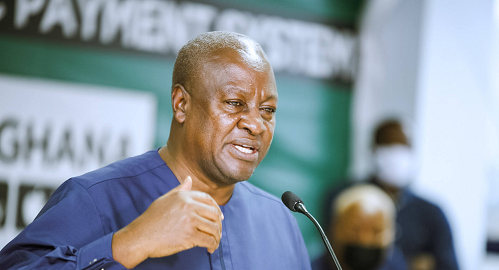
President John Dramani Mahama has reignited debate over Accra’s perennial flooding after declaring at a diaspora town hall meeting in London that “the flooding in Accra is not an engineering problem. It is just a problem of indiscipline”.
Speaking to Ghanaians in the United Kingdom on May 31, 2026, the President blamed poor waste disposal, plastic pollution, encroachment on waterways and the destruction of wetlands for the capital’s recurring flood disasters.
The President is right about one thing: indiscipline is a major contributor to flooding in Accra.
Every rainy season, drains become clogged with plastic waste, construction debris and refuse. Buildings continue to spring up on waterways and wetlands despite planning regulations.
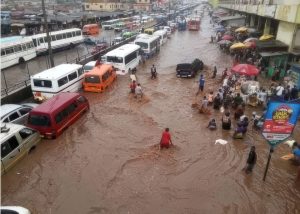
Natural streams that once carried stormwater into the Atlantic Ocean have been narrowed, diverted or completely built over. Even Ramsar sites meant to serve as natural flood buffers have not escaped encroachment.
Yet to suggest that Accra’s flooding is not an engineering problem is to overlook decades of planning failures, weak enforcement and infrastructure deficits that successive governments, including those led by Mahama himself, have failed to address.
Flooding in a modern city is never solely the fault of citizens.
If indiscipline were the only problem, then why do floodwaters continue to overwhelm entire communities even after major drainage projects?
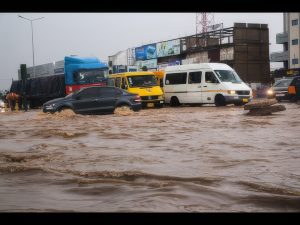
Why do roads become rivers after only a few hours of rainfall? Why are low-income settlements repeatedly exposed to flood risks despite years of studies, reports and promises?
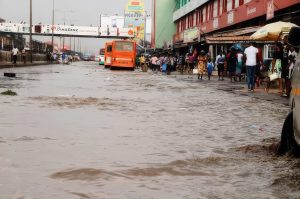
The uncomfortable truth is that Accra suffers from both human indiscipline and institutional failure.
Experts have pointed out that much of the city’s drainage infrastructure was designed decades ago for a much smaller population and a less urbanised environment.
Rapid expansion, uncontrolled development and extensive concrete surfaces have dramatically increased stormwater runoff beyond what existing drains can handle.
Accra’s flood crisis is therefore also an engineering challenge.
A city that continues to grow without corresponding investments in drainage systems, retention basins, flood-control structures and modern urban planning will inevitably flood.
Blaming citizens alone risks allowing governments and public institutions to escape accountability for years of inadequate planning and weak enforcement.
The tragedy is that Ghana has known the causes of Accra’s flooding for decades.
Every major flood disaster is followed by familiar promises: dredge the Odaw, demolish structures on waterways, improve waste management, enforce planning regulations and expand drainage infrastructure. Yet the cycle repeats itself almost every year.
Lives are lost. Homes are destroyed. Businesses suffer losses. Public funds are spent on emergency responses instead of long-term prevention.
The problem is not a lack of knowledge. It is a lack of political will.
Governments routinely announce anti-flood measures but often retreat when demolitions become politically unpopular.
Metropolitan, Municipal and District Assemblies continue to approve or tolerate developments in flood-prone areas. Traditional authorities continue to sell lands that should never be developed.
Regulatory agencies frequently act only after disasters occur. Indeed, Mahama himself acknowledged that chiefs, local authorities and residents all play a role in worsening the situation.
Accra does not need another debate over whether flooding is caused by engineering or indiscipline. It needs action.
First, the government must enforce planning laws without fear or favour. Structures obstructing waterways should be removed irrespective of the social status or political connections of their owners.
Second, a comprehensive flood-resilience programme must be implemented to upgrade drainage systems across the capital. Existing drains must be redesigned to accommodate current and future rainfall patterns.
Third, wetlands and Ramsar sites must be protected and restored rather than sacrificed to real estate development.
Fourth, waste management systems require urgent reform. Citizens must be held accountable for indiscriminate dumping, but the government must also provide adequate waste collection infrastructure and enforcement mechanisms.
Finally, flood management should become a national development priority rather than a seasonal reaction whenever disaster strikes.
President Mahama is right that indiscipline contributes significantly to flooding. However, citizens cannot be expected to solve a crisis created by decades of weak planning, inadequate infrastructure and inconsistent enforcement.
Accra’s floods are not merely a symptom of public indiscipline.
They are also a mirror reflecting the collective failure of governments, city planners, regulators, developers and political leaders across generations.
Until all those responsible are held accountable, the floodwaters will keep returning, no matter how many times citizens are blamed.