Emeritus Professor Kwesi Yankah has urged Ghana to rethink its language policy, warning that the dominance of English in public administration prevents many citizens from fully taking part in democratic governance.
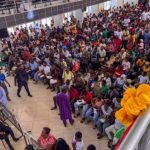
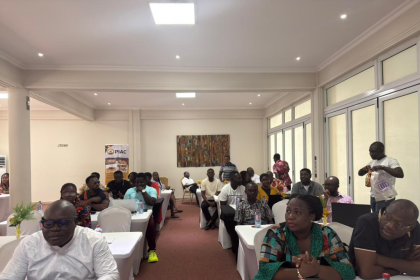
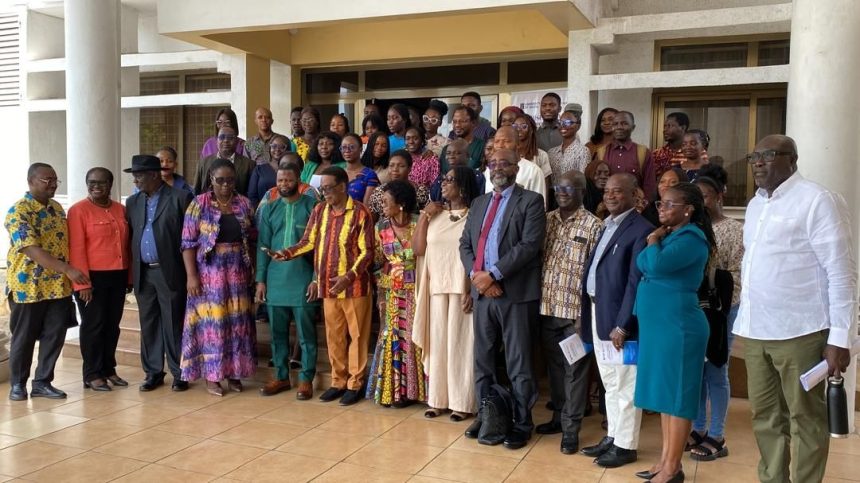
He delivered the keynote address at the Interdisciplinary Symposium on Access to Justice and Political Participation: The Role of Language. The event was held in Accra under the Indiana University (IU) Ghana Gateway Project and brought together academics, students and institutional representatives. Prof. Yankah spoke on behalf of the Project’s Director, Dr. Kwejo Beni.
He described the exclusive use of English in governance as a form of “structural or systemic censorship” that sidelines large sections of the population who cannot communicate effectively in the language.
Prof. Yankah argued that democracy should not be judged only by economic progress but also by how well citizens participate in decision-making processes.
“A key ingredient in democracy is stakeholder participation,” he said, adding that people can only engage meaningfully when they understand the language used in official spaces.
He noted that although many African countries inherited colonial languages for administration, only a small portion of the population can use them comfortably. According to him, this situation risks concentrating power in the hands of a minority while silencing the majority.
Prof. Yankah acknowledged that Ghana’s Constitution recognises the country’s multilingual nature. It provides for language support during arrests and court proceedings to ensure fairness.
However, he criticised parliamentary rules that make the use of local languages dependent on the availability of interpreters.
He described this arrangement as unclear and limiting, especially because no single institution is clearly responsible for providing translation services.
He also challenged the requirement that MPs who speak local languages must translate their own statements into English. In his view, this discourages lawmakers from using indigenous languages in Parliament.
Prof. Yankah further questioned rules that prevent MPs from reading prepared speeches, arguing that such restrictions disadvantage those who are not fluent in English.
He distinguished between formal education and wisdom, warning against the assumption that fluency in English equals intelligence. He referenced the Akan saying “sukuu nnyɛ nyansa” to reinforce his point.
He also cited the experience of former Awutu Senya East MP, Mavis Hawa Koomson, to show how language barriers can affect effective political participation even when individuals are capable.
Despite these concerns, Prof. Yankah observed some progress in Parliament. He noted a growing acceptance of the use of Ghanaian languages and a gradual pushback against what he described as the excessive use of English in debates.
He expressed hope that these changes would continue to strengthen inclusion and allow more citizens to engage meaningfully in governance.