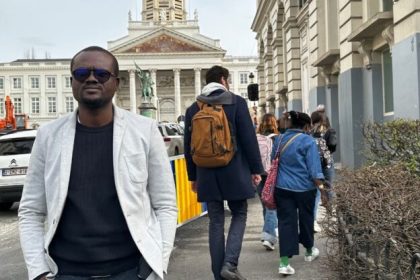
I have consistently argued that education must evolve to align with an economy that has shifted significantly from its pre-industrial foundations. Through a place-based study in the Ga-East Education District, I gained deeper insight into the lived realities of basic school educators. This experience revealed a growing disconnect between the demands placed on teachers and their ability to fulfil their professional roles effectively.
What is emerging is what I describe as the “Tired Educator” phenomenon – teachers who, in many ways, have left the profession in spirit but remain present in body. They show up not out of passion or purpose, but because they feel they have no viable alternative. Physically present yet emotionally detached, they have significantly weakened their connection to the role.
This is not simply a matter of low motivation. Rather, it reflects the increasing difficulty teaching professionals face in sustaining competence amid evolving expectations, limited institutional support, and mounting pressures within the education system.
Quiet quitting, therefore, should not be dismissed as laziness or declining productivity. In many cases, it is a psychological coping mechanism in response to an increasingly unsustainable work environment. I approached this inquiry with a strong personal bias, expecting to encounter disengaged public educators who viewed teaching as a fallback option. Instead, I found highly educated, intellectually capable professionals with a strong grasp of complex organisational concepts. Yet, much of this capability is redirected toward managing overcrowded classrooms of 30 or more students, often as a means of preserving their mental and physical well-being rather than resisting administrative authority.
This dynamic can be further understood through Social Exchange Theory, which frames the relationship between teachers and administrators as a psychological contract. When expectations around support, resources, and working conditions are not met, this contract becomes strained or broken, leading to withdrawal behaviours such as quiet quitting.
Teachers characterise the existing supervisory structure as ‘extractive’, giving them reason to believe that their efforts are being ‘rubbished’ by outsiders. As a result, motivation to engage in Organisational Citizenship Behaviour (the discretionary effort that drives institutional growth) has diminished. Additionally, teachers believe that interactional justice (e.g., being treated with dignity, being recognised for effort) has completely eroded. In response, teachers begin to guard their emotional and professional investment, withholding creative energy when their contributions are met with criticism rather than support.
One of the most critical consequences of this withdrawal is “Knowledge Hoarding as a Survival Mechanism.” According to Knowledge Risk Theory, sharing a pedagogical innovation is a choice made by the teacher, but currently, teachers increasingly treat their instructional methods as private intellectual property. Consequently, teachers are working in silos because they believe that sharing a successful instructional practice will result in additional responsibilities without support or, worse yet, devaluing their instructional approach. The result is an organisational void. Although the innovative energy of individual teachers may be present, the school’s collective intelligence has stagnated, depriving GES of the internal growth it requires to succeed.
Beyond this institutional withdrawal, another layer of adaptation has emerged. For many educators in Ghana, the side hustle has become a new type of mental real estate. Due to low salaries and rising living costs in Accra, teachers are exporting their creative energy elsewhere. I witnessed teachers at both public schools and private religious schools using their talents in makeup artistry, selling fabric and offering private tutoring. This shift represents more than financial necessity; it reflects a redistribution of intellectual energy away from the classroom. When the system fails to provide adequate distributive justice (a wage that supports a basic standard of living), teachers are compelled to invest their efforts elsewhere. In doing so, the education system inadvertently exports the very talent it depends on, depriving students of their teachers’ full capacity.
The “Crisis of Parental Disengagement” is perhaps the saddest impact of these changes on teachers. The Free Education Policy (FEP) has created a perception among teachers that many parents have misinterpreted the FEP as a way to absolve them of their responsibilities. Teachers are often left to fill the gap by using their salaries to fund basic supplies for students (e.g., uniforms and food), turning their relationship with each child into a “Moral Anchor” for the teacher. They stick around for their kids after they have mentally left their contract with the administration. This places additional psychological burdens on teachers to support their students outside the school system while also continuing to support their own families on meagre salaries.
Relying on the diminishing goodwill of increasingly disengaged educators to sustain our education system is no longer viable. Without decisive action by the Ministry of Education and its private-sector partners to confront the “infrastructure shock” of severely overcrowded classrooms and to reform the often-extractive nature of supervision, the ongoing exodus of teachers will persist. This will not only result in the loss of critical man-hours but also undermine long-term national development by eroding intellectual capital and the morale of those entrusted with shaping the nation’s future.
What is required now is a fundamental shift in approach. We must move away from punitive oversight and embrace a system grounded in supportive mentorship, one that restores dignity to the profession and re-engages the intellectual and emotional commitment of those shaping the nation’s future.