The Chairman of the National Development Planning Commission, Dr Nii Moi Thompson, has raised concerns about how bank credit is distributed in Ghana, saying most lending is focused on commerce and finance instead of productive sectors that drive economic growth and job creation.
Speaking in an interview, he explained that banks base lending decisions largely on their risk assessments, including a business’s outlook, structure, production capacity, and market position.
He pointed out that commerce and finance receive the largest share of credit at 16.29%, followed by manufacturing at 11.50% and construction at 8.62%.
Other sectors receive smaller portions, including import trade at 7.62%, transport, storage and communication at 4.79%, agriculture, forestry and fishing at 4.27%, mining and quarrying at 3.16%, and electricity, gas and water at 2.95%.
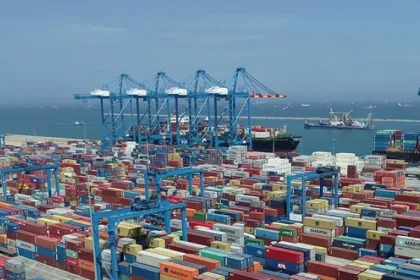
Dr Thompson highlighted a major imbalance, noting that export trade receives just 0.43% of bank lending, despite import trade attracting 7.62%.
He also observed that although manufacturing accounts for 11.50% of credit, export-oriented production remains very limited, restricting Ghana’s ability to expand exports and create sustainable jobs.
He warned that this imbalance is a serious concern, stressing that “that’s where growth and employment is going to come from,” referring to manufacturing and export-driven sectors.
According to him, Ghana’s current credit structure does not adequately support the sectors needed to build industrial capacity and strengthen the economy over the long term.