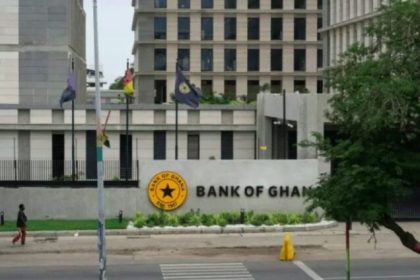
Ghana’s banking sector is strengthening, with total assets reaching GH¢465.4 billion as of February 2026, according to the Bank of Ghana’s March Monetary Policy Report.
This marks a 21% year-on-year increase slower than last year, but a sign of more stable and sustainable growth.
The expansion is being driven mainly by stronger domestic assets and improved funding conditions.
Domestic assets now make up 93.8% of total industry assets, up from 88% a year ago, showing banks are relying more on local markets and are less exposed to external risks.
Investments played a major role in this growth, rising sharply by 57.5% to GH¢192.8 billion.
This was largely due to a surge in short-term instruments, which grew by 130.1%, as banks took advantage of better returns in the money market.
Deposits continue to be the main source of funding, increasing by 18% to GH¢338.5 billion, driven by local inflows—an indication of rising public confidence in the banking system.
The sector’s capital base also improved significantly, with shareholders’ funds growing by 44.1% to GH¢60.6 billion, supported by strong profits and ongoing recapitalisation.
Although credit growth slowed, this reflects a more cautious approach by banks, focusing on managing risks and maintaining asset quality.
Overall, the sector is not just growing, but doing so on stronger foundations, putting it in a better position to support Ghana’s economic recovery.