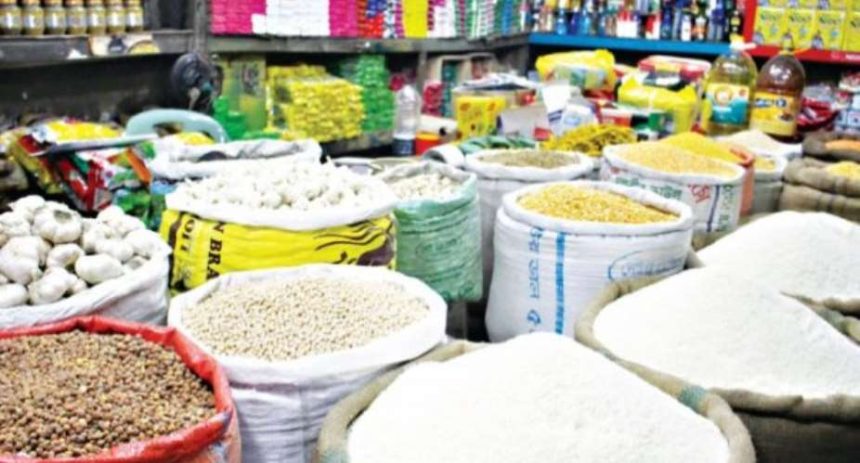
Inequalities in education and location are playing a major role in Ghana’s food security, with new data showing that some households are far more at risk of hunger than others.
A report by the Ghana Statistical Service (GSS) finds that households led by individuals with no formal education are nearly 10 times more likely to experience poor or borderline food consumption than those with tertiary education.
About 23.4 percent of such households are food insecure, highlighting a sharp gap in resilience.
The findings, from the latest Mobile Vulnerability Analysis and Mapping (mVAM) survey, point to a widening divide between vulnerable and more secure households.
“Households headed by individuals with no formal education face much higher risk,” the report noted, identifying education as a key factor in food vulnerability.
Location also matters. Around 11 percent of rural households fall into poor or borderline food consumption, compared to just 4 percent in urban areas nearly three times lower.
This reflects differences in income opportunities, market access, and exposure to economic and climate shocks.
Many vulnerable households are coping by making difficult adjustments.
Among those with no education, over 40 percent are using medium to high coping strategies almost double the rate of households with higher education.
These include reducing food quality, skipping meals, and cutting spending on essential services.
Despite this, national figures still show that over 90 percent of households have acceptable food consumption levels.
However, the Ghana Statistical Service warns that these averages can be misleading.
“These patterns highlight the importance of looking beyond national averages to understand disparities and emerging risks,” the report emphasised.
The report calls for more targeted policies that focus on the most vulnerable groups, especially those defined by education, livelihood, and location.
Without deliberate action, it cautions, existing inequalities could deepen and leave more households exposed to food insecurity.