
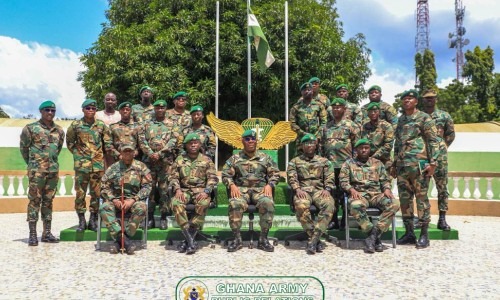
The Ghana Armed Forces (GAF) have introduced a major housing and infrastructure plan called the “Burma Camp Redevelopment Project” to solve the long-standing housing problems faced by soldiers and their families.
The project is part of a wider effort to upgrade military barracks by replacing old and worn-out buildings with safer, more comfortable, and dignified living spaces.
In its first phase, contractors will build about 250 housing units at an estimated cost of GH¢190 million, with completion expected within 13 months.
To raise funds, the GAF hosted a fundraising dinner in Accra on April 25. The event brought together top military leaders, government officials, and key business figures.
Speaking about the project, the Chief of Defence Staff, Lieutenant General William Agyepong, explained that the initiative responds to the urgent need to improve living conditions for military personnel.
“Many of the structures have become weak, outdated and unable to meet modern standards of safety, comfort and dignity,” he said.
He reflected on his early days at El-Wak Barracks, recalling that the facilities once felt like “a four-star hotel.” However, he pointed out that after 52 years, those standards have declined significantly.
Lt Gen. Agyepong also highlighted how growing security challenges in the region have forced the military to increase its workforce without expanding housing at the same pace.
“Across the Army, Navy and Air Force, the housing gap remains significant and continues to exert pressure on personnel and their families,” he said.
He encouraged businesses and development partners to contribute to the project, assuring them that funds would be managed with transparency and accountability.
On the government’s side, the Minister of Works, Housing and Water Resources, Kenneth Gilbert Adjei, spoke on behalf of the acting Minister of Defence, Dr Cassiel Ato Forson.
He announced that the government would finance the construction of 50 housing units under the project.
“This initiative does not replace the government’s responsibility. It strengthens it,” he said, adding that partnerships with the private sector are now essential for delivering large-scale infrastructure.
Businessman and Chancellor of the University of Cape Coast, Sir Sam Jonah, described the project as both necessary and timely.
“That is 14,000 families, 14,000 households where our soldiers are living below the dignity they have earned,” he said.
Sir Sam Jonah also pledged support through his company, Mobus Property Development, which will offer both funding and technical expertise for the project.