
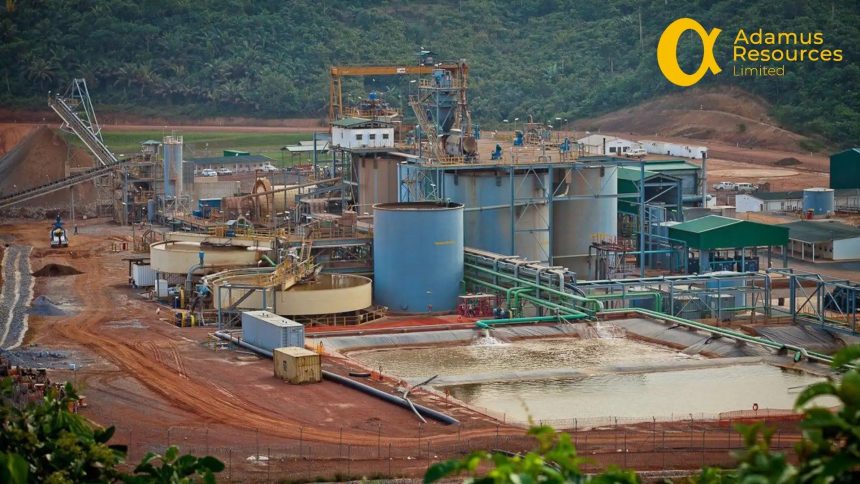
The Minister for Lands and Natural Resources has cancelled the mining leases of Adamus Resources Limited for the Akango, Salman, and Nkroful areas after the company breached Ghana’s mining laws.
In a press statement released on Sunday, April 26, 2026, the Minister explained that this decision came after detailed investigations by the Minerals Commission.
The investigations uncovered several cases of illegal and unauthorised mining carried out by the company.
The findings showed that Adamus Resources Limited violated the Minerals and Mining Act, 2006 (Act 703), along with other related regulations.
Investigators backed their conclusions with strong documentary and photographic evidence, which pointed to serious misconduct.
One major issue involved unlawful sub-contracting. The company allowed other parties to carry out mining on its concessions without seeking the required approval from the Minister, as stated under Section 14 of the law.
The company also carried out mining activities without proper permits. It failed to secure approved operating plans or valid permits from the Chief Inspector of Mines, going against Regulation 8(1) of the Minerals and Mining (Health, Safety and Technical) Regulations, 2012 (LI 2182).
In addition, Adamus Resources Limited did not obtain key approvals from important regulatory bodies, including the Environmental Protection Authority (EPA), which is required under Section 18 of Act 703.
Investigators further discovered that foreign nationals, particularly Chinese nationals, took part in illegal mining activities commonly known as “galamsey” on the company’s concessions. This action directly violated Section 99(5)(a) and (b) of the Minerals and Mining (Amendment) Act, 2019 (Act 995).
The report also showed that the company operated below acceptable standards. Its mining activities extended beyond approved areas and did not follow the required infrastructure guidelines.
These illegal operations caused serious harm to the environment. They damaged the land, destroyed ecosystems, and threatened water bodies.
As a result, nearby communities now face risks to their health and their sources of livelihood.