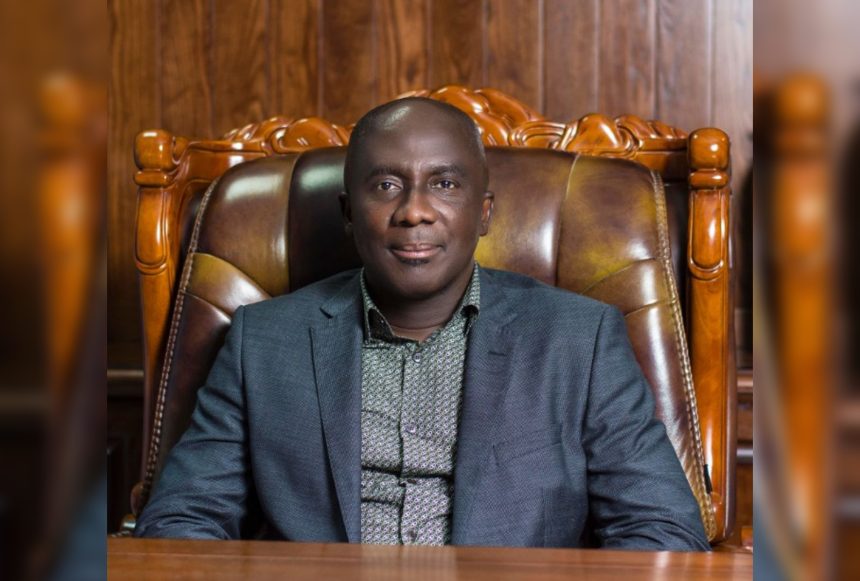
The CEO of the Tobinco Group of Companies, Dr. Samuel Amo Tobbin, has called on the government to intentionally back local pharmaceutical firms in the fight against malaria.
According to him, the fight requires more than just medical tools, it demands a strong and supported local industry.
He believes that targeted financial support will create a sustainable path toward eliminating the disease across the continent.
Dr. Tobbin suggests that the government provide specific tax reliefs and VAT exemptions for essential manufacturing inputs.
These benefits should cover raw materials, heavy machinery, and entire production plants.
By lowering these overhead costs, local factories can produce high-quality malaria medications at much lower prices for the average Ghanaian.
Dr. Tobbin also advocates for stricter rules on importing anti-malaria drugs. He argues that Ghana’s 50 pharmaceutical manufacturers already possess the capacity to supply the entire domestic market.
“There are about 50 pharmaceutical manufacturers in Ghana, and we have enough capacity to produce anti-malarials. So, if the government, through the Food and Drugs Authority, will restrict the imports of these same products, then the local companies can produce more, and it will stabilise our currency as well,” he explained.
As the President of the Pharmaceutical Manufacturers Association of Ghana (PMAG), Dr. Tobbin sees Ghana as a potential “engine of growth” for the entire region.
Many African countries trust Ghanaian drugs because of their high quality. Expanding tax reliefs to more raw materials would allow local firms to export these vital medicines to neighbouring nations.
Dr. Tobbin notes that malaria is a shared burden across the globe, but it hits Africa the hardest. By supplying the sub-region, Ghana provides both humanitarian support and a boost to its own economy.
“Countries in Africa crave for and believe a lot in Ghanaian pharmaceutical products because of the quality. Malaria is not a Ghana-only problem. It’s African, it’s a global problem even though Africa has the highest burden,” Dr. Tobbin added.
Dr. Tobbin highlights several significant roadblocks the local industry still faces. He highlighted public perception, financial barriers, economic volatility, and unfair competition as core challenges.
He shared that many people wrongly believe that imported drugs are superior to locally made ones, while manufacturers still struggle to find loans with fair interest rates to maintain their plants.
Dr. Tobbin connects this health mission to a historic sense of African unity. He references Dr. Kwame Nkrumah’s famous idea that Ghana’s independence is linked to the freedom of the whole continent. Similarly, he believes Ghana cannot truly defeat malaria until it helps its neighbours do the same.
Through his own company, Entrance Pharmaceuticals, Dr. Tobbin already produces Lufart, an award-winning malaria drug sold in Ghana and 14 other African countries.
By strengthening this local production, the government can turn the vision of a malaria-free Africa into a reality.