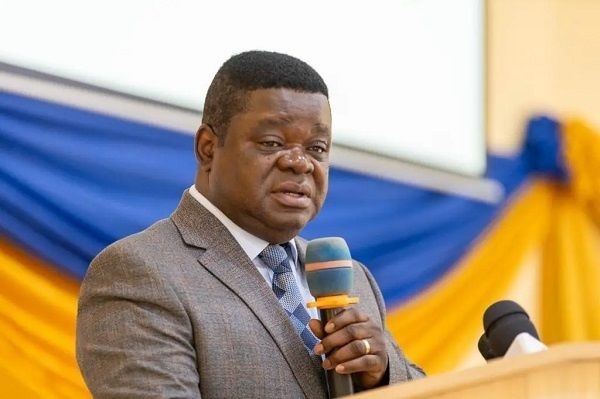
Economist and Head of local Government Service, Professor Lord Mensah, has urged the Finance Minister, Dr. Cassiel Ato Baah Forson to address major import pressures that drain Ghana’s foreign exchange reserves, warning that short-term interventions alone cannot sustain the recent stability of the cedi.
Speaking on GTV’s Current Agenda show on Saturday November 15, 2025, he stressed that long-term reforms are needed to protect the gains made in the exchange rate over the past months.
Prof. Mensah explained that an economy that once recorded an exchange rate of about GH¢17.4 to the dollar cannot be fully transformed within ten months of a new administration. He said stabilising the currency requires strategic investment and careful attention to the country’s import bill, especially in areas like poultry and oil imports that consume large amounts of foreign exchange.
He noted that the 2026 Budget clearly outlines long-term measures to help reduce pressure on the cedi. One of these is a target requiring a percentage of poultry consumed in Ghana by 2026 to be produced locally, including supplies for secondary schools. According to him, such policies are essential because depending on short-term tools like drawing on dollar reserves cannot keep the exchange rate stable forever.
“Every country with strong dollar reserves enjoys temporary stability,” he said, “but you cannot rely on reserves alone to hold the cedi. We need long-term structural measures.”
Prof. Mensah also observed that interest rates, inflation and policy rates have begun to fall, creating expectations that loan prices should eventually drop. However, he cautioned that banks will not rush to lend because they must assess risk carefully. He pointed out that interest rates were as high as 35–40 percent just a year ago, and banks need time to build confidence before expanding credit.
“The banks’ money is not their personal money,” he explained. “They manage funds belonging to the public, so they cannot simply give out loans without proper risk checks.”
He said banks are therefore acting prudently by holding onto capital as they monitor the economic trajectory. If the downward trend in interest rates and inflation continues into next year, he expects banks to respond by increasing lending.
Prof. Mensah concluded that Ghana must combine short-term interventions with strong long-term policies to sustain stability, protect forex reserves, and support growth.