
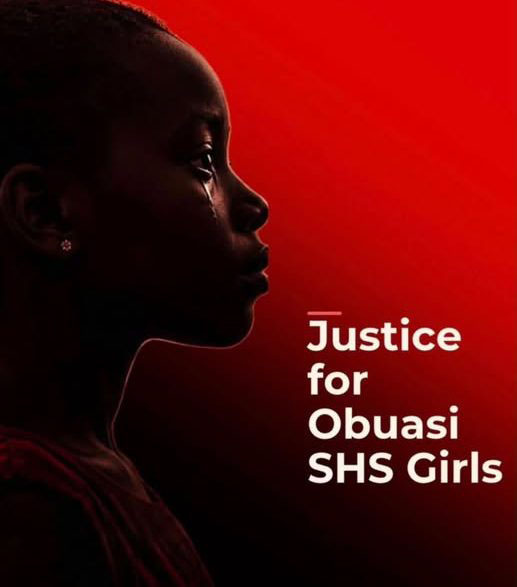
I write as a young Ghanaian woman who once sat in a high school classroom trusting that the adults around me would keep me safe. The allegations from Obuasi Senior High Technical School have broken that trust for many of us. I cannot stay silent, and neither should Ghana.
In the last couple of days, we have had very troubling news dominating our media spaces and timelines on social media. At least 16 female students of Obuasi SHTS have alleged sexual harassment, assault and rape by their headmaster, according to an investigation by JoyNews’ Manasseh Azure Awuni. These are allegations, and the headmaster is entitled to due process. However, the girls are entitled to something too: to be heard, to be taken seriously, and to be protected while the truth is established. What disturbs me most is not only what is alleged to have happened, but how the girls were treated afterwards.
Complaints reportedly reached education officials, municipal authorities and other influential figures months before any action was taken. Some students who spoke up were reportedly told to keep quiet while others were dismissed as having been “coached”. Early official responses from authorities focused on the August riot rather than the allegations that sparked it. A GES committee set up to investigate the matters recommended reposting the headmaster to another school. Reposting is not accountability. It is simply moving the risk to another set of children. The school has been closed for over two months. Students, including final year WASSCE candidates, are losing their education to a crisis they did not create.
Violence is never acceptable, and the August attack on the headmaster must be dealt with lawfully. But we must ask an uncomfortable question: why did the students come to believe that no adult would listen and that they need to resort to violence?
Silence and delay are not neutral. When an adult fails to act on a child’s report of sexual abuse, that failure is not neutrality. It is a choice that leaves a child exposed. I therefore condemn the silence and delay of every person and institution that knew and did not act:
1. The School management and staff who allegedly received complaints and chose to discourage, doubt or conceal rather than report need to bow their heads in shame.
2. The Ghana Education Service at municipal, regional and national levels. Its own Code of Conduct allows interdiction where an investigation may be compromised or the alleged offence is grave. Yet the headmaster was interdicted only after a ministerial directive on 13 October, more than nine weeks after the matter became public. The Service, too, must bow its head in shame. It must urgently reassess how it evaluates such cases: treat every allegation of sexual abuse of a student as a potential crime, not a staff dispute; refer it to the police without delay; and apply its Code of Conduct promptly and consistently, without waiting for public outrage or a minister’s instruction.
3. Local Authorities and influential persons who reportedly treated these concerns as rumours to be managed, rather than possible crimes to be reported to the police.
4. The National Democratic Congress, which initially cleared the accused to contest its Juaben constituency chairmanship. I acknowledge the party’s eventual directive that he step aside, but it should not have taken public outrage. Membership of any political party must never become a shield.
I commend the courage of the girls who spoke, Manasseh Azure’s journalism that brought their accounts to light, and the Minister’s intervention. But justice for children must never depend on a documentary going viral.
What the Girls Deserve Now
1. Swift Justice. A thorough, swift and survivor-centred CID investigation, with the girls kept informed and treated with dignity at every stage.
2. Support. Free psychosocial, medical and legal support, provided promptly and confidentially.
3. Protection from retaliation by staff, peers, family or community for speaking up.
4. Their education. A clear plan to reopen the school safely and help every student, especially WASSCE candidates and newly placed first-years, recover lost time.
We, as a country, need to build a system that protects our girls by design. Protecting girls cannot depend on luck, a brave teacher or a persistent journalist. It must be built into the system. I call on the Ministry of Education, GES, the Ghana Police Service and Parliament to act on the following:
1. Independent oversight. An independent inquiry, not GES investigating itself, into every official who received a complaint and failed to act.
2. Safe reporting channels. A confidential national hotline and an independent safeguarding office, so no student must report abuse to the very people who may shield the accused.
3. Mandatory reporting with consequences. Any teacher, house staff or education officer who receives a report of sexual abuse must refer it to the police, including DOVVSU, within a fixed time. Failure to do so should attract sanctions.
4. Interdiction by default. Automatic interdiction once a credible allegation of sexual abuse of a student is made, with clear timelines for investigation and decision.
5. Clear boundaries. No student should be summoned alone to a staff residence or private office. Every school needs trained safeguarding officers, including women staff whom girls can approach.
6. A record that follows offenders. A national register so that staff dismissed for sexual misconduct are never reposted or re-employed in any school.
7. Education on rights and consent. Age-appropriate teaching so every student knows that no teacher has any claim to their body, and how to seek help.
8. Transparency. A nationwide audit of sexual misconduct in schools, with anonymised outcomes published annually so that accountability is visible.
To every Ghanaian, let us change the questions we ask. Stop asking what the girls wore, why they went to the bungalow, or why they did not speak sooner. Ask instead why the adults around them did not act.
There is no such thing as a “relationship” between a headmaster and his student. There is only an abuse of power and trust.
Ghana was the first country in the world to ratify the UN Convention on the Rights of the Child. That history must mean something in our classrooms and boarding houses today.
To the girls of Obuasi SHTS, we hear you. You did nothing wrong by speaking. Your courage may protect girls you will never meet.
We will keep watching, keep asking and keep speaking until there is justice, and a system that makes this far harder to happen again.
Vanessa Otuo-Acheampong
Secretary , Youth Development Committee