Political and economic leaders across Africa must stop behaving like aid supplicants and begin acting as a coordinated geopolitical force, former UN secretary-general, Ban Ki-moon told business leaders and policymakers in Cape Town, South-Africa, arguing that a fragmenting global order has created a rare opening for the continent to shape outcomes rather than absorb them.
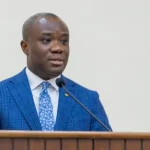
Speaking with unusual candour for a diplomat of his standing at the African Markets Conference 2026, organised by the Corporate and Investment Banking division of the Standard Bank Group in a fireside conversation with the CEO of Standard Bank Group, Sim Tshabalala, Mr. Ki-moon said the gap between economic potential and institutional influence has endured not solely because of external constraints, but because Africa has rarely deployed its leverage collectively. His critique was directed at that fragmentation.
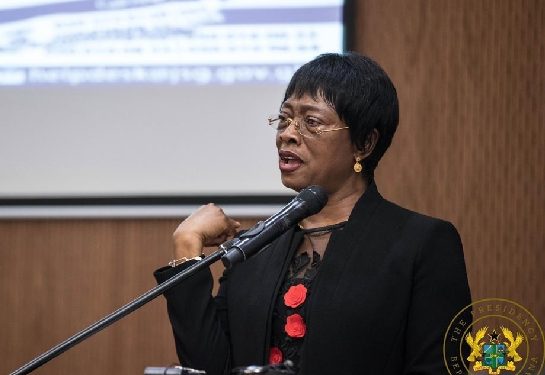
Mr. Ban Ki-moon, known for a decade of carefully calibrated diplomacy at the helm of the United Nations, departed from his customary restraint, when he said: “I am really urging you, raise your voice. Raise your voice. Not in a single person, but as a group, as a country.”
The intervention comes as concerns mount over Africa’s long-standing posture of patient engagement within Western-led multilateral systems, which is no longer sufficient in a world defined by strategic rivalry and institutional drift.
The limits of the old model
For decades, African governments have largely operated within an established script, that is, endorse global frameworks, attend summits, negotiate financing and accept conditions.
The asymmetry is well documented. For instance, despite contributing less than 4 percent of historical global greenhouse gas emissions, Africa faces a disproportionate economic burden, with climate-related damages already costing the continent between 2 percent and 5 percent of its annual Gross Domestic Product (GDP).
This environmental injustice is compounded by a stark imbalance in global financial governance. While Africa’s combined economic output now exceeds US$3 trillion, its influence within the Bretton Woods institutions remains marginal; for instance, the continent’s voting power in the IMF is stalled at approximately 4.8 percent. This misalignment means that while African nations are forced to divert up to 9 percent of their national budgets to climate adaptation, they lack the institutional leverage to reform the international lending rules that dictate their access to the very capital needed for survival.
He pointed to mounting geopolitical disorder, from the United States retreat from multilateral climate commitments to widening trade tensions, as evidence that the post-Cold War consensus is eroding. In that disruption, he suggested, lies both risk and opportunity for Africa.
Signs of a shift
There are indications the balance may be tilting. The admission of the African Union as a permanent member of the G20 in 2023 formalised the continent’s seat at a forum that shapes global economic governance. When South Africa hosted the G20 summit in 2025, the first on African soil, the symbolism underscored a broader ambition: to move from agenda-taker to agenda-setter.
Demographics and resources reinforce that ambition. Africa’s population is the youngest of any region, its urban consumer base is expanding and it holds substantial reserves of critical minerals central to the global energy transition. Growth forecasts for several economies outpace those of advanced markets.
Yet leverage depends on coordination. Without unified positions on trade, climate finance and resource governance, scale risks dissipating into national silos.
Ghana’s test case
The argument resonates sharply locally in Ghana, which hosts the secretariat of the African Continental Free Trade Area (AfCFTA), the continent’s flagship integration project aimed at deepening intra-African commerce and strengthening collective bargaining power in global trade negotiations.
After completing a complex sovereign debt restructuring, Ghana is seeking to restore fiscal credibility and investor confidence. The nation has also taken more assertive steps in resource management, including legislation consolidating state oversight of parts of the gold trade. Such moves reflect a broader push for economic sovereignty, though they carry execution risks.
The expiry of preferential trade arrangements with key partners has further highlighted vulnerabilities inherent in reliance on external goodwill. For advocates of greater continental coordination, these pressures strengthen the case for deeper regional integration under the AfCFTA framework.
Africa’s green investment future at risk
… following U.S. climate retreat, deepening Africa’s finance gap
Earlier in an address, he said Africa’s already critical climate finance deficit faces fresh deterioration following the United States’ second withdrawal from the Paris Climate Agreement
He described the situation as the most alarming he had witnessed since the end of the Second World War.
“Without any consideration,” he said, the United States had withdrawn from the Paris Agreement twice; dismantling, in his view, the foundational architecture of a decade of multilateral climate diplomacy that he had personally shepherded.
“I’m deeply, deeply concerned and even angry about what is now happening at this time. I think it’s the first time after the Second World War we are now experiencing some very serious global problems caused by a big country,” he said.
The remarks carry direct and material consequences for Ghana and the broader African continent, which remain profoundly exposed to climate risk despite contributing less than 4 percent of global greenhouse gas emissions.
A widening financial chasm
The scale of Africa’s climate finance shortfall is already severe. Africa receives approximately US$30 billion annually in climate finance, far below the US$277 billion estimated by the Climate Policy Initiative as required each year through 2030 for adaptation and mitigation efforts. According to the World Economic Forum, Africa’s total climate finance need stands upward of US$2.5 trillion by 2030, yet the United States; historically one of the continent’s three largest bilateral climate finance contributors, has signalled a fundamental retreat from that commitment.
For Ghana specifically, the gap is acute. An annual average of US$830 million in climate finance was tracked in Ghana in 2019 and 2020, a 5 to 9 per cent of its required investment, estimated at between US$9.3 billion and US$15.5 billion annually, to achieve the country’s Nationally Determined Contributions (NDCs).
The United States Government had previously ranked among the three largest providers of climate funding to Ghana alongside the European Union and the African Development Bank.
On average, flooding affects around 45,000 Ghanaians every year, and half of Ghana’s coastline is vulnerable to erosion and flooding as a result of sea-level rise. Over the next two decades, average annual temperatures in Ghana are expected to increase by 1.2 to 1.5 degrees Celsius compared with a decade ago, with the greatest increases projected in the northern half of the country – the region most dependent on rainfed agriculture and the most economically vulnerable.
A structural, not cyclical, risk
Mr. Ban Ki-moon’s warning is not merely political commentary. It signals a structural realignment in the availability of concessional and grant-based climate finance upon which African economies have depended.
Africa faces a US$51 billion annual shortfall in adaptation finance alone, with more than half of the support that does arrive channelled through loans rather than grants, risking trapping countries in a cycle of increasing indebtedness as climate disasters worsen.
Africa requires US$200 billion annually to transition to clean energy, according to the International Energy Agency, a figure that grows more difficult to reach as the United States withdraws from the multilateral frameworks designed to mobilise it.
International sources provide 87 percent of Africa’s tracked climate finance, underscoring the continent’s ongoing domestic resource and capital mobilisation challenges.
The European counterweight
Mr. Ban Ki-moon urged the European Union, along with other G20 members, to fill the void left by Washington, stating that Africa “really needs strong support, political support and financial support.”
“It is high time that the leadership of the European Union and the United States and other G20 countries must provide a lot of support to Africa… you are the one who really needs strong support, political support and financial support, this is something which I really, really worry about,” he noted.
Whether European institutions possess both the political will and the fiscal capacity to compensate for U.S. disengagement at the scale required remains an open and urgent question for African finance ministries and development planners.
A World Bank analysis has found that taking a climate-resilient and low-carbon pathway in Ghana alone could deliver more than US$26 billion in economic benefits by 2040 — a figure that underscores the cost of inaction and the potential return on adequate climate investment.
Implications for Ghana
For Ghanaian businesses and investors, the message from Cape Town showed that the external environment underpinning green investment, energy transition financing, and climate-linked development funding is becoming less reliable, not more.
Sectors most exposed include agriculture, which employs over 50 per cent of Ghana’s population, accounts for 20 percent of Gross Domestic Product (GDP), and 50 percent of exports as well as infrastructure, energy, and coastal industries.
Mr. Ban Ki-moon closed with a direct call to African leaders and the business community to raise their collective voices and demand that the world’s major economies honour their obligations.
Organised by the Corporate and Investment Banking division of the Standard Bank Group.
the second edition of the African Markets Conference 2026 (AMC26), a high-level platform uniting influential voices from across Africa and global markets to advance the continent’s growth and investment agenda.
AMC26 brought together industry leaders, global investors, policymakers, and business executives to shift the narrative from intention to implementation. Under the theme “Mobilising Global Capital at Scale,” last month conference focused on unlocking sustainable financing for infrastructure and energy security, strengthening African capital markets and private investment
Experts also discussed how to expand intra-African trade and facilitate capital flows ,navigate and manage sovereign debt dynamics across the continent