
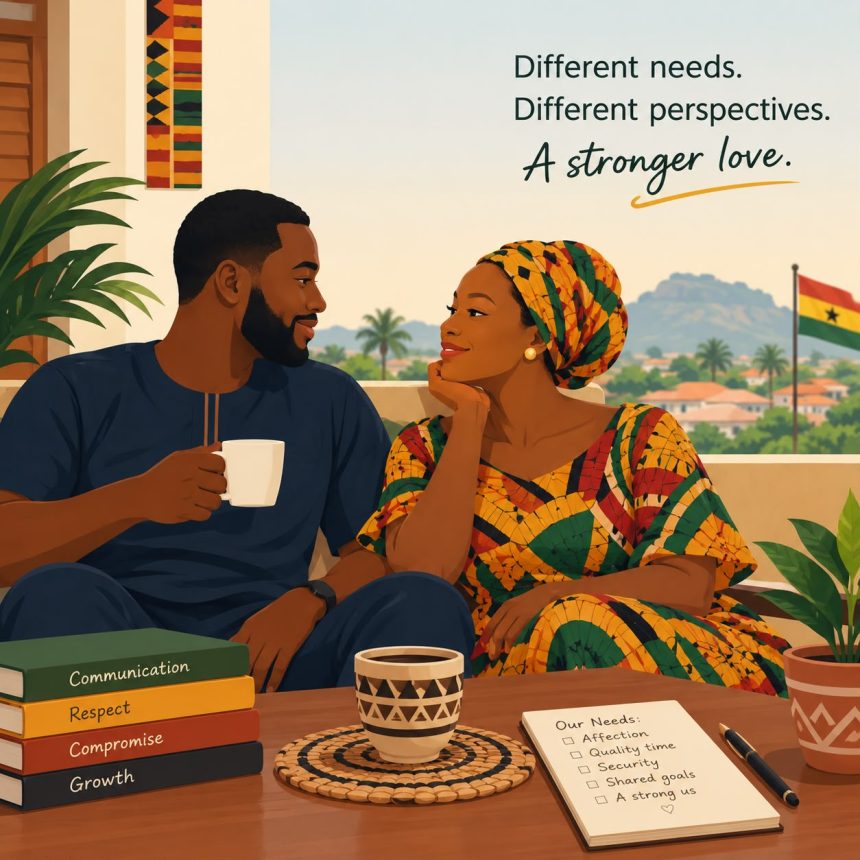
Most couples don’t fall out of love because they stop caring. They drift apart because they stop understanding.
In ‘His Needs, Her Needs’, Dr. Willard Harley explains that men and women often have different emotional “need profiles” — what makes one feel deeply loved may barely register for the other. The problem isn’t that we’re different; it’s that we treat those differences as defects instead of clues.
Needs Are Different, Love Is Learned
Harley’s central insight is simple: the feeling of being “in love” grows when our most important emotional needs are consistently met by our partner. But those needs often don’t match.
For many men, top needs include sexual fulfillment, recreational companionship, admiration, and practical support at home. For many women, top needs often include affection, intimate conversation, honesty, financial security, and family commitment.
These are patterns, not rules. The question for every couple is: *What are your top needs? How are they different? And how can you meet them without losing yourselves?*
From “Same-ship” to Relationship
You don’t want a “same-ship”; you want a relationship. If your partner were exactly like you, you’d share all the same strengths — and all the same blind spots. Differences become dangerous only when we:
– Treat them as personal attacks (“You don’t care” instead of “You recharge differently”).
– Use them as weapons (“You’re too emotional” / “You’re too cold”).
– Refuse to learn the “language” of our partner’s needs.
When managed well, differences broaden your perspective, teach empathy, and make your partnership more resilient.
A Simple “Needs Map” Exercise
Try this with your partner:
List your top five emotional needs in the relationship (e.g., affection, quality time, admiration, security, help at home).
Share and clarify without defending. Ask: “So when I do X, you feel Y — is that right?”
Spot the differences and ask: “Where can my difference actually help us, instead of hurt us?”
This shifts the conversation from “You’re wrong” to “We’re different — let’s design for both.”
Celebrating Differences in Everyday Life
– Name the pattern without blame.
“I notice I’m energised by social time, and you recharge with quiet time. How can we honour both?”
– See behaviour as need expression, not character flaw.
Alone time may be stress regulation, not rejection. Constant conversation may be connection, not clinginess.
– Create “both-and” solutions.
One evening out with friends, one evening in with a movie. Agreed budget for fun, plus agreed savings target. Both needs are honoured.
A Daily Check-In That Changes Everything
Once a day or week, ask each other:
“On a scale of 1–10, how loved do you feel right now?”
“What’s one specific thing I could do in the next few days that would meet one of your top needs?”
“Is there a difference between us that’s been bothering you that we can reframe or redesign together?”
Keep it short, specific, and action-oriented. Over time, this builds a habit of curiosity over criticism.
Love as a Skill, Not Just a Feeling
*His Needs, Her Needs* reminds us that love is not only a feeling; it’s a set of skills: learning your partner’s emotional language, choosing to meet needs even when they’re not your own, and treating differences as information, not indictment.
When you stop trying to make your partner a copy of you, and start learning how to love *this* person — with their unique needs, triggers, and gifts — your relationship moves from fragile to resilient.
Your differences don’t have to push you apart. They can be the very thing that makes your love richer, deeper, and more colourful than either of you could create alone.