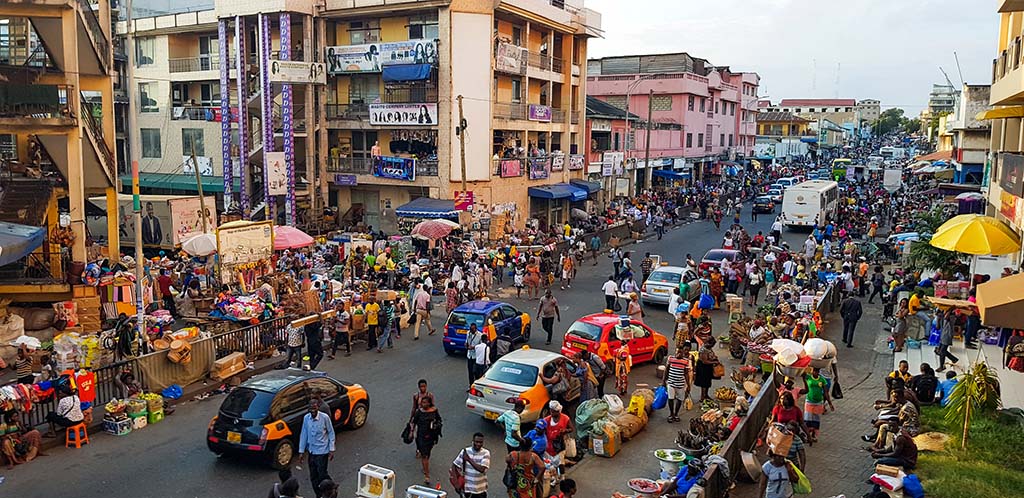
Accra has been ranked the eighth most expensive city in Africa in 2026, underscoring the cost-of-living pressures many households in Ghana continue to face, even as broader economic conditions show signs of stabilisation.
Data from Numbeo’s 2026 Cost of Living Index places the capital 8th out of 22 major African cities, with a cost of living index score of 36.6.
While Accra does not top the continental list, it sits firmly in the upper tier, reflecting relatively high day-to-day expenses compared with average local incomes.
On a global scale, Accra remains far less expensive than major cities in Europe, North America and parts of Asia.
However, within Africa and other emerging markets, it continues to be a costly city for residents earning domestic wages.
Abidjan ranks as Africa’s most expensive city with an index of 45.2, followed by Addis Ababa at 42.6. Several South African cities, including Pretoria, Johannesburg and Cape Town, also feature prominently at the higher end of the rankings.
Accra’s position ahead of cities such as Nairobi, Tunis and Cairo highlights the structural cost challenges confronting urban households in Ghana.
A closer look at the data points to food and everyday consumption as the main sources of pressure.
Accra’s groceries index stands at 42.4, one of the highest on the continent, reflecting persistent food inflation, supply chain constraints and the impact of currency depreciation.
Restaurant prices are also relatively high, with a restaurant price index of 39.1, similar to levels seen in Abidjan and Johannesburg.
By contrast, rent costs are comparatively moderate. Accra’s rent index of 11.4 is lower than that of cities such as Kigali, Addis Ababa and Cape Town, suggesting that housing is not the primary driver of overall living costs.
Instead, routine household spending weighs more heavily on residents.
Perhaps most concerning is Accra’s purchasing power index of 12.7, among the weakest in Africa.
This indicates that incomes in the capital stretch far less than in many peer cities.
In South Africa, for example, purchasing power indices exceed 100, helping to cushion higher prices.
Within West Africa, Accra ranks as the second most expensive city, behind only Abidjan.
While Abidjan’s higher costs are linked to stronger industrial activity and domestic demand, Accra’s ranking is more closely associated with currency depreciation, import dependence and lingering inflation following Ghana’s recent debt crisis.
For businesses, these conditions affect wage negotiations, operating costs and consumer demand.
For policymakers, the findings reinforce the need to address food supply chains, transport costs and productivity-boosting reforms.
Overall, the 2026 ranking presents a mixed picture. Accra is not among the world’s most expensive cities, but within Africa and particularly West Africa, it remains a high-cost urban centre where limited income buffers make price pressures especially difficult for households.