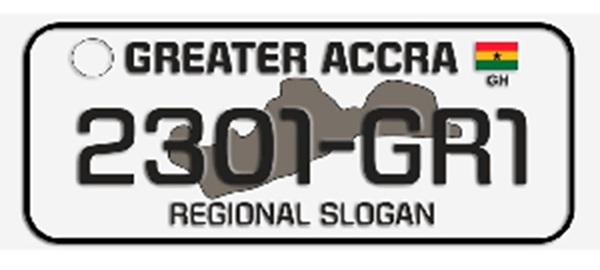
The High Court has rejected two interlocutory applications that sought to prevent the Driver and Vehicle Licensing Authority (DVLA) from moving forward with the embossment and distribution of vehicle number plates for 2026.
These applications were submitted by 26 vehicle embossment companies along with their parent association, contesting the authority’s decision to award a new contract.
The motions, which were filed on 22 December 2025 and 5 January 2026, were presented in court on Tuesday by the plaintiffs’ counsel.
The first application requested an injunction to stop the DVLA and the awarded company from producing or distributing number plates until the final resolution of the substantive suit.
The second application sought to prevent the defendants from embossing or distributing number plates in any form, including digitalised plates, until the case is settled.
The presiding judge dismissed both applications, determining that they were without merit.
In their main claim, the plaintiffs are requesting the court to declare the 2026 embossment contract null and void. They contend that the DVLA’s prior approval of 27 of their members to carry out embossment, along with historical practices, established a binding and enforceable agreement that has never been formally rescinded.
Additionally, the plaintiffs assert that the authority owes their members outstanding payments for pre-financing previous embossment projects.
Despite the DVLA’s intention to implement digital vehicle number plates in January 2026, the plaintiffs assert that their members have not been involved in the process.
They argue that the embossment cycle should have commenced in October 2025 with the distribution of blank plates, which did not take place despite public declarations.
The plaintiffs state that on 27 October 2025, the DVLA Chief Executive notified them that the contract for manufacturing and embossment had been granted to Dr Nyarko Esumadu Appiah of Original Manufacturing and Embossment (Daasebre), a decision that was subsequently validated by the Deputy Chief Executive.
They described this decision as unjust and an abuse of administrative power, contending that for thirty years, manufacturing and embossment contracts were awarded separately to avoid conflicts of interest.
They claim that granting both contracts to a single individual while excluding 46 companies and sole proprietors is discriminatory and illegal.
The plaintiffs further allege violations of the Public Procurement Act, 2003, asserting that the contract was neither advertised nor sanctioned for sole-sourcing by the Public Procurement Authority.
While they support the digitalisation of number plates, they recommend a six-month delay in the rollout to facilitate adequate planning and stakeholder involvement.
They caution that without judicial intervention, over 3,000 workers employed by their members may encounter significant financial difficulties.