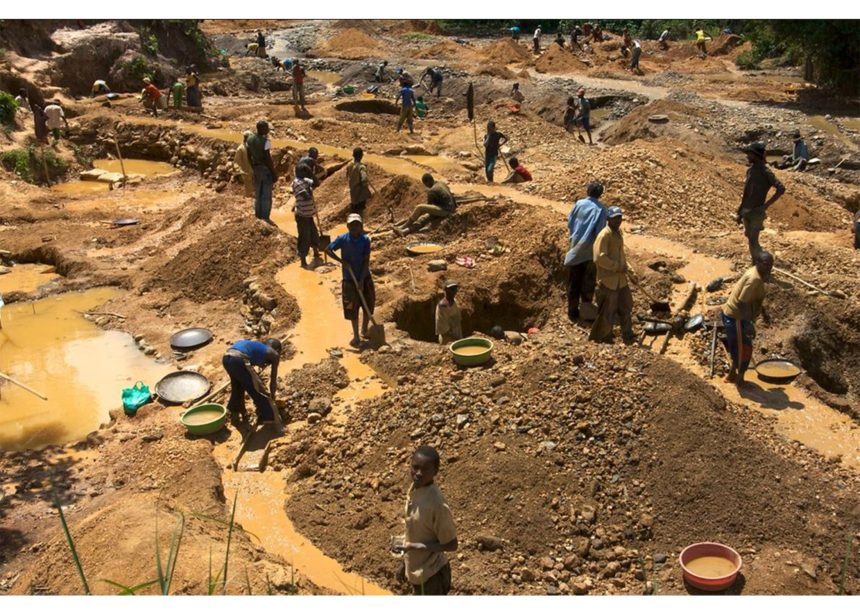
The Pediatric Society of Ghana has issued a strong appeal to the president, warning that illegal mining (galamsey) poses a grave and immediate threat to the health and future of children across the country.
In a formal letter dated April 22, 2026, and addressed to the Presidency at Jubilee House, the Society commended the government for its role in securing global recognition of the transatlantic slave trade as a crime against humanity at the United Nations.
However, it stressed that Ghana now faces a modern crisis of comparable moral urgency.
The group described galamsey as both “a crime against present humanity” and “a heinous crime against humanity yet unborn,” citing its devastating impact on water bodies, food systems, and public health.
According to paediatric experts, exposure to toxic substances such as mercury and arsenic, commonly used in illegal mining, has already begun to affect children’s health.
The letter highlights alarming medical evidence, including the link between prenatal mercury exposure and irreversible brain damage, reduced intelligence, and developmental disorders.
It also notes that polluted water sources are contributing to rising cases of infections, malnutrition, and chronic diseases among children.
Beyond immediate health risks, the Society warned that environmental destruction is deepening poverty, worsening food insecurity, and displacing vulnerable communities, effects that disproportionately harm children.
Describing the situation as a “slow, silent assault on the Ghanaian child,” the Society called on the government to declare galamsey a national emergency.
It urged a coordinated, science-driven response involving multiple sectors, alongside stricter enforcement to protect forests and water bodies.
The group also advocated for investment in child-focused environmental health systems to detect and treat heavy metal exposure early, warning of long-term consequences such as kidney disease, cancer, and neurodevelopmental conditions.
Framing the issue in global moral terms, the Society encouraged Ghana to lead international advocacy efforts to classify severe environmental destruction as a crime against humanity.
“The children of Ghana, both present and unborn, depend on the decisions we take today,” the letter concluded.